
Download the Updated Dirty Dozen and Clean 15 PDF Produce Reference
Your 2026 Dirty Dozen and Clean 15 PDF Shopping Reference
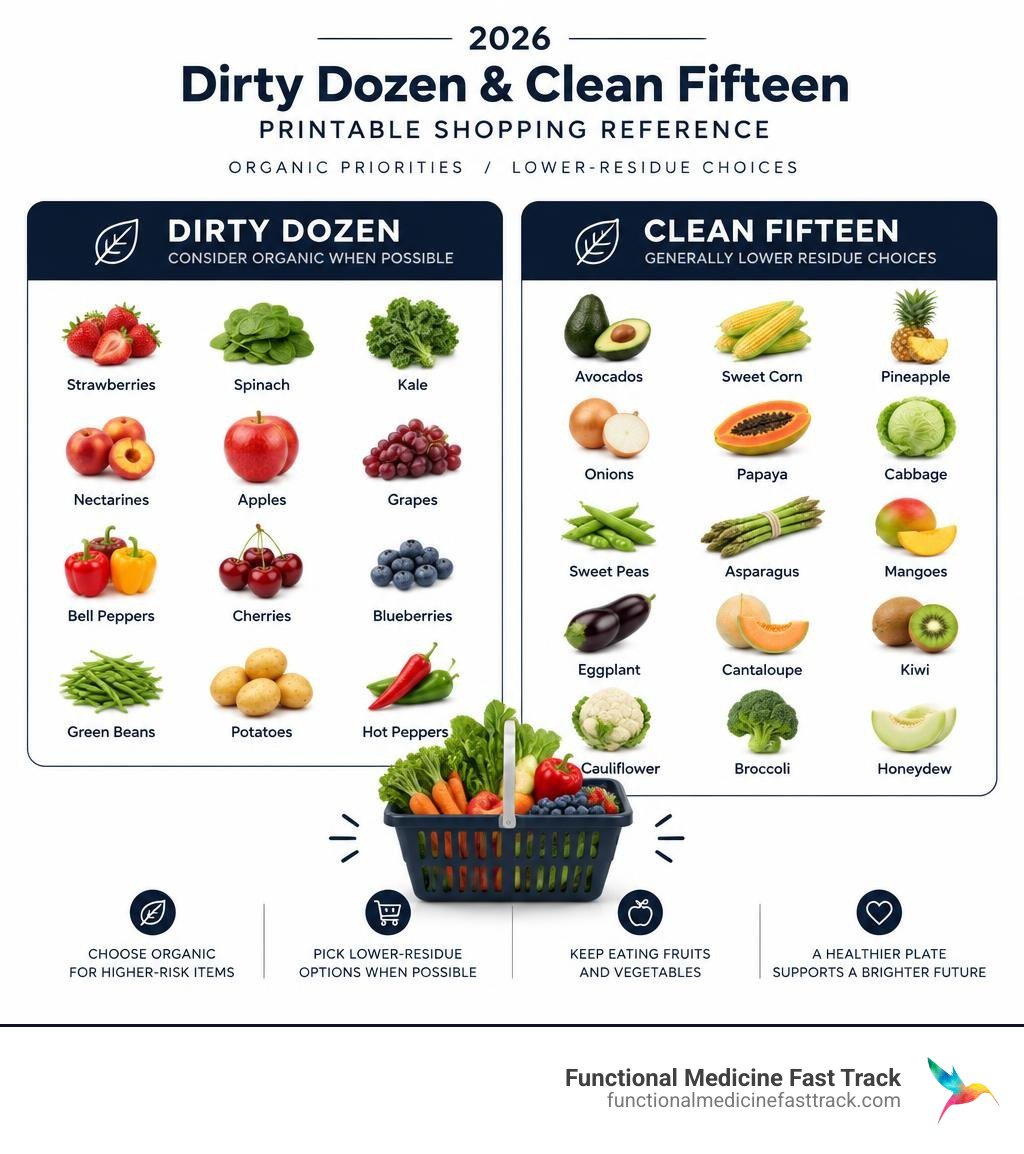
Save the Dirty Dozen and Clean 15 PDF reference by choosing Print and then Save as PDF in your browser. For a quick shopping rule, consider organic spinach, berries, and other Dirty Dozen items when your budget allows. Conventional avocados, sweet corn, and other Clean Fifteen choices generally have lower pesticide residues. Keep eating fruits and vegetables even when organic is not an option.
The Environmental Working Group creates these lists using government pesticide-residue testing. They can help you decide where to spend more on organic produce, but they do not tell you whether an individual fruit or vegetable is safe or unsafe.
I’m Garric Vosloo, CEO of Functional Medicine Fast Track. My experience consulting with patients and owning two practices shapes how I explain the Dirty Dozen and Clean 15 PDF: as a practical shopping aid, not a reason to avoid produce.
What Are the Dirty Dozen and Clean Fifteen?
The Dirty Dozen and Clean Fifteen are annual consumer reference guides developed by the Environmental Working Group (EWG), an independent non-profit organization. Published as part of the Shopper’s Guide to Pesticides in Produce, these rankings highlight which conventionally grown fruits and vegetables tend to carry the highest and lowest concentrations of pesticide residues.
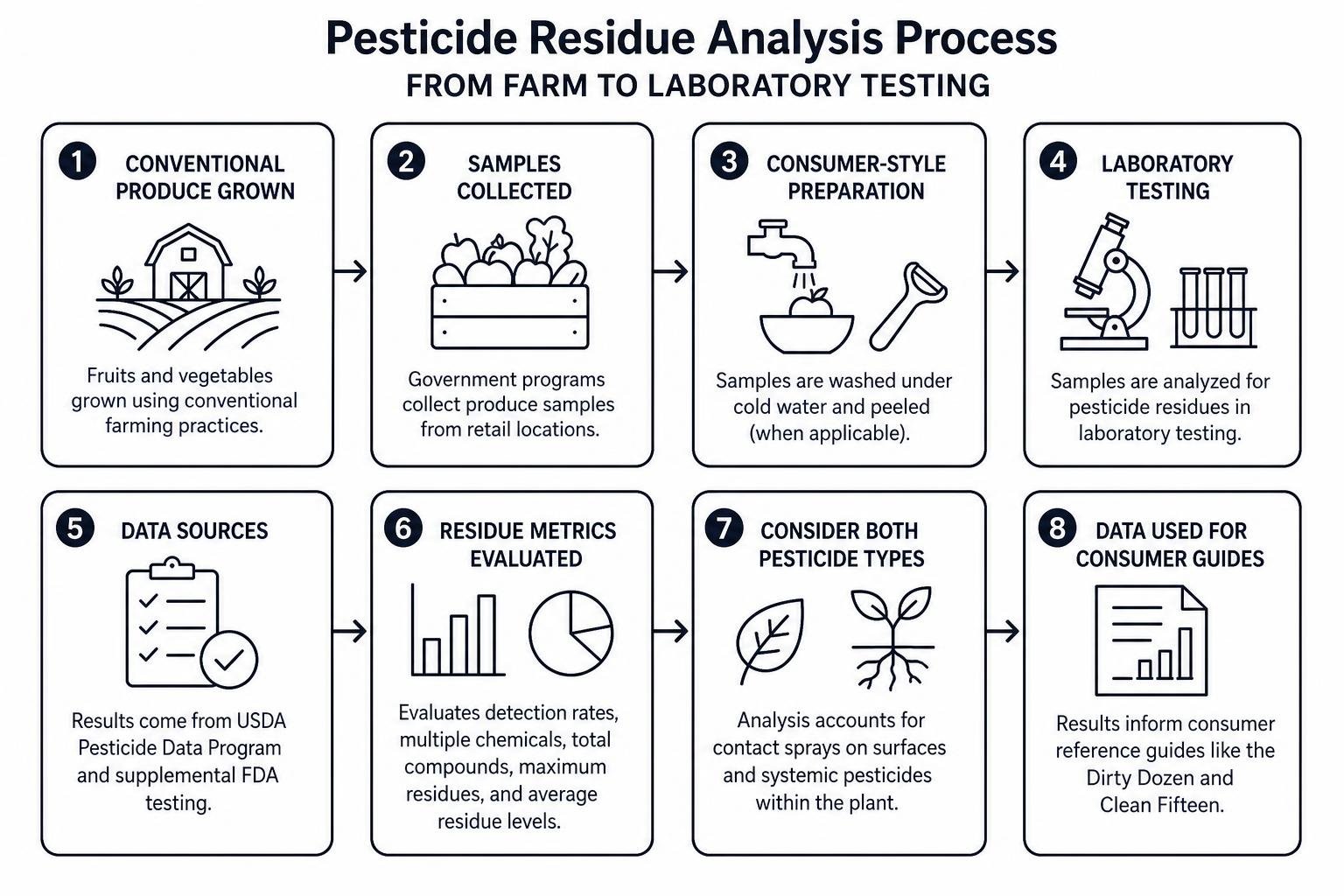
The rankings are built using government surveillance data from the United States Department of Agriculture (USDA) Pesticide Data Program, alongside supplemental testing from the Food and Drug Administration (FDA). Unlike simple agricultural audits, the USDA prepares produce samples as consumers typically would: washing them under cold water and peeling items with non-edible skins before analyzing residue levels.
The resulting index examines several key metrics across dozens of crops:
The percentage of tested samples with detectable pesticides
The percentage of samples with two or more distinct chemicals
The total number of individual compounds found on a given crop
The maximum number of residues detected on a single sample
The average amount of residue measured in parts per million
A critical distinction in understanding these lists involves systemic pesticides versus contact sprays. Contact chemicals rest on the exterior skin or leaves of a plant and can often be partly rinsed away. Systemic pesticides, however, are absorbed through plant roots and vascular systems as the crop grows, distributing traces throughout the edible flesh. When evaluating overall exposure, the ranking methodology accounts for both the diversity of compounds present and the persistence of systemic residues.
Key Findings in the 2026 Produce Pesticide Analysis
The 2026 analysis represents one of the most comprehensive evaluations to date, evaluating 54,344 samples across 47 individual fruits and vegetables.
Pesticide-residue testing provides an accurate snapshot of chemical traces present on food at the retail level. However, testing does not directly establish toxicity thresholds or measure individualized health outcomes. Regulatory agencies such as the EPA establish legal residue tolerances, but consumer advocacy organizations emphasize cumulative exposure—often referred to as the "cocktail effect"—where multiple chemical traces interact.
One of the most notable developments in recent testing is the targeted screening for per- and polyfluoroalkyl substances (PFAS) in agricultural applications. Certain modern crop chemicals incorporate fluorinated compounds to enhance stability and pest resistance. These findings underscore why functional health practitioners encourage minimizing synthetic chemical load where feasible, while maintaining a nutrient-dense whole-food dietary pattern.
The 2026 Dirty Dozen: Produce With Higher Pesticide Residues to Consider Buying Organic
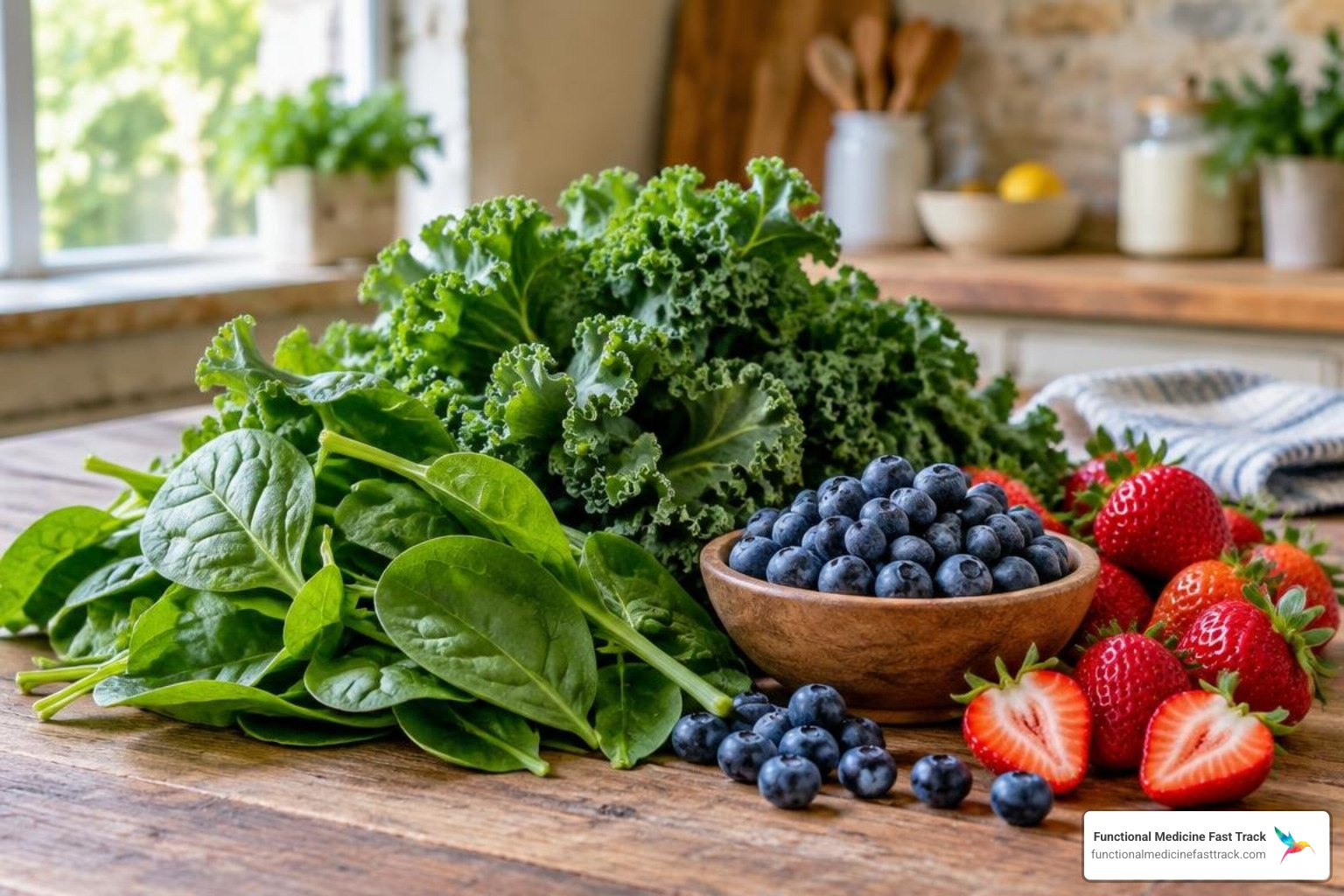
When establishing your grocery priorities, the Dirty Dozen highlights the crops that carry the highest measurable pesticide burden when grown conventionally. Selecting organic options for these twelve items can significantly reduce your daily dietary exposure to agricultural sprays.
The complete 2026 Dirty Dozen ranking includes:
Spinach
Kale, Collard, and Mustard Greens
Strawberries
Grapes
Peaches
Pears
Nectarines
Apples
Blackberries
Cherries
Blueberries
Potatoes
Produce Item | Rank | Primary Residue Characteristics | Common Chemical Classes Detected |
|---|---|---|---|
Spinach | 1 | Highest residue concentration by weight | Insecticides (including permethrin), fungicides |
Kale, Collard & Mustard Greens | 2 | High frequency of multiple residues | Dacthal (DCPA), organophosphates |
Strawberries | 3 | High average number of residues per sample | Fungicides, systemic insecticides |
Grapes | 4 | Thin, edible skin allows high absorption | Broad-spectrum fungicides, insecticides |
Peaches | 5 | Delicate skin retains surface fungicides | Fludioxonil, post-harvest protectors |
Pears | 6 | Multiple pesticide combinations detected | Fungicides, targeted insecticides |
Nectarines | 7 | High surface absorption without protective rind | Formetanate hydrochloride, fungicides |
Apples | 8 | Pre- and post-harvest treatments applied | Diphenylamine, systemic fungicides |
Blackberries | 9 | Fragile structure requires frequent field spraying | Cypermethrin, broad-spectrum fungicides |
Cherries | 10 | Vulnerable to fruit flies and rot | Insecticides, systemic fungicides |
Blueberries | 11 | Re-entered top ranking due to persistent residues | Organophosphates, surface fungicides |
Potatoes | 12 | Underground tuber absorbing soil treatments | Chlorpropham (sprout inhibitor) |
For individuals utilizing an elimination diet food list or navigating an elimination diet complete guide, prioritizing organic versions of these twelve items helps reduce confounding chemical variables during food reintroduction phases.
Why Spinach and Leafy Greens Top the 2026 Ranking
Spinach and dark leafy greens occupy the top tier of the 2026 list due to a combination of physical crop anatomy and commercial agricultural practices. Leafy greens have an exceptionally large surface-area-to-weight ratio. As leaves grow outward, they are repeatedly exposed to field sprays targeting chewing insects, mold, and aphids.
Furthermore, spinach has been shown to retain higher pesticide residue by weight than any other evaluated crop. The tender leaf structure absorbs both topical treatments and soil-borne residues, meaning standard post-harvest washing procedures leave behind measurable traces. If your daily routine includes green smoothies or raw salads, opting for organic leafy greens is one of the most impactful swaps you can make.
The 2026 Clean Fifteen: Lower-Pesticide Conventional Choices That May Help Save Your Budget

Eating well does not require purchasing every single grocery item with an organic label. The Clean Fifteen identifies conventionally grown produce items that consistently test with minimal or undetectable pesticide residues, allowing you to allocate your budget effectively.
The 2026 Clean Fifteen crops are:
Avocados
Sweet Corn (fresh and frozen)
Pineapples
Onions
Papayas
Sweet Peas (frozen)
Asparagus
Cabbage
Cauliflower
Watermelon
Honeydew Melon
Mushrooms
Mangoes
Carrots
Kiwifruit
Integrating these affordable, low-residue options aligns well with structured wellness programs, such as an anti-inflammatory food list or a balanced carb food list.
Natural Characteristics of Lower-Residue Crops
What makes certain plants naturally resistant to pesticide accumulation? The Clean Fifteen crops generally share several biological defenses:
Thick Outer Rinds and Inedible Skins: Items such as pineapples, avocados, watermelons, and papayas possess thick protective barriers. Field sprays land on the outer husk or peel, which is discarded before consumption.
Natural Defensive Compounds: Onions, cabbage, and asparagus produce sulfur-containing phytochemicals that naturally deter pest infestations, reducing the necessity for heavy synthetic chemical applications during the growing season.
Rapid Growth Cycles or Enclosed Pods: Sweet peas mature inside protective pods, shielding the inner seeds from direct liquid contact. Mushrooms are often cultivated in controlled indoor environments that do not rely on traditional field pesticide programs.
A note on genetically modified crops: While sweet corn and papayas consistently test low for synthetic chemical residues, small percentages of conventional domestic crops are cultivated from genetically modified seeds. If avoiding GMOs is a personal health or environmental priority, choosing certified organic or Non-GMO Project Verified options for corn and papaya is recommended.
How to Use the Dirty Dozen and Clean 15 PDF for Smarter Grocery Shopping
Adopting a practical shopping strategy allows you to protect your household from unnecessary chemical exposure without doubling your grocery bill. Rather than viewing produce selection through an all-or-nothing lens, use a tiered purchasing framework.
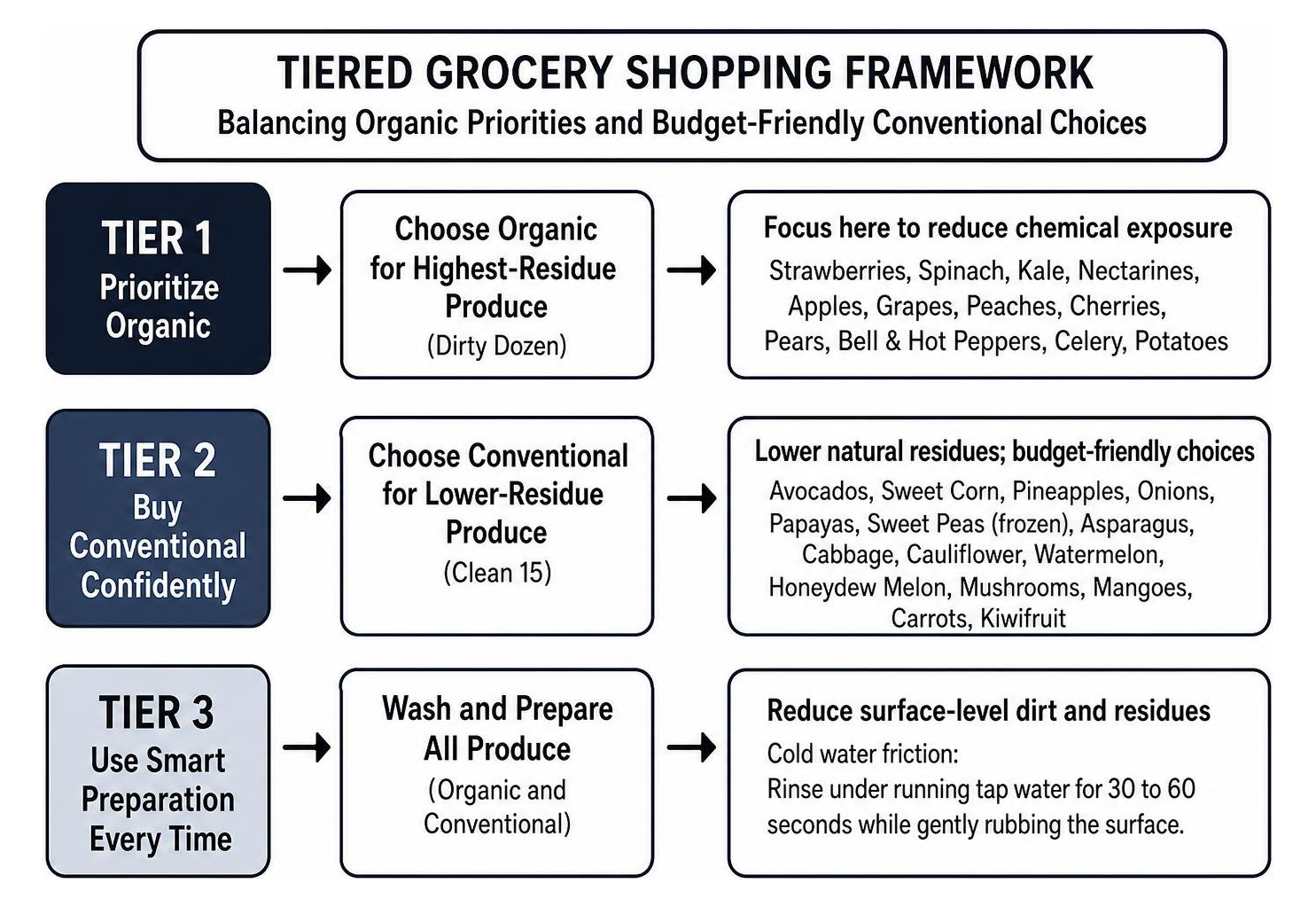
Practical Tips for Washing and Preparing Conventional Produce
Proper preparation helps lower surface-level dirt, bacteria, and contact chemical residues on all produce types:
Cold Water Friction: Rinse produce under running tap water for 30 to 60 seconds while gently rubbing the surface with your hands or a clean produce brush for firm items such as carrots and melons.
Baking Soda Soak: Research suggests that soaking firm fruits in a mild sodium bicarbonate solution (1 teaspoon of baking soda per 2 cups of cool water) for 10 to 15 minutes can help degrade certain surface-bound topical pesticides more effectively than tap water alone.
Peeling Outer Layers: For conventional leafy vegetables such as cabbage or lettuce, discard the outermost leaves where agricultural dust and contact sprays accumulate.
Recognize Systemic Limitations: Understand that neither water nor baking soda removes systemic chemicals that have been drawn into the inner cellular tissue of the plant.
These preparation methods are particularly useful when following structured nutritional cleanses, such as a 21-day cleanse plan.
How to Use the Dirty Dozen and Clean 15 PDF While Grocery Shopping
Applying the printable guide at your local market is straightforward:
Prioritize the Top 12: Reserve your organic budget for the Dirty Dozen list, particularly spinach, greens, strawberries, and grapes.
Buy Conventional for the Clean 15: Confidently purchase non-organic avocados, onions, cabbage, and melons to balance your weekly grocery expenditure.
Explore the Frozen Aisle: Frozen organic berries, spinach, and green beans are frequently priced lower than fresh counterparts, offering a budget-friendly way to buy clean produce year-round.
Shop Seasonally and Locally: Small local farms often utilize low-spray or holistic agricultural methods without maintaining expensive organic certifications. Inquire directly with growers at your regional farmers market.
Download Your Printable Dirty Dozen and Clean 15 PDF Guide
To simplify your shopping trips, you can reference our foundational food list resources or access our comprehensive Elimination Diet Food Plan Guide to help structure a clean, nutrient-rich dietary lifestyle.
Frequently Asked Questions About Pesticides in Produce
Are conventional Dirty Dozen foods unsafe to eat if organic is unavailable?
No. Conventional fruits and vegetables are not inherently unsafe, and the documented benefits of consuming adequate dietary fiber, vitamins, minerals, and antioxidants far outweigh the potential risks of trace pesticide intake. If organic options are unavailable or outside your budget, continue purchasing conventional produce, prepare it thoroughly, and maintain your regular fruit and vegetable intake.
Does washing or peeling completely eliminate pesticide residues?
Washing and mechanical peeling significantly reduce surface dirt, microbes, and topical contact sprays. However, they cannot eliminate systemic pesticides that have been absorbed through the root systems and distributed into the edible plant pulp. This is why crops on the Dirty Dozen list remain higher in overall residues even after commercial post-harvest washing.
Should children and pregnant women consider pesticide residues when choosing produce?
Developing fetuses, infants, and young children have smaller body weights, developing organ systems, and less mature metabolic detoxification pathways, which may make them more sensitive to environmental chemicals. For households supporting prenatal wellness or feeding young children, focusing organic purchasing power on high-intake items from the Dirty Dozen—such as apples, berries, and spinach—is a practical approach.
Conclusion
Understanding pesticide residue patterns empowers you to make informed, budget-conscious decisions in the grocery aisle. By prioritizing organic purchases for high-residue crops on the Dirty Dozen and choosing conventional items from the Clean Fifteen, you can effectively manage chemical exposure while supporting a balanced, whole-food dietary pattern.
At Functional Medicine Fast Track, we help healthcare professionals implement comprehensive nutritional frameworks and root-cause clinical systems to guide their clients toward sustainable health. Use this reference guide as a practical tool to support your wellness goals, and remember that eating plenty of fresh produce remains a foundational pillar of vibrant health.