

Print Your Comprehensive Elimination Diet Food List and Take Control
Understanding the Protocol: Why and How Elimination Diets Work
A comprehensive elimination diet food list focuses on nutrient-dense, anti-inflammatory whole foods—such as pasture-raised poultry, cold-water fish, non-nightshade vegetables, low-glycemic fruits, and gluten-free pseudograins—while systematically removing common dietary triggers, including dairy, gluten, soy, eggs, peanuts, shellfish, and artificial additives. This protocol remains the gold standard clinical tool to identify non-IgE-mediated food sensitivities, lower systemic inflammation, and restore gut integrity.
Up to 20% of people worldwide experience a food intolerance, yet standard diagnostic pathways often overlook dietary irritants. Unlike true IgE-mediated food allergies—which trigger rapid histamine release, hives, or life-threatening anaphylaxis—food sensitivities frequently involve delayed, cell-mediated immune responses. Symptoms can appear anywhere from 30 minutes to 72 hours after eating an offending food, making casual observation unreliable for pinpointing reactive triggers.
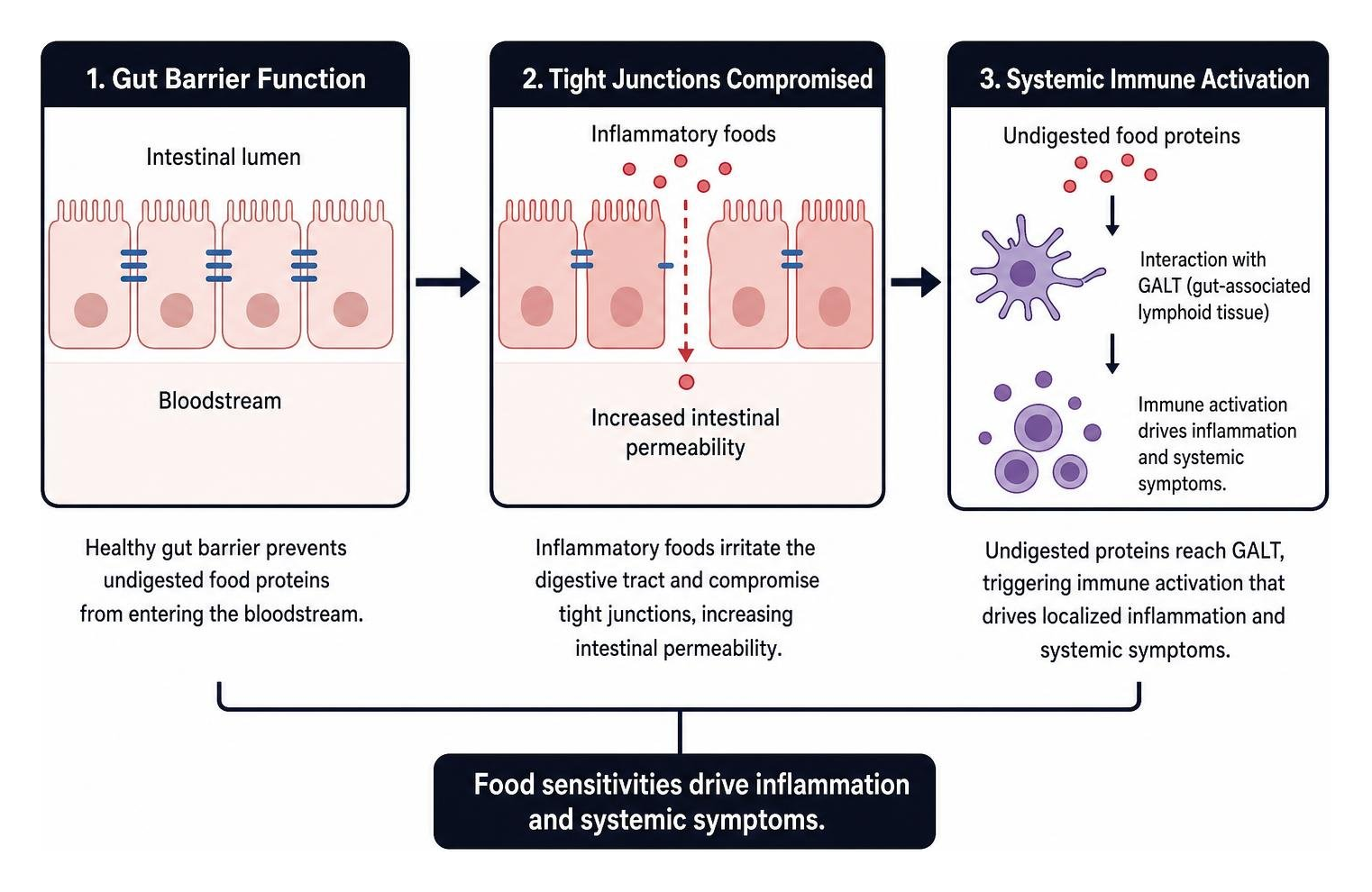
When inflammatory foods irritate the digestive tract, they compromise the intestinal mucosal barrier. This increased intestinal permeability allows undigested food proteins to interact directly with gut-associated lymphoid tissue (GALT). The resulting immune activation drives localized inflammation and systemic symptoms throughout the body.
Clinical research demonstrates the broad efficacy of structured dietary elimination across diverse conditions:
Irritable Bowel Syndrome (IBS): IBS affects roughly 11.2% of people globally. In a classic clinical study of 150 patients with IBS, individuals following an elimination diet achieved a 10% reduction in overall symptoms, while those who adhered most strictly saw improvements of up to 26%.
Eosinophilic Esophagitis (EoE): EoE affects approximately 1 in 1,000 individuals, and cases continue to rise. Clinical trials show that more than 75% of EoE patients achieve histological remission and symptom relief through targeted dietary elimination. Removing just milk, eggs, and wheat leads to roughly a 50% improvement in EoE markers.
Chronic Migraines: Migraines affect roughly 39 million Americans. A two-month dietary elimination study involving 50 frequent migraine sufferers demonstrated significant reductions in headache frequency and severity.
As detailed in medical literature on evidence on elimination protocols, systematically removing antigenic proteins gives the gut mucosa time to recover (Malone & Daley, 2024). Once the baseline inflammatory burden clears, reintroducing individual foods provides clear, unequivocal data on which foods support health and which trigger symptoms.
The Master Elimination Diet Food List: What to Eat and What to Avoid
Executing a successful protocol requires absolute clarity on food choices. The primary goal is maintaining nutrient density using whole, anti-inflammatory foods while eliminating common antigenic proteins, artificial additives, and gut irritants.
When shopping and preparing meals, adhere to established clinical dietary guidelines to eliminate hidden ingredients. Always read labels carefully: common irritants like soy lecithin, dairy whey, wheat flour, and cornstarch frequently hide in pre-packaged sauces, broths, and seasonings. Cross-contamination in shared manufacturing facilities can also disrupt your clinical reset.
Food Category | Foods to Include (Eat Freely) | Foods to Exclude (Avoid Completely) |
|---|---|---|
Proteins | Pasture-raised poultry (chicken, turkey), grass-fed lamb, wild game (venison, bison), clean cold-water fish (salmon, sardines, mackerel) | Conventional feedlot beef, pork, shellfish, eggs, soy products (tofu, tempeh, edamame), processed meats (sausages, bacon, hot dogs) |
Vegetables | Broccoli, cauliflower, Brussels sprouts, kale, spinach, arugula, cabbage, carrots, zucchini, cucumbers, asparagus, sweet potatoes, parsnips, celery | Nightshades (tomatoes, white potatoes, eggplants, bell peppers, cayenne, paprika), corn |
Grains & Starches | Quinoa, brown rice, wild rice, millet, buckwheat, amaranth, teff, arrowroot, tapioca, cassava | Wheat, barley, rye, spelt, kamut, triticale, conventional gluten-free baked goods containing corn or soy |
Legumes | None (on comprehensive protocols) or limited soaked lentils/chickpeas if tolerated | Soybeans, peanuts, black beans, pinto beans, kidney beans, canned legumes with additives |
Fats & Oils | Extra virgin olive oil, avocado oil, coconut oil, unrefined coconut butter, ghee (if dairy-free protocol permits), flaxseed oil | Canola oil, soybean oil, corn oil, cottonseed oil, peanut oil, margarine, commercial mayonnaise |
Fruits | Blueberries, raspberries, blackberries, apples, pears, cherries, cantaloupe, pomegranates, avocado | Citrus fruits (oranges, grapefruits, lemons, limes—on strict plans), dried fruits with sulfur dioxide, high-sugar fruit juices |
Nuts & Seeds | Chia seeds, flaxseeds, pumpkin seeds, sunflower seeds (if tolerated on moderate plans) | Peanuts, tree nuts (almonds, cashews, walnuts, pecans, macadamias, Brazil nuts—on broad protocols) |
Beverages | Filtered water, herbal teas (peppermint, chamomile, rooibos), chicory root coffee substitute, bone broth | Coffee, black tea, energy drinks, soda, alcohol, commercial sweetened fruit juices |
Spices & Condiments | Turmeric, ginger, garlic, rosemary, thyme, oregano, sea salt, apple cider vinegar, fresh herbs | Chili powder, cayenne pepper, paprika, curry powder containing nightshades, soy sauce, ketchup, barbecue sauce, artificial sweeteners |
Foods to Include on Your Elimination Diet Food List
Focusing on abundance prevents dietary fatigue. Your daily meals should center around diverse, nutrient-dense ingredients:
Clean Animal & Plant Proteins: Prioritize organic pasture-raised chicken and turkey, grass-fed lamb, wild game, and low-mercury cold-water fish like wild Alaskan salmon, sardines, and anchovies. These supply bioavailable amino acids essential for mucosal wall regeneration.
Non-Nightshade Vegetables: Fill your plate with leafy greens (kale, collards, chard, spinach), cruciferous vegetables (broccoli, cabbage, cauliflower, bok choy), and prebiotic-rich root vegetables (carrots, parsnips, sweet potatoes, turnips, burdock root).
Gluten-Free Pseudograins: Utilize ancient grains and seeds such as quinoa, buckwheat, wild rice, amaranth, and millet to provide dietary fiber and sustained energy.
Healthy Fats: Support cellular membranes and hormonal balance with cold-pressed extra virgin olive oil, avocado oil, fresh avocados, unrefined coconut oil, and coconut milk.
Low-Glycemic Fruits: Fresh or frozen organic berries (blueberries, blackberries, raspberries), crisp apples, pears, and pomegranates deliver protective polyphenols without spiking blood glucose.
Anti-Inflammatory Herbs & Aromatics: Season foods generously with fresh ginger, turmeric root, garlic, rosemary, thyme, cilantro, parsley, and unrefined sea salt.
Foods to Avoid on Your Elimination Diet Food List
To calm immune reactivity, strictly exclude all primary allergens and inflammatory triggers for the entire initial phase:
Dairy Proteins: Eliminate all forms of cow, goat, and sheep dairy—including milk, cheese, yogurt, butter, whey, casein, and dairy-derived protein powders. Lactose-free items are not acceptable substitutes because they still contain milk proteins.
Gluten-Containing Grains: Remove all wheat derivatives (bulgur, farro, semolina, spelt), rye, barley, malt, and non-certified oats due to high rates of cross-contact.
Soy & Legumes: Exclude soybeans, soy sauce, tamari, tofu, tempeh, edamame, textured vegetable protein (TVP), peanuts, and peanut butter.
Eggs: Remove whole eggs, egg whites, and egg yolks, as well as processed products containing albumin or powdered eggs.
Shellfish & Processed Meats: Avoid shrimp, crab, lobster, clams, mussels, and oysters. Strictly avoid cured meats, sausages, hot dogs, and deli slices preserved with nitrates or sodium erythorbate.
Nightshade Botanicals: (On moderate-to-high intensity protocols) Exclude tomatoes, white potatoes, eggplants, bell peppers, chili peppers, cayenne, and spice blends containing paprika.
Stimulants, Alcohol & Added Sugars: Eliminate coffee, black and green tea, energy beverages, wine, beer, spirits, refined cane sugar, high-fructose corn syrup, agave nectar, and artificial sweeteners (sucralose, aspartame, acesulfame potassium).
Step-by-Step Protocol: Elimination, Reintroduction, and Intensity Levels
Executing an elimination diet requires a systematic structure. We recommend the four-phase PACE framework (Plan, Avoid, Challenge, Evaluate) to ensure safety, consistency, and definitive outcomes.
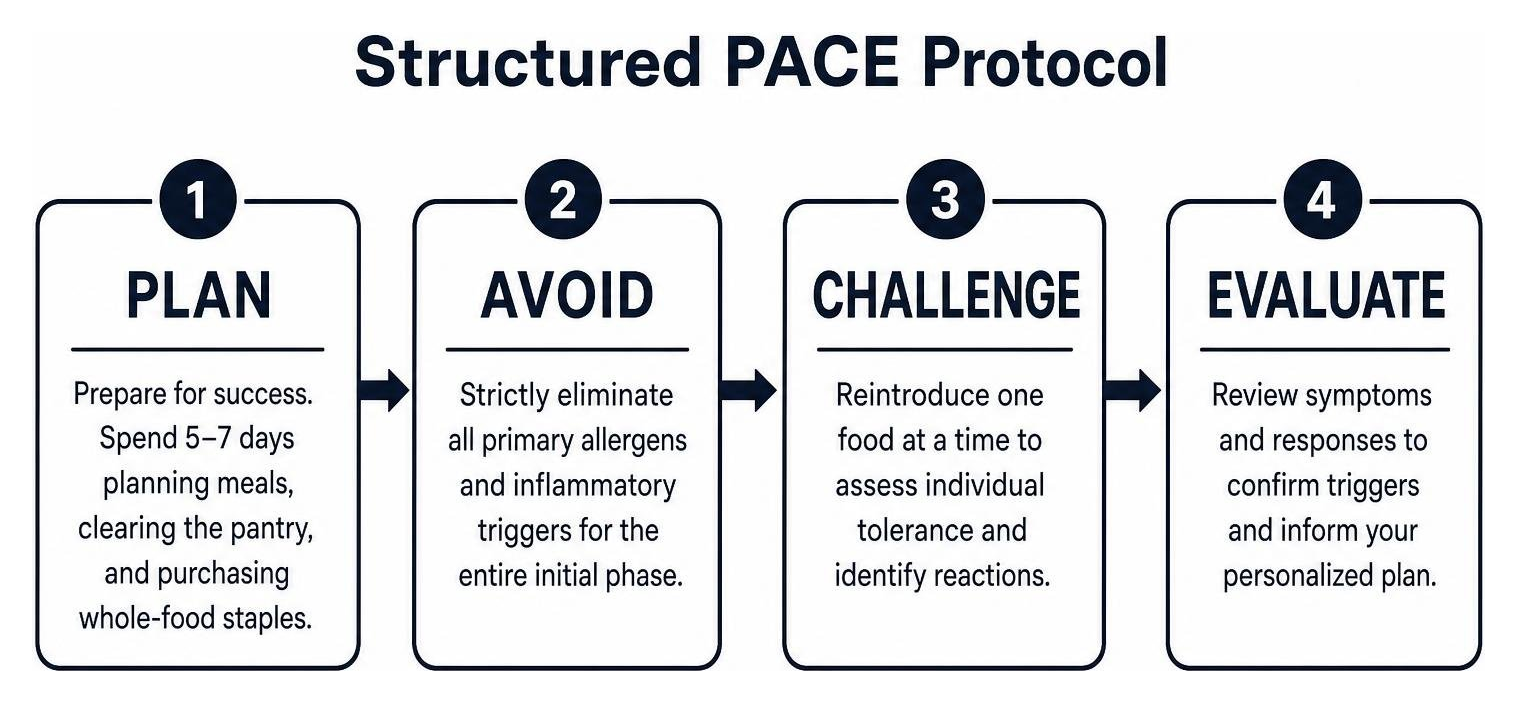
Before changing your diet, spend five to seven days planning meals, clearing the pantry of temptations, and purchasing whole-food staples. Understanding when to run targeted testing versus when to rely on clinical trials is essential. Our functional medicine lab selection framework helps clinicians and patients determine whether comprehensive microbiome mapping, organic acid testing, or dietary interventions should take priority.
Determining Protocol Intensity from 1-FED to Comprehensive
Elimination protocols are not one-size-fits-all. Match the level of restriction to clinical presentation, symptom severity, and patient bandwidth:
Low-Intensity Protocols (1-FED / 2-FED): Target one or two primary culprits—most commonly dairy alone or dairy plus gluten. This approach works well for mild gastrointestinal complaints, pediatric populations, or patients at risk of dietary overwhelm.
Moderate-Intensity Protocols (4-FED): Systematically eliminates cow's dairy, gluten/wheat, eggs, and soy. This protocol represents the clinical standard for initial interventions in eosinophilic esophagitis and moderate atopic conditions.
Comprehensive Protocols (6-FED & Beyond): The standard Six-Food Elimination Diet removes dairy, wheat, soy, eggs, tree nuts/peanuts, and fish/shellfish. Higher-intensity plans also exclude nightshades, corn, legumes, citrus, caffeine, and alcohol for complex autoimmune, dermatological, or multi-system inflammatory conditions.
The Reintroduction Phase and the Rule of 3s
The elimination phase lasts three to six weeks. Once symptoms stabilize and a clear baseline is established, begin the systematic challenge phase using the Rule of 3s.
Never reintroduce multiple foods simultaneously. If you reintroduce cheese and wheat bread on the same day and wake up with joint pain and a headache, you will not know which food triggered the reaction.
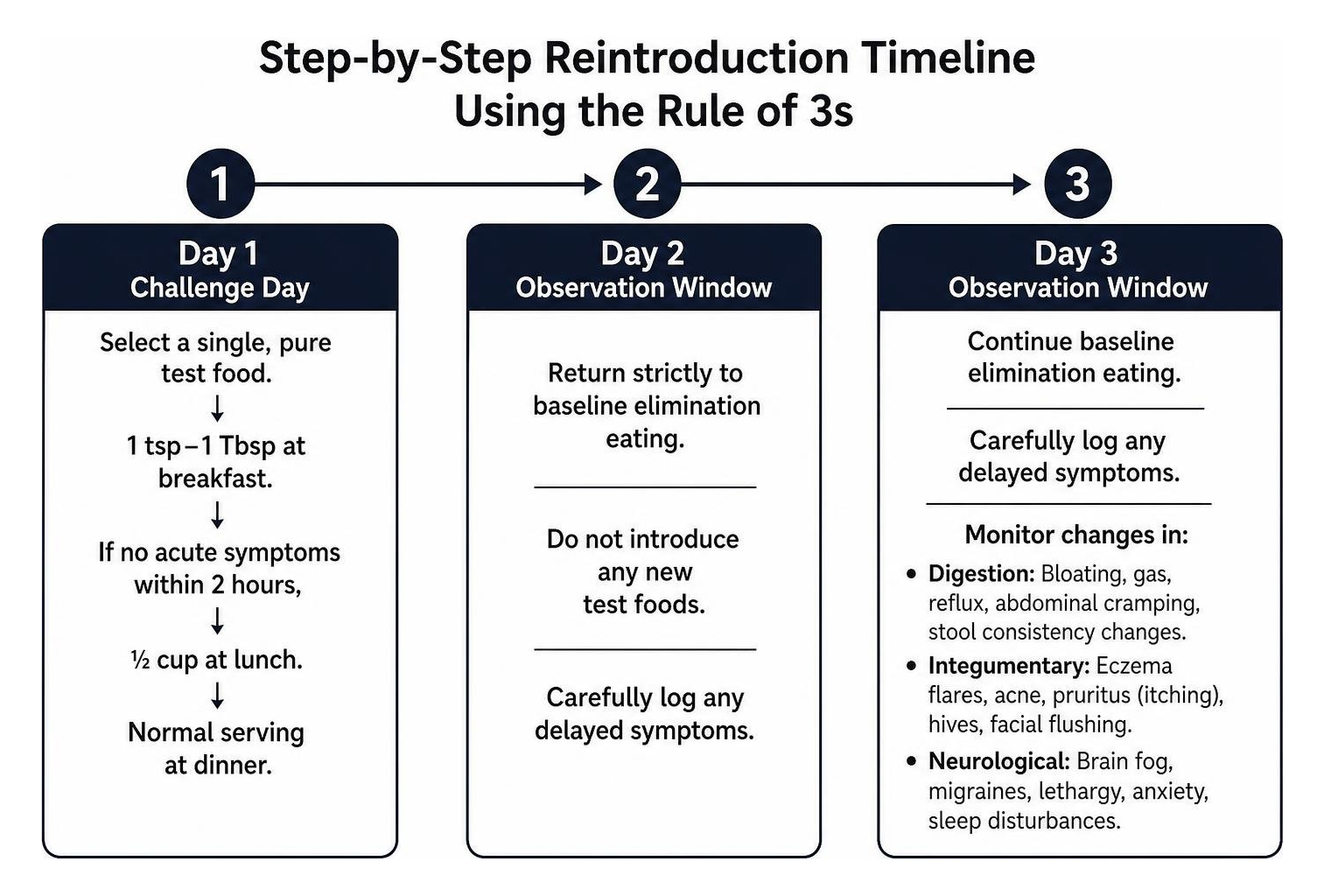
Day 1 (Challenge Day): Select a single, pure test food (for example, organic whole milk or plain scrambled eggs). Consume a small test portion (1 teaspoon to 1 tablespoon) at breakfast. If no acute symptoms emerge within two hours, consume a half-cup portion at lunch, and a normal serving at dinner.
Days 2 and 3 (Observation Window): Return strictly to baseline elimination eating. Do not introduce any new test foods. Carefully log any delayed symptoms, monitoring changes in:
Digestion: Bloating, gas, reflux, abdominal cramping, stool consistency changes.
Integumentary: Eczema flares, acne, pruritus (itching), hives, facial flushing.
Neurological: Brain fog, migraines, lethargy, anxiety, sleep disturbances.
Musculoskeletal: Joint stiffness, myalgia, fluid retention.
Day 4 (Evaluation): If no reactions occurred across Days 1 through 3, record that food as safe. If adverse symptoms appear, immediately remove the challenge food, return to baseline until symptoms completely resolve, and log the item as a confirmed inflammatory trigger.
Safety, Nutritional Adequacy, and Clinical Considerations
While a short-term elimination diet is a powerful diagnostic intervention, poorly planned protocols can risk nutrient deficiencies, caloric deficits, and social fatigue. Maintaining clinical safety throughout the process is paramount.
Micronutrient Deficiencies: Removing all dairy products reduces dietary calcium and vitamin D intake. Compensate by consuming bone-in canned sardines, collard greens, kale, broccoli, sesame tahini (if seeds are permitted), and fortified dairy-free alternatives. When eliminating all grains, emphasize leafy greens and sweet potatoes to maintain potassium and magnesium balance.
Caloric & Fiber Density: Patients occasionally lose weight unintentionally due to the natural satiety of whole, unprocessed foods. Ensure adequate caloric intake by incorporating generous portions of clean complex carbohydrates (quinoa, sweet potatoes, squash) and healthy fats (olive oil, coconut butter, avocados).
Gut Microbiome Alterations: Extended, overly restrictive diets can decrease beneficial commensal bacteria, including bifidobacteria and butyrate-producing microbes. For this reason, the strict elimination phase should not extend indefinitely. The goal is always the broadest, most diverse diet tolerated.
Disordered Eating Risks: Individuals with a history of orthorexia, anorexia, or severe anxiety around food should not undertake unsupervised elimination protocols. In these cases, focus on gentle food additions and foundational gut support rather than rigid restriction.
Functional medicine seeks to address underlying physiological drivers rather than simply swapping prescription medications for handfuls of supplements. Relying solely on pill-based solutions misses the bigger picture, as explained in our guide on why replacing drugs with supplements not functional medicine is an incomplete approach. Nutrition remains the foundation of sustainable health.
Frequently Asked Questions About Elimination Diets
How long should the elimination phase last?
The elimination phase should last between three to six weeks. Two to three weeks is generally the minimum duration needed to clear circulating immune complexes and quiet gastrointestinal inflammation. Extending the elimination phase beyond six weeks without beginning reintroductions is rarely beneficial and may increase the risk of micronutrient deficiencies and microbiome shifts. If symptoms resolve earlier, you can begin the reintroduction phase at week three or four.
What should I do if my symptoms do not improve during elimination?
If symptoms fail to improve after three to four weeks of strict adherence, consider three potential issues:
Hidden Exposures: Carefully review all condiments, supplements, tea blends, medications, and restaurant meals for hidden traces of gluten, soy, dairy, or cornstarch.
Unaddressed Sensitivities: You may be reacting to foods permitted on standard plans, such as nightshades, histamines, high-FODMAP foods, or specific proteins like poultry.
Non-Dietary Drivers: Chronic symptoms may stem from small intestinal bacterial overgrowth (SIBO), intestinal parasites, mold mycotoxin exposure, heavy metal burdens, or severe autonomic nervous system dysregulation. In these cases, re-evaluate the protocol with a qualified functional medicine practitioner.
Can children safely complete an elimination diet?
Yes, children can safely undertake elimination protocols under direct pediatric medical and dietetic supervision. Because children have high micronutrient and caloric demands for growth and cognitive development, overly broad restrictions are discouraged.
A modified 1-FED (dairy removal) or 2-FED (dairy and wheat removal) is typically the preferred initial approach for pediatric eczema, chronic constipation, or suspected eosinophilic esophagitis. Never give commercial plant-based milk alternatives (such as almond or rice milk) as primary nutrition to infants under one year of age; use appropriate elemental or hypoallergenic formulas recommended by your pediatrician.
Conclusion
A structured elimination diet provides clarity and clinical insight for resolving chronic, unexplained symptoms. Rather than guessing which foods cause your distress or relying on variable sensitivity tests, removing common dietary triggers and systematically reintroducing them reveals your unique biological blueprint.
Healing the digestive tract restores systemic vitality, energy levels, and mental clarity. Use our comprehensive clinical resources to guide your dietary reset:
Download our Comprehensive Elimination Diet Food Plan to print your complete shopping and meal planning checklist.
Explore advanced protocols and case studies on our Functional Medicine Blog.
Take control of your metabolic and digestive health today. By treating food as medicine and listening to your body's signals, you can build a sustainable, nourishing way of eating that supports lifelong health.
References
Jordan C. Malone, Sharon F. Daley. "Elimination Diets." StatPearls Publishing, 2024. NBK599543.