
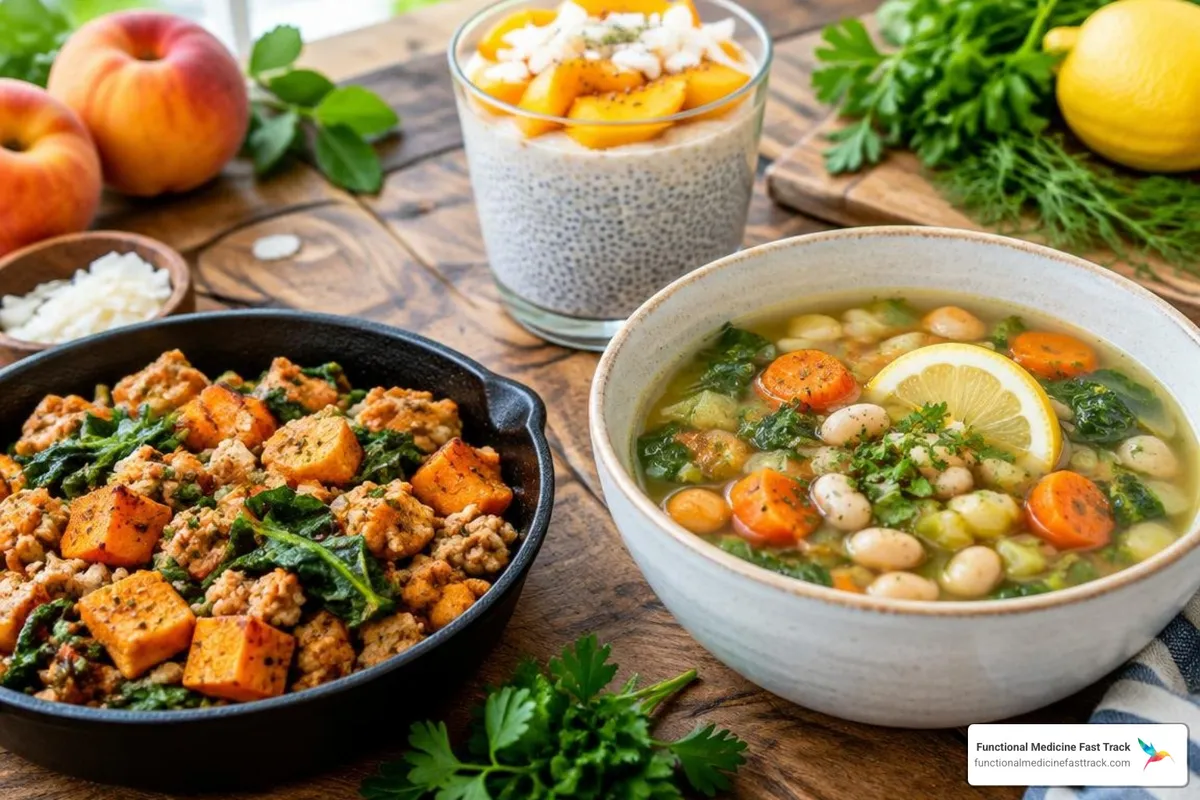
6 Food Elimination Diet Recipes That Actually Taste Good
Six Food Elimination Diet Recipes for Every Part of the Day
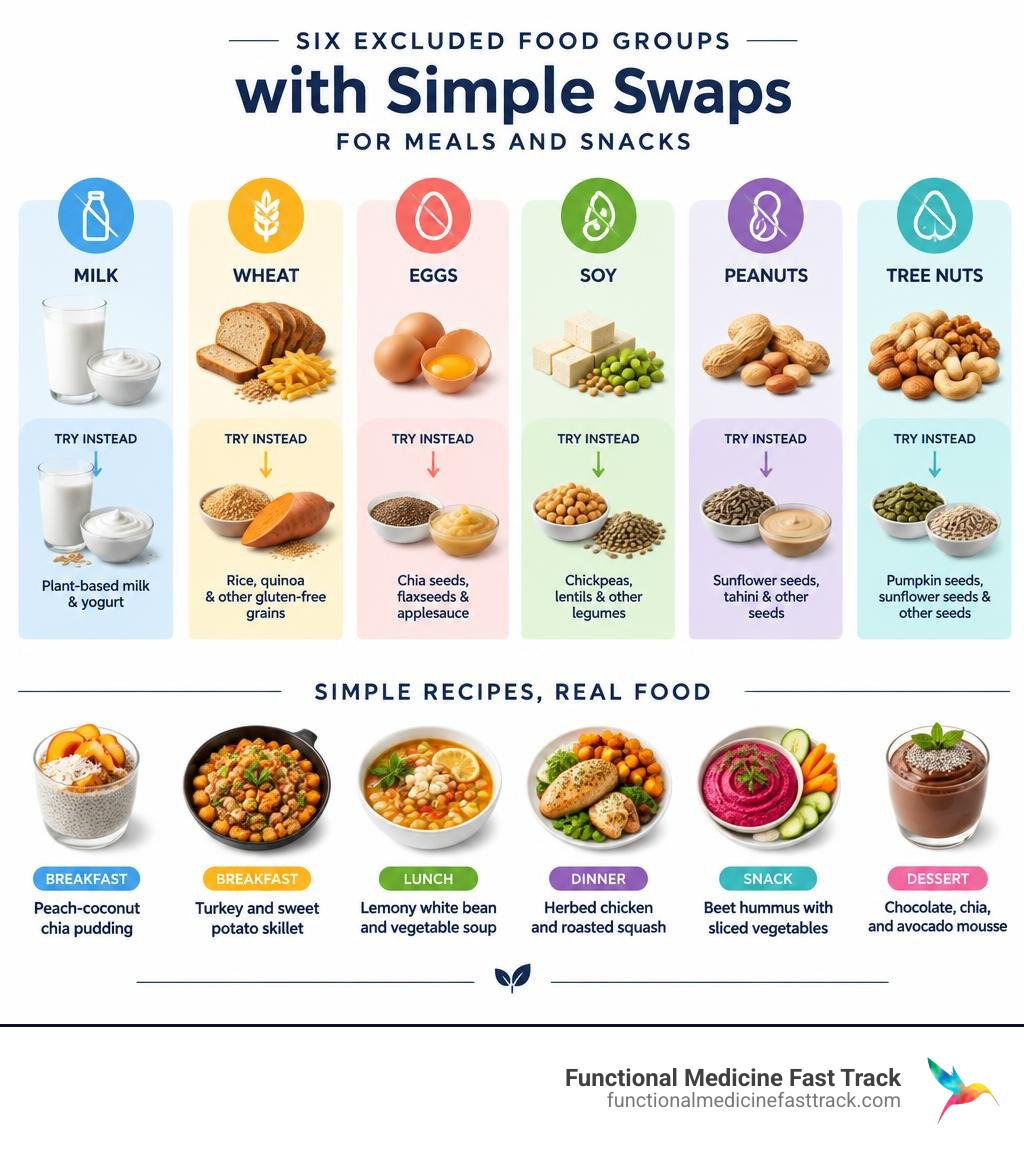
Need 6 food elimination diet recipes you can make without milk, wheat, eggs, soy, peanuts or tree nuts, or seafood? Start with these:
Breakfast: Peach-coconut chia pudding.
Breakfast: Turkey and sweet potato skillet.
Lunch: Lemony white bean and vegetable soup.
Dinner: Herbed chicken and roasted squash.
Snack: Beet hummus with sliced vegetables.
Dessert: Chocolate, chia, and avocado mousse.
Use plain ingredients and check every packaged item, including broth, coconut milk, and chocolate, for excluded ingredients. The six-food elimination diet is often used by people with eosinophilic esophagitis (EoE), but it is restrictive. Work with a healthcare professional to plan meals that meet your nutrition needs.
I'm Garric Vosloo. After more than 30 years consulting with patients and owning two practices, I know that useful food guidance has to work in a real kitchen; these 6 food elimination diet recipes are a practical place to start.
What Is the Six-Food Elimination Diet Approach?
The Six-Food Elimination Diet (SFED) is an evidence-based dietary intervention designed to help identify hidden immunologic or digestive triggers. It is most widely recognized as a non-pharmacological cornerstone for managing eosinophilic esophagitis (EoE)—a chronic allergic inflammatory condition of the esophagus—as well as other eosinophilic gastrointestinal disorders (EGIDs) and complex food sensitivities.
When you follow this approach, you temporarily remove the six most common allergenic food groups:
Cow’s Milk & Dairy: Including butter, yogurt, cheese, whey, and casein.
Wheat: Including spelt, semolina, farro, and modern wheat derivatives.
Hen’s Eggs: Both whites and yolks, as well as albumin.
Soy: Including tofu, edamame, soy sauce, and soy protein isolate.
Peanuts & Tree Nuts: Almonds, walnuts, cashews, hazelnuts, pecans, and pistachios.
Fish & Shellfish: All finned fish, crustaceans (shrimp, crab, lobster), and mollusks (clams, oysters, mussels).
Removing these categories gives the gastrointestinal lining an opportunity to calm inflammation and regenerate. To understand the broader scope of how therapeutic eating supports recovery, you can review our elimination diet food list for an extensive breakdown of whole, nourishing foods that remain safe to enjoy.
Navigating the Six Excluded Food Groups and Hidden Ingredients
Adhering strictly to the SFED requires becoming an ingredient detective. Food manufacturers often use allergen derivatives as binders, emulsifiers, texturizers, and flavor enhancers. A single accidental exposure to a hidden allergen can trigger esophageal inflammation and cloud your assessment.
When examining ingredient panels, keep an eye out for these subtle forms of excluded allergens:
Hidden Dairy: Whey, casein, caseinate, lactalbumin, ghee, curds, natural butter flavoring, nougat, and caramel color (which occasionally uses lactose).
Hidden Wheat: Malt extract, modified food starch, hydrolyzed wheat protein, bulgur, durum, farina, graham flour, and dextrin.
Hidden Eggs: Lysozyme, albumin/egg white solids, globulin, livetin, ovalbumin, and mayonnaise.
Hidden Soy: Hydrolyzed vegetable protein (HVP), textured vegetable protein (TVP), soy lecithin, natural flavoring, vegetable broth concentrates, and tamari.
Hidden Nuts: Marzipan, artificial nut extracts, praline, nut distillates, and certain pesto or bakery items.
Hidden Seafood: Worcestershire sauce, Caesar dressings, fish sauce, surimi (imitation crab), and Asian curry pastes containing shrimp paste.
To reduce cross-contact risks at home, clean preparation surfaces thoroughly, use separate cutting boards, and avoid bulk-bin goods or shared toaster slots. If you are just starting out, our elimination diet phase 1 guide provides practical tips for setting up an allergen-safe home kitchen.
Allergen Substitutions for SFED Cooking and Baking
Removing these staples might initially feel like it limits your culinary options, but modern whole-food cooking offers versatile, allergen-free alternatives:
Common Allergen | Culinary Role | Compliant SFED Substitute | Practical Usage Tip |
|---|---|---|---|
Cow’s Milk / Cream | Moisture, creaminess, fat base | Full-fat canned coconut milk, certified GF oat milk, tigernut milk | Use coconut cream 1:1 for heavy cream in savory sauces and soups. |
Hen’s Eggs | Binding & leavening | Ground flaxseed or chia "egg", unsweetened applesauce, mashed banana | Combine 1 tbsp ground flax with 2.5 tbsp warm water; let gel for 5 minutes. |
Wheat Flour | Structure, thickening, gluten elasticity | Cassava flour, arrowroot starch, sweet potato flour, brown rice flour | Cassava flour mimics all-purpose flour at roughly a 1:1 ratio by weight. |
Soy Sauce | Umami, depth, sodium balance | Organic coconut aminos | Offers a rich, slightly sweeter umami profile; reduce added sweeteners. |
Peanut / Tree Nut Butter | Healthy fats, spreads, rich texture | Sunflower seed butter (sunbutter), pumpkin seed butter, tahini | Pumpkin seed butter adds an earthy flavor and is rich in zinc and magnesium. |
Cheese / Parmesan | Savory richness, umami topping | Unfortified nutritional yeast flakes | Adds a comforting, savory dimension to roast veggies, broths, and grain bowls. |
6 Food Elimination Diet Recipes for Balanced Daily Nutrition
Maintaining variety and meal satisfaction is key to sustaining an elimination approach. Below are six nutrient-dense recipes that leave out all six major allergens while delivering comforting flavors, satisfying textures, and balanced macronutrients.
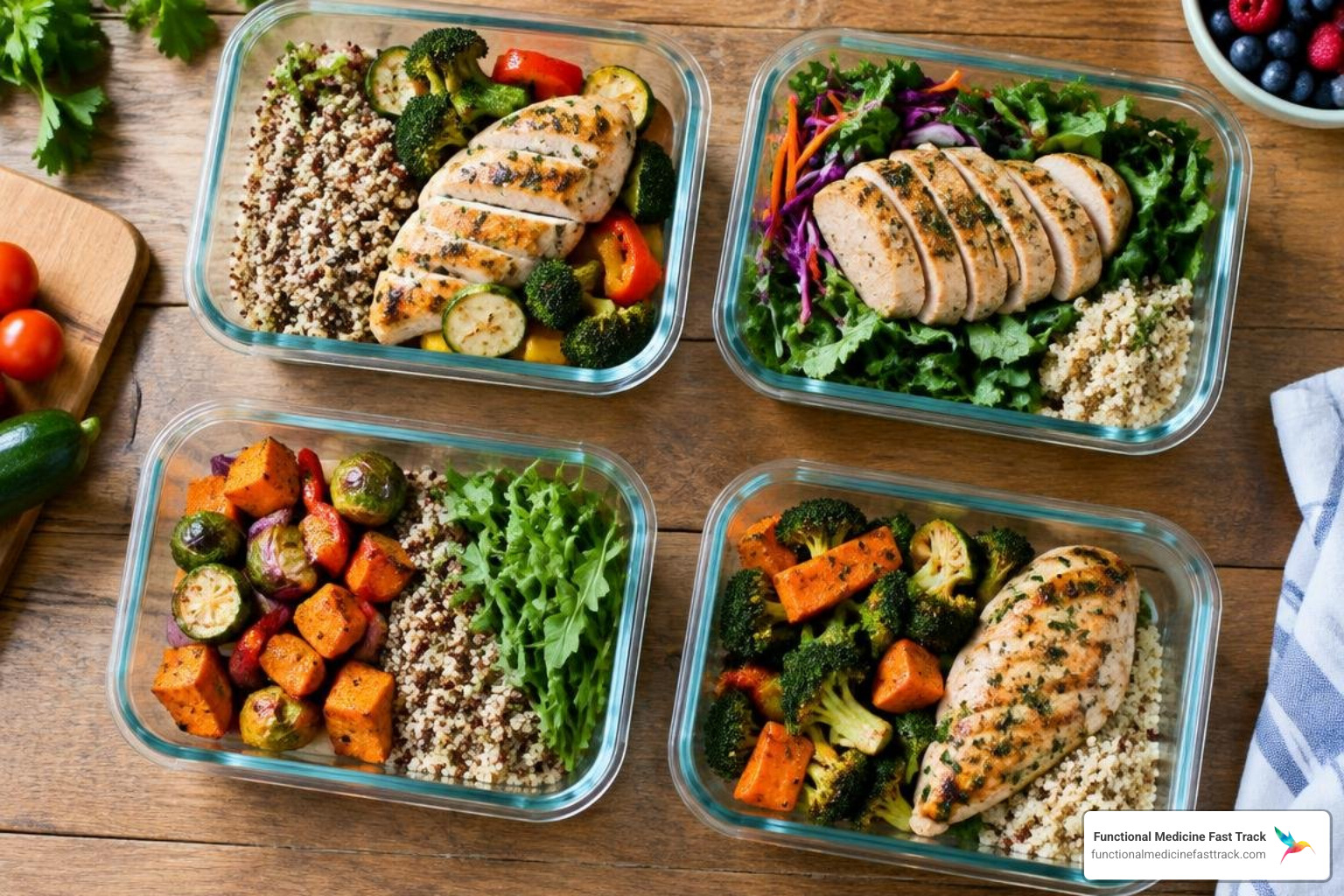
Easy Breakfast 6 Food Elimination Diet Recipes
Recipe 1: Warm Peach-Coconut Chia Porridge
A soothing, fiber-rich morning bowl that is naturally sweet and supports digestive motility.
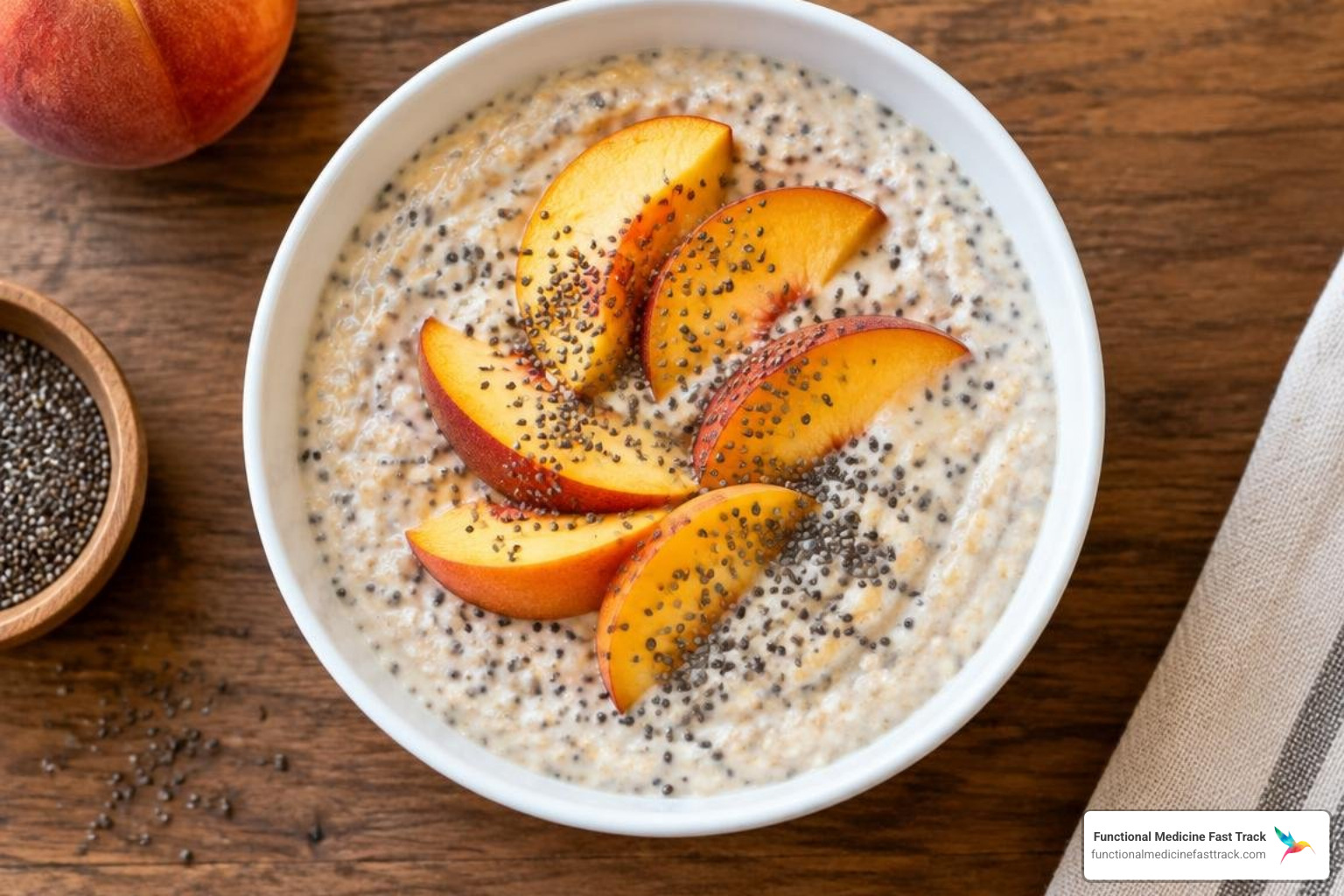
Prep time: 5 minutes | Cook time: 8 minutes | Servings: 2
Ingredients:
1/4 cup whole black or white chia seeds
1/2 cup organic coconut milk (canned, full-fat)
1 cup warm water (or certified gluten-free oat milk)
2 ripe peaches, pitted and diced (or thawed organic frozen peaches)
1 tsp pure vanilla bean powder or extract (allergen-safe)
1/2 tsp ground Ceylon cinnamon
1 tbsp raw pumpkin seeds (pepitas) for topping
1 tsp pure maple syrup (optional)
Instructions:
In a small saucepan over medium-low heat, combine the diced peaches, cinnamon, and vanilla with 2 tablespoons of water. Simmer for 3–4 minutes until softened.
In a medium bowl, whisk together the chia seeds, coconut milk, and remaining warm water until evenly dispersed.
Pour the chia mixture into the saucepan with the peaches, reducing the heat to low. Whisk continuously for 3–4 minutes as the chia seeds absorb the liquid and thicken into a warm porridge.
Spoon into two serving bowls. Top with raw pumpkin seeds and a light drizzle of maple syrup if desired. Serve immediately.
Recipe 2: Savory Ground Turkey and Sweet Potato Skillet
A grounding, protein-packed breakfast rich in complex carbohydrates and anti-inflammatory spices.
Prep time: 10 minutes | Cook time: 20 minutes | Servings: 3
Ingredients:
1 lb lean organic ground turkey (93/7)
2 medium garnet sweet potatoes, peeled and cut into 1/2-inch cubes
2 cups fresh organic baby spinach or chopped Tuscan kale
1 tbsp cold-pressed extra-virgin olive oil or avocado oil
1/2 tsp ground turmeric
1/2 tsp garlic powder
1/2 tsp dried thyme
1/2 tsp sea salt
Instructions:
Heat the olive oil in a large cast-iron or stainless steel skillet over medium heat.
Add the cubed sweet potatoes, season with half the sea salt and thyme, and cover the skillet with a lid. Cook for 8–10 minutes, stirring occasionally, until tender and lightly browned.
Push the sweet potatoes to one side of the skillet and crumble the ground turkey into the empty side.
Sprinkle the turmeric, garlic powder, and remaining salt over the turkey. Sauté for 6–8 minutes, breaking up the meat with a wooden spoon until browned and cooked through.
Stir the sweet potatoes and turkey together, add the greens, and toss gently for 1–2 minutes until wilted. Divide into bowls and serve hot.
Nutritious Dinner and Lunch 6 Food Elimination Diet Recipes
Recipe 3: Slow-Simmered Lemony White Bean and Vegetable Soup
A light yet deeply satisfying lunch packed with prebiotic fiber and clean plant-based protein.
Prep time: 15 minutes | Cook time: 30 minutes | Servings: 4
Ingredients:
2 cans (15 oz each) organic cannellini beans, rinsed and drained
1 medium yellow onion, diced
3 medium carrots, sliced into rounds
3 stalks celery, sliced
2 cloves garlic, minced
4 cups low-sodium organic chicken bone broth or vegetable broth
2 cups chopped curly kale (stems removed)
2 tbsp extra-virgin olive oil
Zest and juice of 1 organic lemon
1 bay leaf
1/2 tsp sea salt and freshly ground black pepper (to taste)
Instructions:
Warm the olive oil in a large stockpot over medium heat. Add the diced onion, carrots, and celery. Sauté for 6–8 minutes until the vegetables begin to soften.
Add the minced garlic and cook for 1 minute until fragrant.
Pour in the rinsed cannellini beans, broth, and add the bay leaf. Bring the mixture to a gentle boil, then lower the heat, cover, and let simmer for 20 minutes.
Remove the bay leaf. Using an immersion blender, briefly pulse the soup 2–3 times to create a creamier base while keeping most beans whole.
Stir in the chopped kale, lemon zest, and lemon juice. Simmer for 3–4 minutes until the kale is bright green and tender. Season with salt and pepper, then ladle into warm bowls.
Recipe 4: Sheet-Pan Herbed Chicken with Delicata Squash and Brussels Sprouts
A low-mess, hands-off dinner that delivers clean poultry protein and caramelized roasted autumn vegetables.
Prep time: 15 minutes | Cook time: 35 minutes | Servings: 4
Ingredients:
1.5 lbs boneless, skinless organic chicken thighs or breasts, cut into bite-sized pieces
1 medium delicata squash, seeded, halved lengthwise, and sliced into 1/2-inch half-moons
1 lb fresh Brussels sprouts, trimmed and halved
2.5 tbsp extra-virgin olive oil or melted unrefined coconut oil
1 tbsp coconut aminos
1 tsp dried rosemary, crushed
1 tsp dried oregano
1/2 tsp onion powder
3/4 tsp fine sea salt
Instructions:
Preheat your oven to 400°F (200°C) and line a large rimmed baking sheet with unbleached parchment paper.
In a small bowl, whisk together the olive oil, coconut aminos, crushed rosemary, oregano, onion powder, and sea salt.
Arrange the chicken pieces, sliced delicata squash, and halved Brussels sprouts in a single, uncrowded layer on the baking sheet.
Drizzle the herb and oil marinade evenly across the ingredients. Use your hands or tongs to toss everything until thoroughly coated.
Roast for 30–35 minutes, stirring halfway through, until the chicken reaches an internal temperature of 165°F (74°C) and the vegetables are tender with caramelized edges. Serve directly from the pan.
Nutrient-Dense Snacks and Allergen-Free Treats
Recipe 5: Vibrant Roasted Beet Hummus
An earthy, nut-free, and legume-free dip with a bright color that pairs well with fresh vegetables and seed crackers.
Prep time: 10 minutes | Cook time: 40 minutes (if roasting beets fresh) | Servings: 6
Ingredients:
2 medium organic red beets, roasted, peeled, and cooled (or vacuum-packed pre-cooked plain beets)
1 can (15 oz) organic chickpeas, rinsed and drained (or 1.5 cups cooked white beans)
1/3 cup high-quality raw sesame tahini
3 tbsp fresh lemon juice
1 small garlic clove, peeled
2 tbsp extra-virgin olive oil
1/2 tsp ground cumin
1/2 tsp sea salt
1–2 tbsp ice water (as needed for silky texture)
Instructions:
Place the roasted beets, chickpeas, tahini, lemon juice, garlic, olive oil, cumin, and sea salt into the bowl of a high-speed food processor.
Process on high for 2 minutes, stopping to scrape down the sides with a rubber spatula.
With the motor running, drizzle in 1–2 tablespoons of ice water until the mixture turns smooth, airy, and creamy.
Transfer to a serving bowl, garnish with a swirl of olive oil and sesame seeds, and serve alongside sliced cucumbers, celery, carrot sticks, and artisan flax crackers.
Recipe 6: Dark Chocolate Chia and Avocado Mousse
A velvety dessert made without dairy, eggs, soy, or tree nuts.
Prep time: 10 minutes | Chill time: 30 minutes | Servings: 4
Ingredients:
2 ripe organic Hass avocados, pitted and peeled
1/4 cup unsweetened high-grade raw cacao powder
1/4 cup full-fat coconut cream (chilled solid portion from the top of the can)
3 tbsp pure dark maple syrup
1 tbsp whole chia seeds
1 tsp pure vanilla extract
Pinch of fine sea salt
Instructions:
Add the scooped avocado flesh, cacao powder, coconut cream, maple syrup, chia seeds, vanilla extract, and sea salt to a high-speed blender or food processor.
Blend on high for 90–120 seconds, stopping to scrape down the sides, until the mixture is uniform and silky smooth with no visible avocado pieces.
Spoon the mousse into four small ramekins or dessert glasses.
Place in the refrigerator for at least 30 minutes to firm up slightly. Garnish with fresh raspberries or a pinch of coarse sea salt before serving.
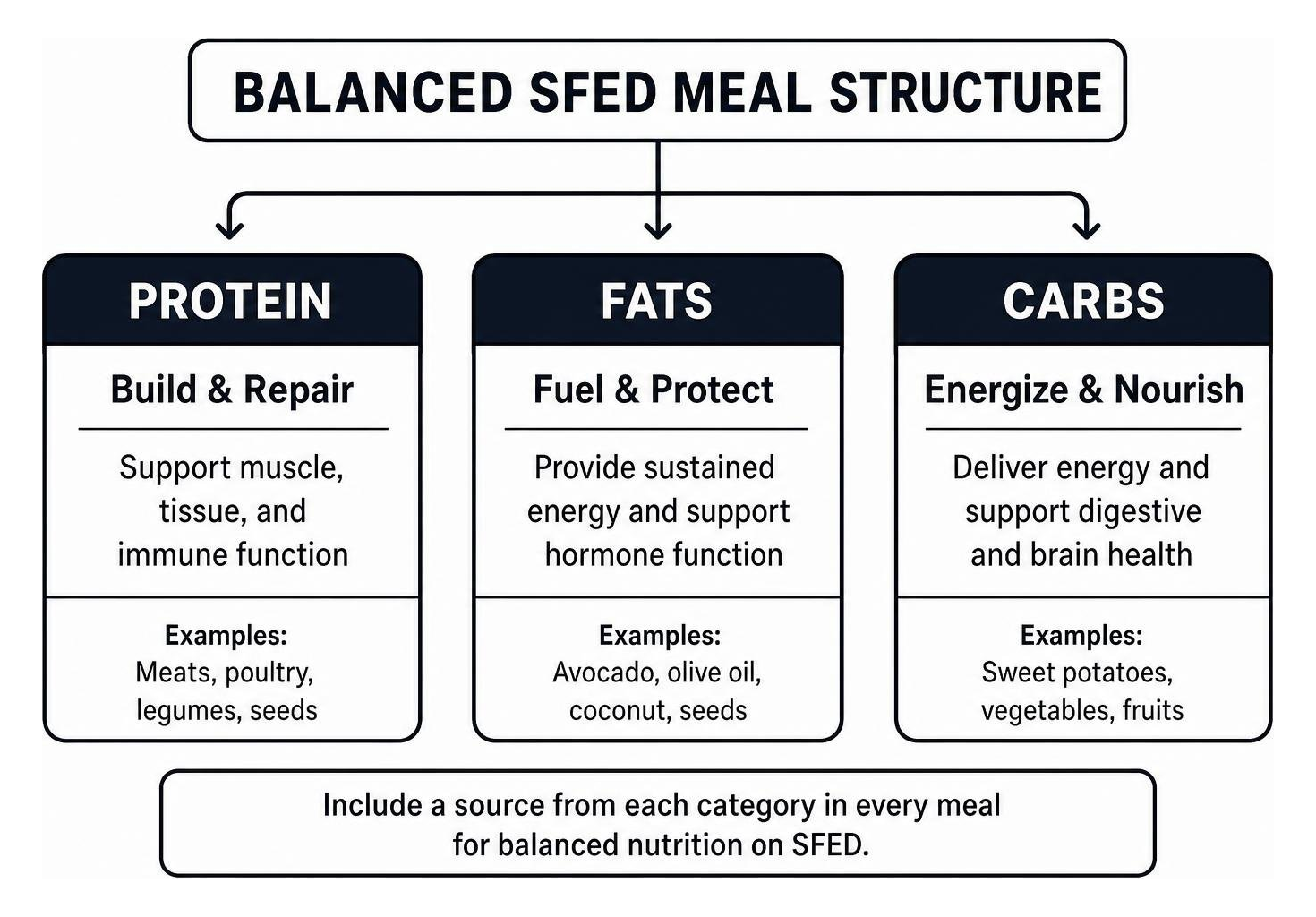
Maintaining Nutritional Completeness and Meal Planning on SFED
Removing six entire food groups can sometimes feel challenging for your daily micronutrient and macronutrient intake if not carefully planned. When you eliminate dairy, seafood, eggs, and nuts, you must deliberately incorporate alternative whole foods to avoid nutritional gaps.
Key Nutrients to Track and Safe Dietary Sources:
Calcium: Without cow’s milk products, support bone density and muscle function by eating leafy greens (collard greens, Tuscan kale, bok choy), fortified non-dairy milks, chia seeds, blackstrap molasses, and calcium-set organic tofu (if not sensitive to soy; otherwise stick to sesame tahini and greens).
Complete Protein: You can meet your protein needs by rotating pasture-raised poultry (chicken, turkey), grass-fed beef, lamb, bison, and clean plant sources like lentils, black beans, chickpeas, quinoa, and hemp seeds.
Omega-3 Essential Fatty Acids: In the absence of cold-water oily fish, prioritize ground flaxseed, chia seeds, hemp hearts, and cold-pressed camelina or flax oil, or ask your provider about algae-derived EPA/DHA supplements.
Zinc & Iron: Support mucosal healing, enzyme function, and oxygenation with pumpkin seeds (pepitas), grass-fed red meat, dark poultry cuts, and lentils. Pairing plant-based iron sources with vitamin C foods (such as lemon, bell peppers, or berries) helps enhance iron absorption.
To structure this approach step-by-step, consult our 21-day elimination diet guide to map out balanced meals over multiple weeks.
Managing Dining Out and Social Situations Without Stress
Navigating social events and restaurants during the elimination phase requires clear, upfront communication. Here are a few practical habits to stay on track:
Call Ahead: Contact restaurants during off-peak hours and explain your food allergies directly to the manager or head chef.
Keep Orders Simple: Choose simply prepared meals such as plain grilled steak or chicken breast, baked sweet potatoes, and steamed vegetables tossed in pure olive oil and sea salt.
Inquire About Cooking Oils and Fryers: Ask whether fryers share oil with battered items (wheat) or fish, and verify that meat is seared in olive or avocado oil rather than butter or soy-derived vegetable oils.
Pack Portable Backups: Carry portable, shelf-stable snacks such as unsweetened coconut flakes, sunflower seed butter packets, pumpkin seeds, or plain beef jerky free from soy and wheat binders.
Focus on the Company: At family gatherings or social celebrations, bring a generous, allergen-safe dish to share. This guarantees you have a safe meal while introducing others to delicious whole-food alternatives.
The Elimination and Reintroduction Timeline
The elimination diet is not meant to be permanent. It is a focused diagnostic and therapeutic tool designed to help you identify specific dietary triggers.
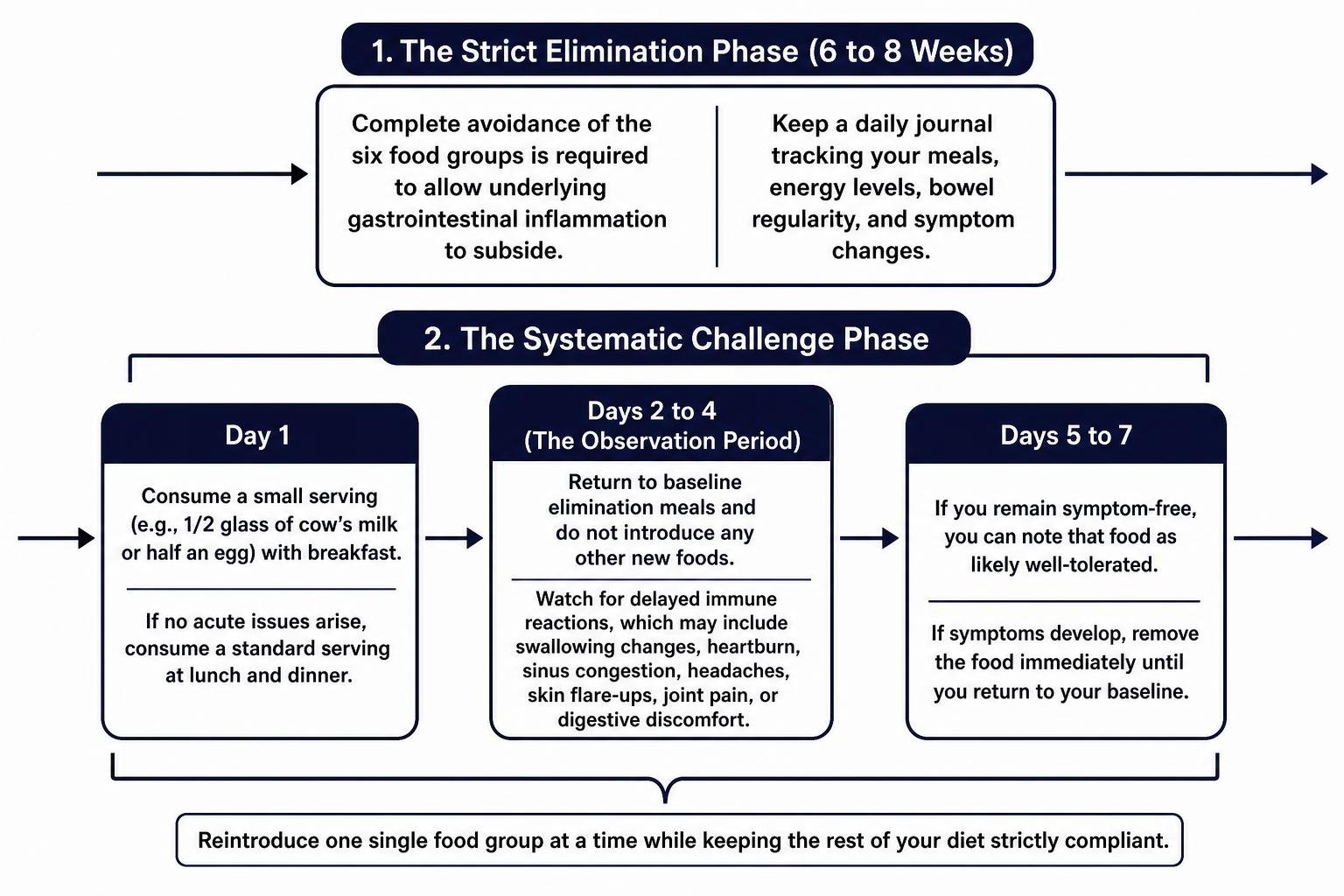
The Strict Elimination Phase (6 to 8 Weeks): Complete avoidance of the six food groups is required to allow underlying gastrointestinal inflammation to subside. During this time, keep a daily journal tracking your meals, energy levels, bowel regularity, and symptom changes.
The Systematic Challenge Phase: Reintroduce one single food group at a time while keeping the rest of your diet strictly compliant.
Day 1: Consume a small serving (e.g., 1/2 glass of cow's milk or half an egg) with breakfast. If no acute issues arise, consume a standard serving at lunch and dinner.
Days 2 to 4 (The Observation Period): Return to baseline elimination meals and do not introduce any other new foods. Watch for delayed immune reactions, which may include swallowing changes, heartburn, sinus congestion, headaches, skin flare-ups, joint pain, or digestive discomfort.
Days 5 to 7: If you remain symptom-free, you can note that food as likely well-tolerated. If symptoms develop, remove the food immediately until you return to your baseline.
Endoscopic Confirmation (For EoE): When used for eosinophilic esophagitis, gastroenterologists typically recommend scheduling a follow-up endoscopy with mucosal biopsies after an elimination block to visually and histologically verify esophageal healing.
For structured, professional guidance through every step of this process, explore our comprehensive elimination diet program.
Frequently Asked Questions About SFED Recipes and Approaches
How long should I stay on the six-food elimination diet?
The initial elimination phase typically lasts between 6 and 8 weeks. This window allows mucosal tissue time to calm inflammatory processes and provides a clean baseline before you begin systematically reintroducing individual foods.
Can I follow the six-food elimination diet as a vegetarian?
Yes, but it requires mindful planning. Because soy, eggs, and nuts are excluded, plant-based eaters rely primarily on legumes (chickpeas, lentils, black beans), seeds (hemp, chia, sunflower, pumpkin), and pseudo-grains (quinoa, amaranth, buckwheat) to meet their daily protein and amino acid needs.
What should I do if I accidentally consume an eliminated allergen?
If you accidentally eat an excluded ingredient, do not panic. Record the exposure, time, and specific ingredient in your food diary. Monitor and log any symptoms over the next 72 hours. Continue eating your compliant SFED meals. If you are preparing for a scheduled diagnostic endoscopy, notify your gastroenterologist, as they may suggest slightly adjusting your test date.
Conclusion
Following a Six-Food Elimination Diet does not mean settling for boring, flavorless meals. By focusing on nutrient-dense whole foods—like fresh root vegetables, aromatic herbs, quality poultry, nourishing bone broths, seeds, and healthy plant fats—you can enjoy satisfying meals every day while working toward digestive balance.
At Functional Medicine Fast Track, we support licensed healthcare professionals in bringing evidence-based clinical nutrition, functional medicine frameworks, and sustainable health transformations to their patients. Ready to take the next step in your nutritional journey? Download our complete, practitioner-developed resource:
Download the Complete Elimination Diet Food Plan Guide (PDF)