

Elimination Diet Program Blueprint for Pinpointing Food Intolerances
Understanding Food Sensitivities, Inflammation, and Gut Permeability
An elimination diet program is a structured diagnostic protocol designed to identify adverse food reactions by systematically removing common dietary triggers for a set period and methodically reintroducing them one at a time. By eliminating potential inflammatory antigens, calming digestive immune activation, and tracking symptom responses during reintroduction, this approach isolates hidden food sensitivities, allergies, and intolerances.
The gastrointestinal tract does far more than digest meals—it serves as the primary boundary between internal physiology and the external environment. More than 70% of the human immune system is clustered directly around the digestive tract in the gut-associated lymphoid tissue (GALT). When that mucosal barrier functions optimally, tightly regulated junctions between enterocytes allow micronutrients and water into circulation while keeping intact proteins, environmental toxins, and microbes out.
When this mucosal barrier becomes compromised—a state known as increased intestinal permeability or leaky gut—un-cleaved dietary peptides cross into the lamina propria. The underlying immune cells recognize these foreign proteins as potential threats, driving local mucosal inflammation and triggering systemic cytokine release. This process can spark reactions far beyond the gut, leading to joint pain, brain fog, skin flares, and persistent fatigue. For healthcare practitioners seeking to address these root causes, exploring a clinical overview of elimination protocols (Malone & Daley, 2024) reveals how removing antigen loads allows the intestinal lining to regenerate (a process where enterocytes renew every 2 to 4 days). We have seen how targeted dietary shifts yield real patient case results by dampening chronic inflammation and stabilizing the microbiome.
Condition Type | Underlying Mechanism | Immune Involvement | Common Examples | Typical Onset |
|---|---|---|---|---|
True Food Allergy | IgE antibody-mediated mast cell and basophil degranulation | Yes (Adaptive / IgE) | Peanuts, tree nuts, shellfish, hen eggs | Immediate (minutes to 2 hours); risk of anaphylaxis |
Food Sensitivity | Non-IgE delayed cellular immune response, IgG/IgA involvement | Yes (Innate / Non-IgE) | Gluten, dairy (casein/whey), soy, corn | Delayed (2 hours to 72 hours); systemic symptoms |
Food Intolerance | Enzyme deficiency, transport defect, or pharmacological sensitivity | No (Direct biochemical) | Lactase deficiency, histamine excess, fructose malabsorption | Dose-dependent (30 minutes to several hours); mostly GI |
Allergic Responses vs. Enzyme Deficiencies vs. Sensitivities
Differentiating these three distinct physiological reactions is crucial for patient safety and clinical success:
Food Allergies (IgE-Mediated): These are rapid immune responses. When a sensitized person ingests even trace amounts of an allergen, IgE antibodies bind to the allergen, triggering mast cells to release histamine and inflammatory mediators. This can manifest as hives, swelling, wheezing, vomiting, or life-threatening anaphylaxis.
Food Intolerances: Intolerances are non-immunological biochemical reactions. The classic example is lactase deficiency, where a lack of the digestive enzyme lactase prevents the breakdown of milk sugar (lactose), causing gas, bloating, and diarrhea. Lactase deficiency affects anywhere between 25% and 90% of the world's adult population depending on ancestral heritage. Other examples include histamine intolerance—where diamine oxidase (DAO) enzyme activity is insufficient to clear dietary histamine—and fructose malabsorption.
Food Sensitivities: These involve non-IgE, delayed cellular immune cascades. Symptoms can take anywhere from a few hours to three days to appear, making them notoriously difficult to trace without a structured diagnostic diet. Up to 20% of the global population is estimated to experience a food intolerance or sensitivity.
Chronic Conditions Linked to Dietary Triggers
Systemic inflammation stemming from food sensitivities manifests in varied, chronic presentations across multiple organ systems:
Irritable Bowel Syndrome (IBS): Affecting roughly 11.2% of the global population, IBS is strongly tied to dietary triggers. In a landmark 2004 clinical study, 150 individuals with IBS who followed an elimination protocol reduced symptoms by 10%, with the most adherent participants experiencing up to a 26% symptom reduction.
Eosinophilic Esophagitis (EoE): A chronic immune-mediated esophageal disease driven primarily by food antigens. In a study of 146 patients with EoE, over 75% achieved significant clinical symptom reduction and histological mucosal healing after implementing an elimination diet.
Migraine Headaches: Affecting roughly 39 million Americans, chronic migraines often have dietary drivers such as tyramine, histamines, and gluten. A 2016 clinical study demonstrated that 50 patients with frequent migraine attacks who followed an elimination protocol for 2 months significantly reduced their monthly headache frequency.
Atopic Eczema and Dermatitis: Skin is often a direct mirror of gut mucosal health. Removing triggers such as dairy, eggs, and nightshades regularly dampens cutaneous inflammation.
ADHD and Neurobehavioral Symptoms: Food dyes, additives, and inflammatory proteins can cross an altered blood-brain barrier, worsening hyperactivity, irritability, and executive dysfunction.
Core Phases of an Elimination Diet Program

A comprehensive elimination protocol runs in deliberate, measurable stages to ensure patient safety and diagnostic accuracy. Clinical guidance from institutions like the Cleveland Clinic's step-by-step elimination guide highlights the necessity of reaching a stable baseline before testing individual variables.
Phase 1: Removing Common Trigger Foods
The elimination phase removes the most common antigenic foods for 3 to 4 weeks (minimum 21 days). This period is essential because immunoglobulin half-lives and mucosal inflammatory cascades take several weeks to quiet down.
The primary categories to eliminate include:
Gluten-Containing Grains: Wheat, barley, rye, spelt, and triticale.
Dairy Products: Milk, cheese, butter, yogurt, cream, casein, and whey (from cow, goat, and sheep).
Soy and Legumes: Soy sauce, tofu, edamame, soy lecithin, peanuts, and other selected legumes.
Hen Eggs: Both the albumin (whites) and yolk proteins.
Corn: High-fructose corn syrup, cornstarch, corn oil, and whole maize.
Nightshade Botanicals (Optional/Tier 2): Tomatoes, white potatoes, eggplants, bell peppers, cayenne, and paprika (vital for joint and autoimmune symptoms).
Refined Sugars & Sweeteners: Cane sugar, artificial sweeteners (sucralose, aspartame), and high-fructose syrups.
Industrial Seed Oils: Canola, soybean, corn, cottonseed, and partially hydrogenated trans-fats.
Processed Meats, Alcohol, and Excess Caffeine: Cured sausages, cold cuts, wine, beer, and energy drinks.
Essential Foods to Include in an Elimination Diet Program
Restricting inflammatory triggers does not mean caloric restriction. The elimination plate should be rich, nutrient-dense, and satisfying:
Pasture-Raised Proteins: Organic turkey, chicken breast, pasture-raised pork (if tolerated), grass-fed lamb, and wild game.
Wild-Caught Low-Mercury Fish: Sockeye salmon, sardines, mackerel, anchovies, and cod (rich in omega-3 fatty acids).
Abundant Vegetables: Broccoli, cauliflower, Brussels sprouts, kale, spinach, zucchini, cucumbers, carrots, parsnips, rutabaga, and sweet potatoes.
Hypoallergenic Grains & Starches: White and brown rice, wild rice, quinoa, buckwheat, millet, tapioca, arrowroot, and cassava.
Healthy Lipids: Extra virgin olive oil, cold-pressed avocado oil, unrefined coconut oil, and olives.
Low-Sugar Fruits: Wild blueberries, blackberries, raspberries, green apples, lemons, limes, and pears.
Anti-Inflammatory Kitchen Staples: Turmeric, ginger, garlic, rosemary, thyme, oregano, bone broth, and herbal teas.
Systematic Reintroduction and Symptom Tracking
The elimination phase calms the storm; the reintroduction phase is where the actual clinical discovery occurs. Rushing this step invalidates the entire protocol. To learn more about modern integrative protocols, read our functional medicine insights on our blog.
Tracking Symptoms During an Elimination Diet Program
Accurate self-monitoring makes the difference between definitive answers and ambiguous guesswork. A structured food-symptom journal must record meals, hydration, sleep quality, stress levels, and physiological reactions rated on a scale of 0 to 10.
Key symptom categories to track include:
Digestive: Bloating, gas, epigastric burning, acid reflux, constipation, loose stools, and abdominal cramping.
Neurological & Mood: Brain fog, tension headaches, migraines, mid-afternoon energy crashes, irritability, and anxiety.
Dermatological: Eczema flare-ups, hives, acne, flushed skin, itching, or dry patches.
Musculoskeletal: Morning stiffness, joint aches, tendon pain, and generalized muscle soreness.
Respiratory & Systemic: Sinus congestion, post-nasal drip, dark under-eye circles, fluid retention, and interrupted sleep.
Stepwise Reintroduction Protocol
When symptoms have settled during the elimination phase, reintroduce foods using a 3-day challenge cycle:
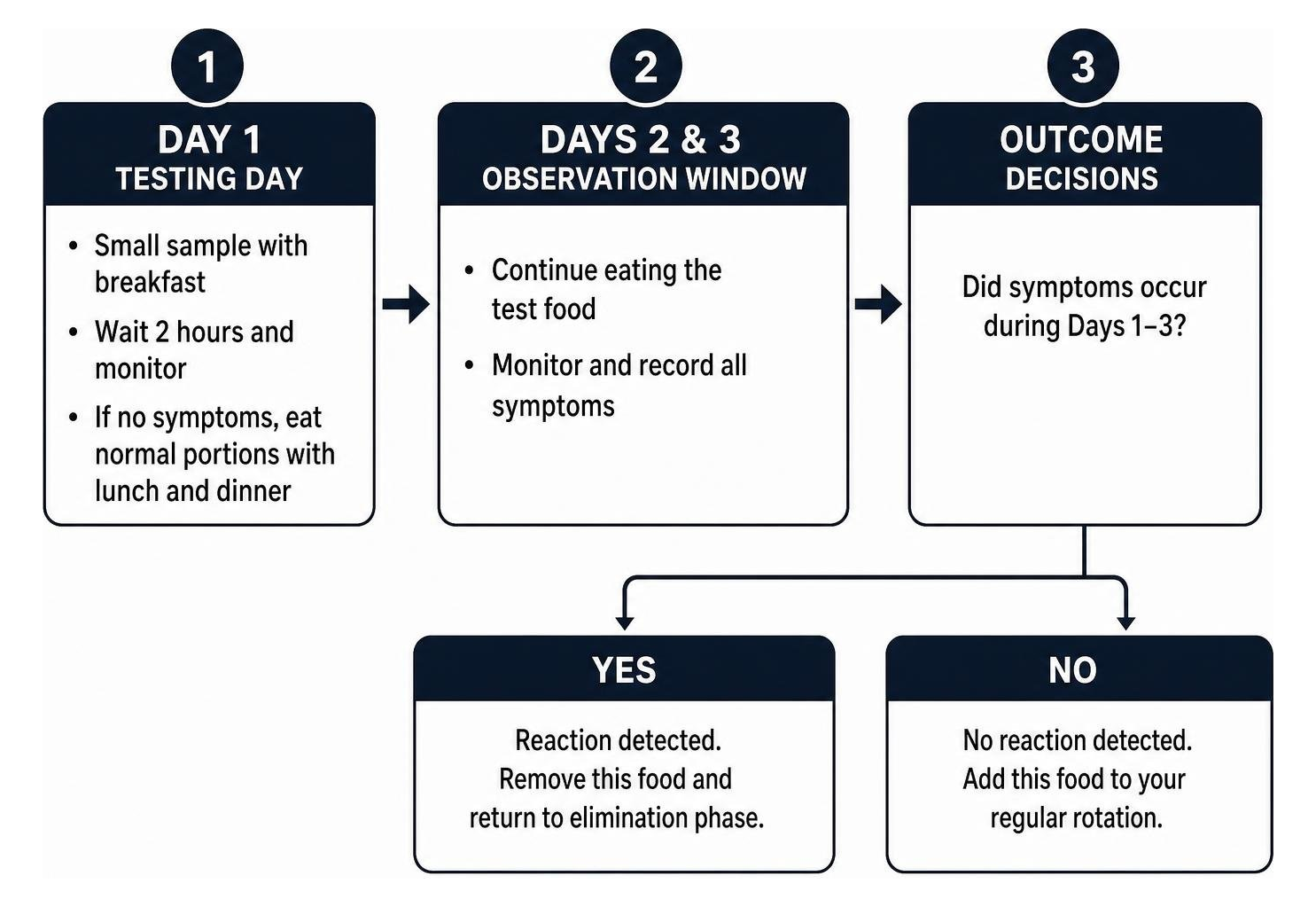
Day 1 (Testing Day):
Eat a small sample of the test food (e.g., 1 teaspoon of plain organic yogurt) with breakfast.
Wait 2 hours and monitor for acute reactions.
If no symptoms occur, eat a normal portion (e.g., 1/2 cup) with lunch and dinner.
Days 2 & 3 (Observation Window):
Completely remove the test food and return to the baseline elimination diet.
Monitor for delayed hypersensitivity reactions (joint pain, bowel changes, or brain fog often peak 24–48 hours post-ingestion).
Evaluating the Outcome:
No Symptoms: The food is considered well-tolerated. It can be set aside while testing continues, or integrated back into meals.
Reaction Occurs: The food is a confirmed trigger. Record the symptoms, remove the food immediately, and wait until all symptoms completely resolve before testing the next item.
Practical Meal Planning, Safety, and Long-Term Healing
Adhering to an elimination diet requires practical preparation, batch cooking, and label awareness. Hidden additives like wheat starch, maltodextrin, hydrolyzed soy protein, and milk solids hide in many packaged products. Cooking at home from whole, single-ingredient foods minimizes accidental exposure.

Preventing Micronutrient Deficiencies and Caloric Deficits
Nutritional adequacy must remain a priority during elimination diets. Prolonged or unsupervised restriction risks deficiencies in calcium, vitamin D, iodine, iron, and prebiotic fibers (Malone & Daley, 2024). Furthermore, individuals with a history of disordered eating or orthorexia should not undertake restrictive diets without direct behavioral and dietary supervision.
To maintain nutrient density:
Support Bone Health: Consume sesame seeds (tahini), bone-in sardines, kale, bok choy, and calcium-fortified plant milks.
Maintain Caloric Balance: Incorporate calorie-dense healthy fats such as avocados, extra virgin olive oil, coconut cream, and approved nuts and seeds.
Nourish the Mucosa: Support enterocyte repair with collagen-rich bone broths, L-glutamine, zinc carnosine, and omega-3 essential fatty acids.
Long-Term Trigger Management and Gut Rehabilitation
Identifying a food sensitivity does not mean a lifetime sentence of exclusion. True IgE allergies require indefinite avoidance, but non-IgE sensitivities and enzyme insufficiencies often improve once mucosal inflammation cools and the gut barrier repairs.
After 3 to 6 months of gut healing, re-test previously reactive foods one at a time. Many individuals regain oral tolerance, allowing them to enjoy those foods occasionally or in rotation without triggering symptoms.
Clinical Guidance and Diagnostic Lab Testing
While self-guided protocols are common, working with a trained functional medicine practitioner or registered dietitian provides crucial diagnostic clarity. Clinical oversight ensures that underlying issues like Small Intestinal Bacterial Overgrowth (SIBO), dysbiosis, parasite infections, or inflammatory bowel diseases are properly evaluated.
Key diagnostic tools used alongside elimination diets include:
Comprehensive Stool Testing: Evaluates microbial diversity, commensal bacteria levels, pancreatic elastase, and calprotectin markers of inflammation.
Lactulose/Mannitol Intestinal Permeability Tests: Quantifies the structural integrity of the gut lining.
SIBO Breath Testing: Measures hydrogen and methane gas production to rule out bacterial overgrowth in the small intestine.
Targeted Serum Panels: High-sensitivity C-reactive protein (hs-CRP) and total IgE panels to evaluate baseline systemic inflammation.
If you are a practitioner looking to implement these structured protocols in your own clinical practice, you can start your clinical journey with our end-to-end functional medicine frameworks.
Frequently Asked Questions About Elimination Diets
How long does an elimination diet take from start to finish?
The entire process typically takes 6 to 10 weeks. The initial elimination phase lasts 3 to 4 weeks (21 to 30 days) to clear circulating antigens and establish a stable baseline. The reintroduction phase requires 3 to 4 days for each food tested, spanning another 3 to 6 weeks depending on how many food groups you choose to evaluate.
How does an elimination diet differ from a low-FODMAP diet?
A standard elimination diet removes broad allergenic proteins (like gluten, casein, soy, and egg albumin) to calm immune-mediated sensitivities. A low-FODMAP diet targets short-chain fermentable carbohydrates (Fermentable Oligosaccharides, Disaccharides, Monosaccharides, and Polyols) that feed bacterial fermentation in the colon, addressing osmotic gas and bloating in IBS and SIBO without focusing on immune pathways.
Can I ever eat my identified trigger foods again?
Yes, for many non-IgE sensitivities. Unlike true IgE-mediated food allergies, sensitivities are frequently driven by an inflamed, permeable gut barrier. Once the mucosal lining heals and dysbiosis is addressed over 3 to 6 months, patients often tolerate previously reactive foods when eaten in moderation.
Conclusion
An elimination diet remains the gold standard in functional medicine for identifying non-IgE food sensitivities and uncovering hidden sources of chronic inflammation. By systematically removing potential triggers, calming mucosal immune activation, and methodically reintroducing foods, you replace guesswork with clear physiological feedback.
Whether your goal is resolving chronic bloating, calming skin flare-ups, or putting an end to migraines, this blueprint provides a structured path toward lasting digestive balance. For clinicians and health practitioners who want to master these functional medicine strategies and deliver predictable patient transformations, explore our clinical resources and mentorship at Functional Medicine Fast Track.
Scientific References
Jordan C. Malone, Sharon F. Daley. "Elimination Diets." StatPearls Publishing, 2024. NBK599543.