

Why Functional Medicine Genomic Testing Beats Standard Bloodwork Every Time
Functional Medicine Genomic Testing: A Blueprint, Not a Better Blood Test
Functional medicine genomic testing looks at inherited DNA variants that may affect nutrient processing, medication response, or disease risk. Bloodwork shows what is happening in the body now. If you are evaluating genomic tests for your practice, start with a clinical question: Will the result change a care decision? A targeted test can add useful context, but it does not diagnose the cause of symptoms or replace bloodwork.
For clinicians, the value is in combining stable genetic information with changing markers, medical history, and patient goals. That is more useful than treating either test as a complete answer.
I'm Garric Vosloo. After more than 30 years working with patients and owning two practices, I help licensed clinicians build practical care systems, including frameworks for deciding when functional medicine genomic testing belongs in a care plan.
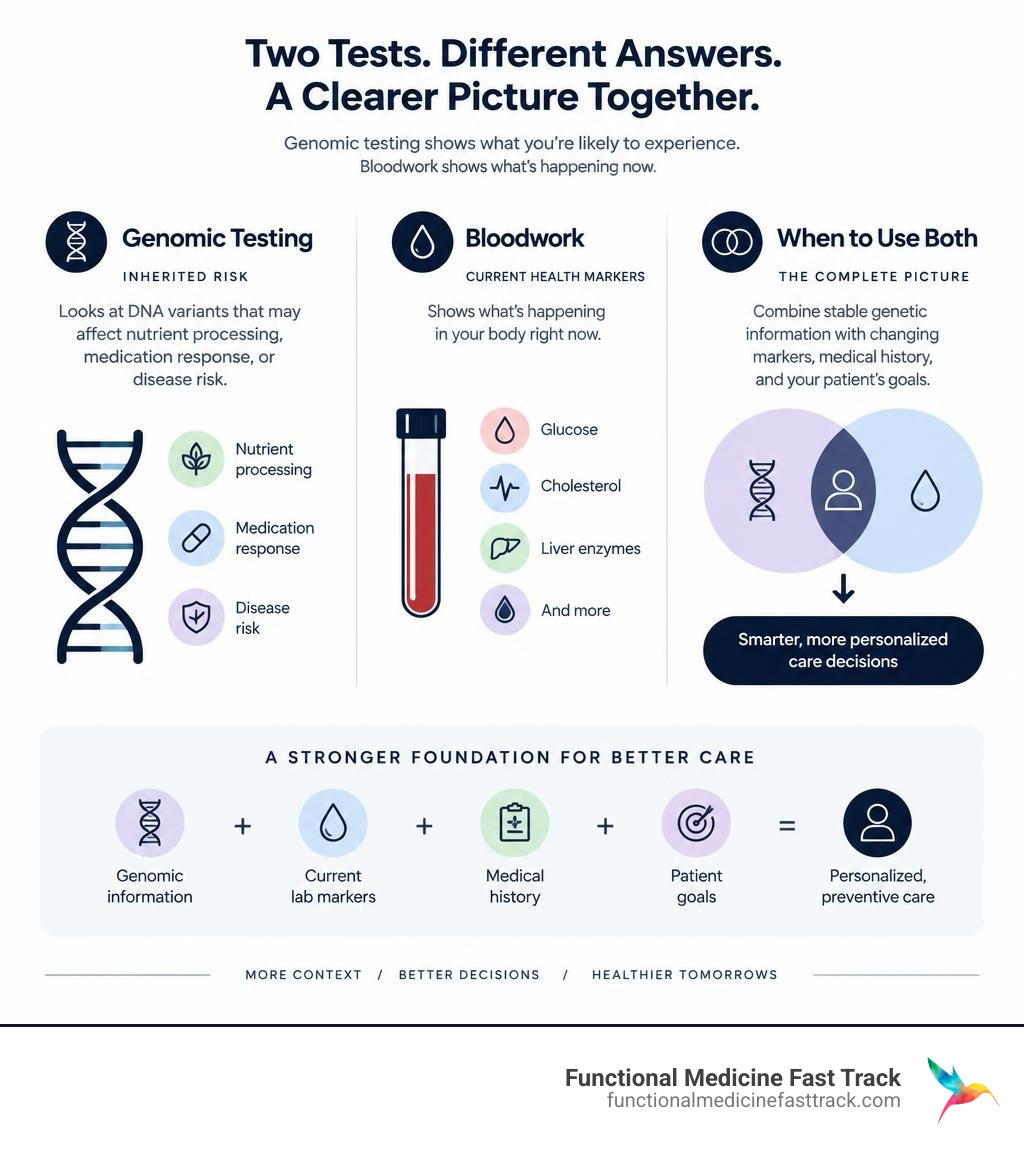
The Limitations of Standard Bloodwork vs. The Genomic Blueprint
Standard routine bloodwork measures transient biomarkers. A serum glucose reading, a fasting lipid panel, or a liver enzyme count represents a snapshot of physiology taken at a single moment in time. These markers fluctuate based on what a patient ate twelve hours prior, their hydration status, their sleep quality the night before, and acute psychological stress.
Furthermore, conventional labs rely on broad population reference ranges designed to identify acute end-stage disease rather than optimal functional health. Relying exclusively on these broad markers often leads to lab range interpretation pitfalls, where patients experiencing chronic fatigue, brain fog, or metabolic dysfunction are told everything is "normal" simply because their numbers fall between statistical bell curves.
Functional genomic testing operates on a fundamentally different paradigm. Rather than tracking dynamic, reactive biomarker levels, genomic testing identifies an individual's static biological blueprint. It evaluates Single Nucleotide Polymorphisms (SNPs)—the subtle genetic variations in DNA sequences that influence how efficiently enzymes function, how nutrients are metabolized, and how tissues manage oxidative stress.
Feature | Standard Bloodwork | Functional Genomic Testing |
|---|---|---|
Data Nature | Dynamic snapshot of current physiological state | Lifelong, immutable biological blueprint |
Testing Frequency | Repeated periodically to track active biomarkers | Performed once in a lifetime |
Primary Scope | Identifies existing tissue damage or clinical disease | Identifies functional predispositions and vulnerabilities |
Influence | Highly reactive to diet, sleep, stress, and acute illness | Unaltered by daily environmental variables |
Clinical Application | Disease diagnosis and acute symptom monitoring | Proactive prevention and personalized protocol design |
By shifting focus from reactive biomarker tracking to proactive genetic evaluation within systems-based clinical evaluations, practitioners can identify underlying metabolic bottlenecks decades before pathology appears on a standard lab panel.
Core Clinical Panels in Functional Medicine Genomic Testing
The human genome contains around 20,000 genes responsible for directing cellular function, enzyme production, and structural integrity. In past decades, testing this blueprint was cost-prohibitive; the original sequencing of the human genome cost roughly $100 million. Today, advances in high-throughput sequencing have dropped costs to a few hundred dollars.
Unlike early direct-to-consumer panels that analyzed less than 0.1% of DNA for ancestry or trivial traits, modern clinical platforms analyze hundreds of modifiable SNPs or provide whole genome coverage to assess health-optimizing biochemical pathways.
Key Biomarkers Evaluated in Functional Medicine Genomic Testing
In clinical practice, we evaluate specific gene clusters that directly influence metabolic pathways:
MTHFR (Methylenetetrahydrofolate Reductase): Governs the conversion of dietary folate into 5-MTHF, the primary methyl donor required for homocysteine recycling, neurotransmitter synthesis, and DNA repair.
COMT (Catechol-O-Methyltransferase): Breaks down catecholamines (dopamine, epinephrine, norepinephrine) and estrogen metabolites. Variants dictate whether a patient clears stress hormones rapidly or slowly, shaping their neurochemical resilience and hormone clearance rates.
APOE (Apolipoprotein E): Modulates lipid transport, cardiovascular risk, and neurodegenerative susceptibility. Variants such as APOE-e4 alter how patients process dietary fats and clear amyloid proteins.
GST (Glutathione S-Transferase) & SOD2 (Superoxide Dismutase 2): Determine Phase II detoxification capacity and mitochondrial antioxidant defense against reactive oxygen species.
CYP450 Enzymes: Dictate hepatic Phase I detoxification efficiency and how exogenous chemicals and steroid hormones are processed.
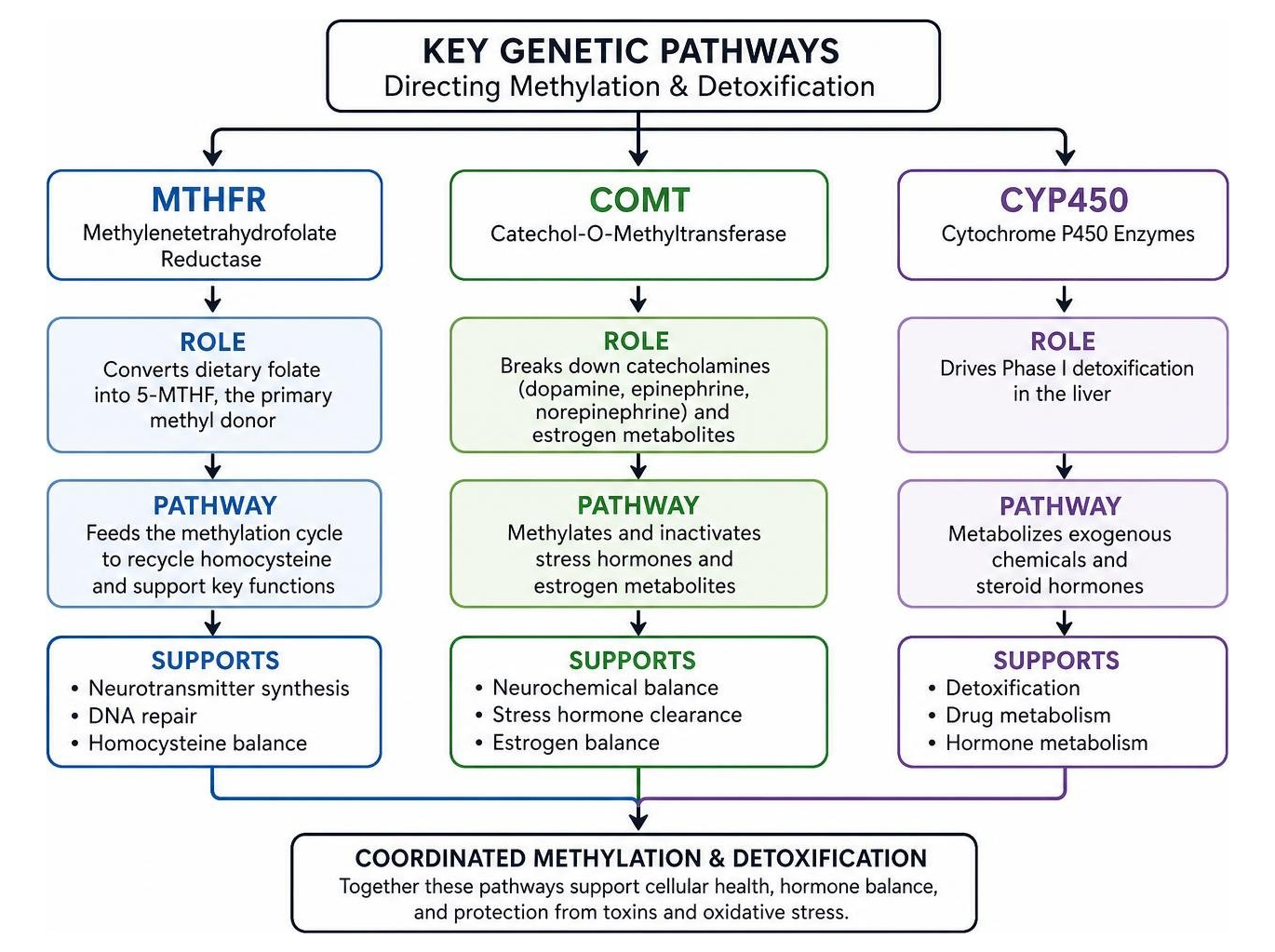
Understanding these variants ensures practitioners select the right diagnostics using an evidence-based lab selection framework instead of ordering unneeded panels.
Pharmacogenomics and Preventing Adverse Drug Reactions
Pharmacogenomics (PGx) evaluates how genetic variations affect an individual's response to medications. The clinical implications are significant: adverse drug reactions (ADRs) cause an estimated 200,000 deaths annually in Europe, and combined with U.S. data, approximately 328,000 patients across both regions die from prescription medications each year. Furthermore, the FDA estimates that over 2,216,000 serious adverse drug reactions occur in hospitalized patients annually.
Variants in genes like SLCO1B1 alter hepatic uptake of statins, substantially increasing the risk of statin-induced myopathy. Similarly, CYP2D6 and CYP2C19 polymorphisms dictate whether a patient is a poor, intermediate, or rapid metabolizer of psychiatric, cardiovascular, and pain medications. Preemptive genomic profiling allows providers to avoid harmful medication-gene interactions and adjust dosages safely.
Epigenetics and Nutrigenomics: How Lifestyle Overrides Genetic Destiny
A common patient misconception is that carrying a genetic variant guarantees disease. In functional medicine, we emphasize that genes load the gun, but environment pulls the trigger.
Epigenetics describes biological mechanisms—such as DNA methylation, histone modification, and non-coding RNA expression—that turn genes on or off without altering the underlying DNA sequence. Nutrigenomics explores how dietary components interact with these genetic variations to alter phenotypic expression.
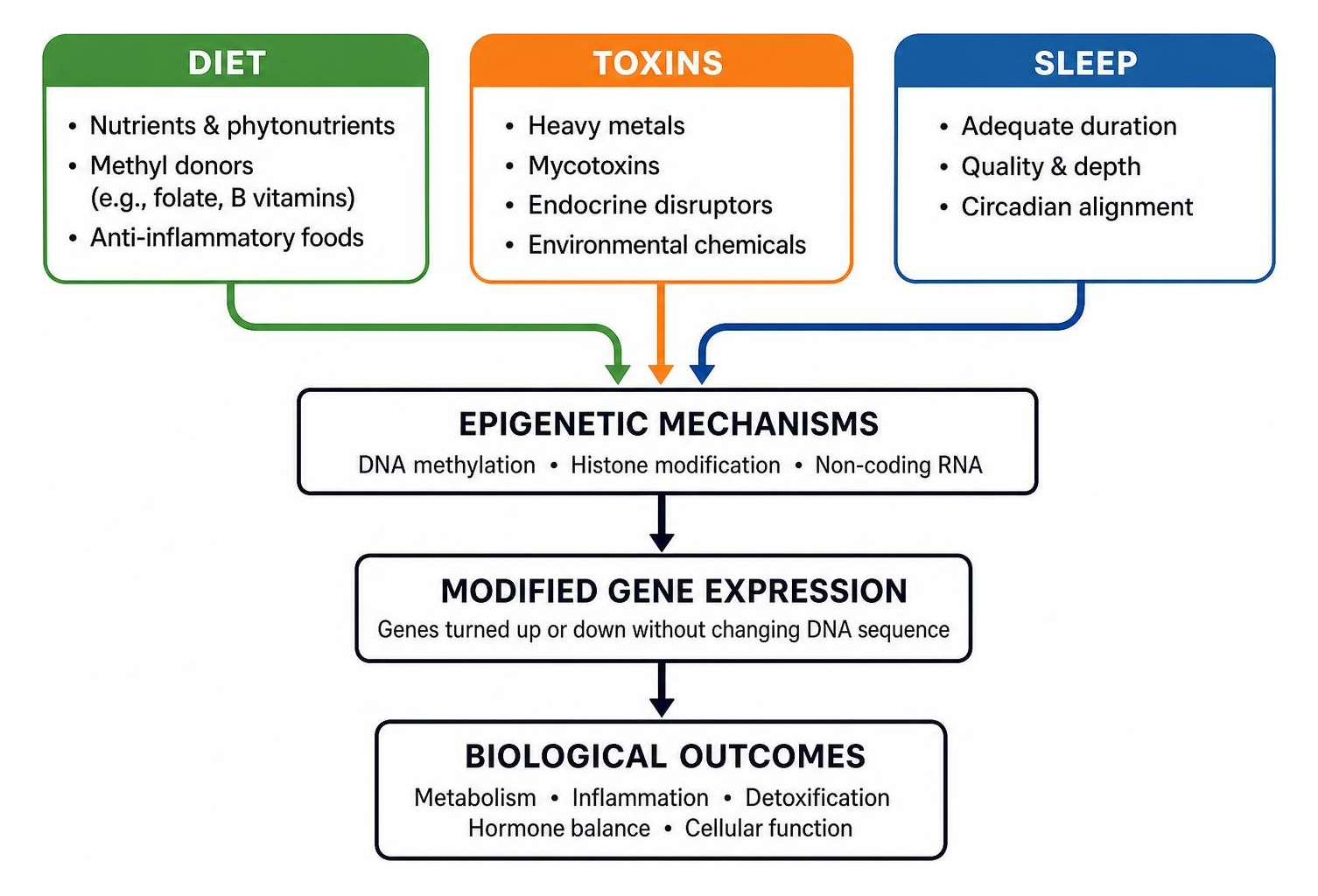
When practitioners pair actionable data from nutrigenomic health assessments with targeted strategies like anti-inflammatory dietary protocols, they provide cells with the specific biochemical inputs needed to silence pro-inflammatory genes and support enzymatic throughput.
Environmental Modifiers and Chronic Disease Expression
Environmental exposures continuously modify gene expression. Chronic psychological stress, toxicant burdens (such as heavy metals, mycotoxins, and endocrine disruptors), circadian disruption, and intestinal permeability place heavy demands on underlying genetic vulnerabilities.
For example, a patient with impaired SOD2 and GSTM1 variants exposed to high environmental toxicant loads will experience accelerated mitochondrial oxidative stress and cellular fatigue. Recognizing these interactions is vital when designing functional protocols for autoimmune conditions, where immune triggers and genetic susceptibility meet.
Translating Raw Genetic Insights into Clinical Protocols
Raw genetic data without clinical context creates confusion. Functional medicine avoids "SNP-matching"—the error of simply prescribing a supplement for every heterozygous or homozygous mutation found on a raw report.
True clinical translation means understanding biochemical pathways so you avoid root-cause functional intervention strategies that simply replace a drug with a handful of natural pills.
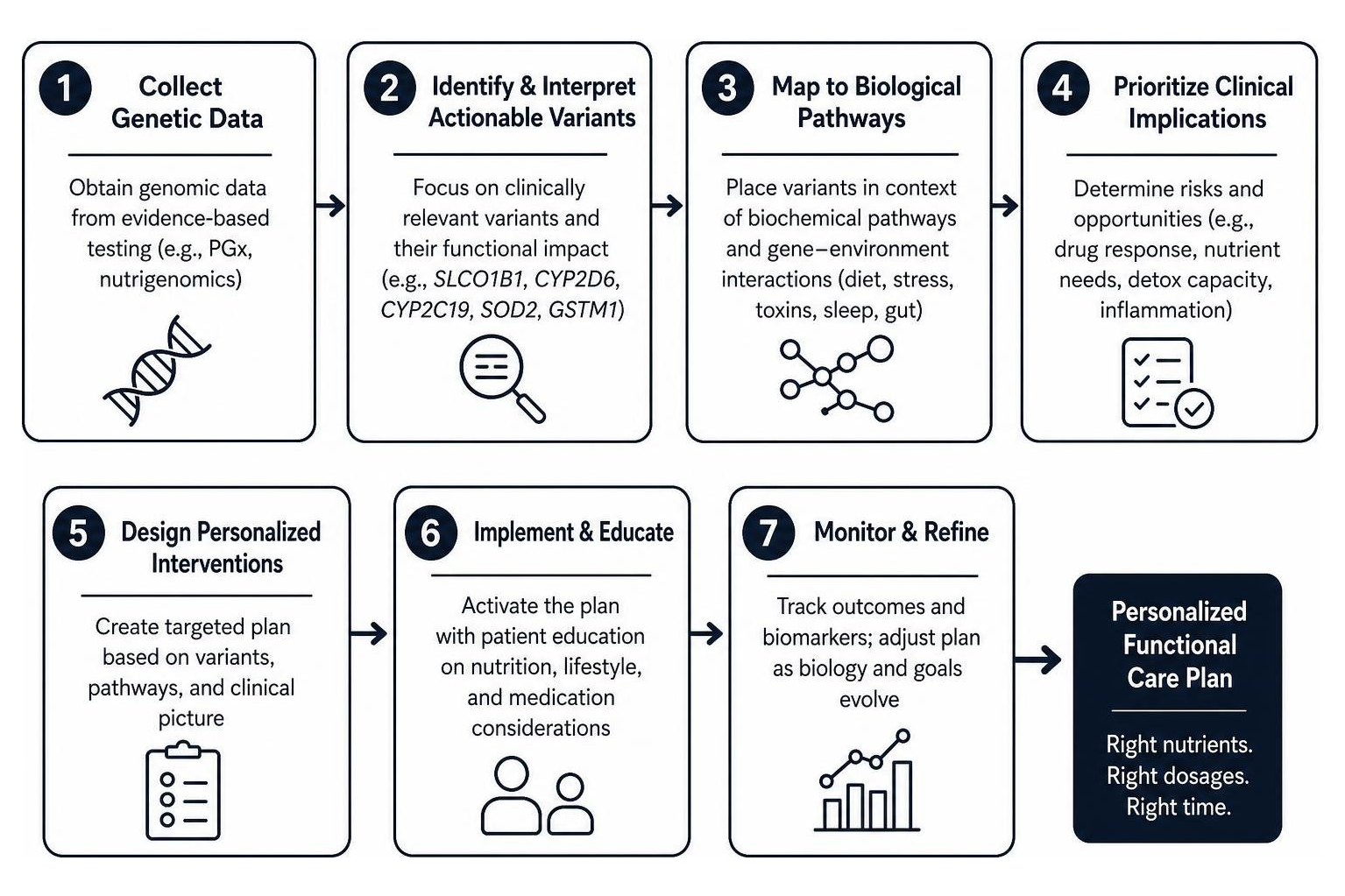
Precision Nutrient Formulation: Providing active coenzymatic nutrient forms (e.g., L-methylfolate vs. synthetic folic acid, methylcobalamin vs. cyanocobalamin) tailored to enzymatic capacity.
Macronutrient Architecture: Adjusting saturated fat, carbohydrate, and dietary fiber ratios based on APOE, PPAR-gamma, and insulin-sensitivity loci.
Detoxification Modulation: Supporting Phase I and Phase II liver pathways in balanced sequence to prevent the accumulation of intermediate reactive metabolites.
Integrating Functional Medicine Genomic Testing into Comprehensive Care Plans
Genomics serves as the foundational architectural layer of a multi-omic diagnostic strategy. It is not an isolated tool.
Practitioners integrate genomic findings directly with:
Organic Acid Testing (OAT): To assess real-time mitochondrial energy production, neurotransmitter turnover, and cellular nutrient status.
Comprehensive Stool Analysis (GI-MAP): To evaluate microbiome composition, dysbiosis, and gut mucosal inflammation alongside genetic digestive tendencies.
Comprehensive Hormone Profiling (DUTCH): To correlate Phase I/Phase II estrogen metabolites with COMT and CYP1B1 genetics.
This multi-omic integration is particularly valuable when developing holistic mental health mapping, where neurotransmitter breakdown genes directly inform target nutrient therapies.
Frequently Asked Questions About Genomic Testing
Is functional genomic testing diagnostic of specific diseases?
No. Functional genomic testing is not diagnostic. It does not determine whether a patient currently has a disease, nor does it guarantee they will develop one. Instead, it assesses relative functional risk, enzyme kinetics, and metabolic predispositions. This provides an objective roadmap for optimizing biological systems before clinical pathology develops.
How does sample collection work and is the data secure?
Sample collection is non-invasive, utilizing either a simple buccal (cheek) swab or a saliva collection kit that patients can complete at home. Clinical samples are processed in CLIA-certified and CAP-accredited laboratories. Patient data is protected by HIPAA-compliant, encrypted systems, ensuring that genomic blueprints remain confidential and secure.
What is the typical cost and does insurance cover functional genomics?
Most specialized functional genomic panels operate on a cash-pay basis, ranging from $200 to $600 depending on the scope of the panel, though patients can frequently utilize Health Savings Accounts (HSA) and Flexible Spending Accounts (FSA). Because DNA does not change, genomic testing is a one-time investment that delivers clinical value across a patient's lifespan.
Conclusion
Standard bloodwork will always have a place in clinical medicine for tracking active disease markers and monitoring acute physiology. However, relying on standard labs alone keeps healthcare reactive. Functional medicine genomic testing delivers the upstream clarity practitioners need to create personalized, root-cause protocols.
For healthcare providers ready to move beyond standard symptom suppression and build sustainable clinical practices, integrating precision genomics within a structured framework is transformative. At Functional Medicine Fast Track, we support clinicians with the clinical systems, marketing strategies, and practice models required to lead in modern healthcare. Explore our mission for elevating clinical practice systems to deliver root-cause care in your own community.