

Ways to Grow Your Functional Medicine Practice Profitability and Cash Flow
How to Improve Functional Medicine Practice Profitability
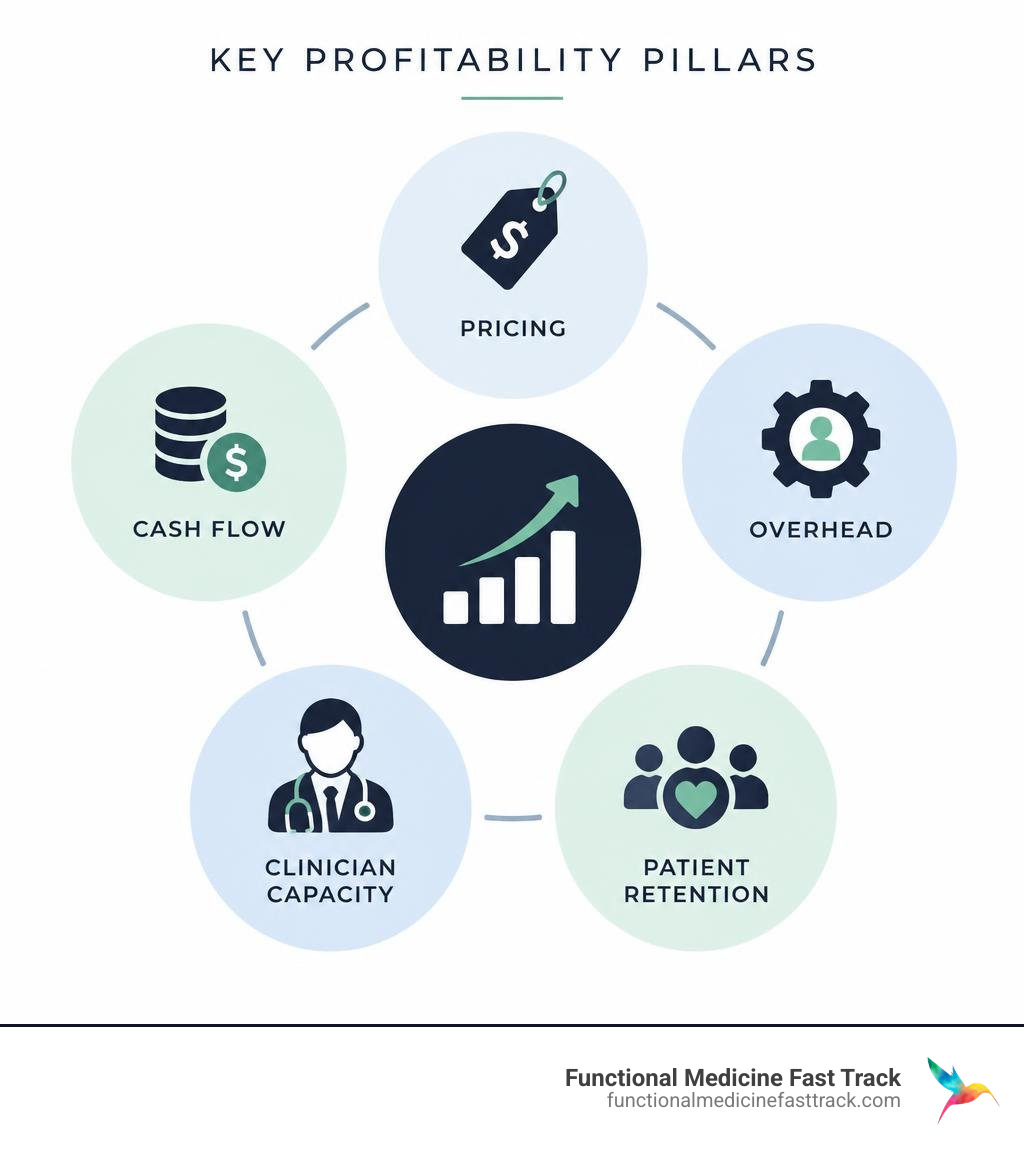
To improve functional medicine practice profitability, start with the math: track what each patient pays, what their care costs to deliver, and how much clinician time it takes. Set clear prices that cover those costs. Then reduce avoidable admin work and review leads, patient retention, and cash flow each month.
A cash-pay model can mean less insurance paperwork, but fewer patients do not automatically mean more profit. The right model is one that supports good care, covers overhead, and fits the hours you want to work.
I'm Garric Vosloo. I've spent more than 30 years consulting with patients and owned two private practices, experience that shapes my approach to functional medicine practice profitability.
Financial Models That Maximize Functional Medicine Practice Profitability
When clinicians transition into root-cause medicine, they quickly discover that traditional fee-for-service reimbursement rarely aligns with in-depth care. A standard primary care model relies on seeing 20 to 30 patients daily to stay solvent. However, thorough health histories, detailed lifestyle assessments, and complex lab evaluations require substantial clinical time.
Choosing a sustainable business structure means addressing overhead, capacity, and revenue stability directly.
Evaluating Insurance vs. Cash-Pay Functional Medicine Practice Profitability
In an insurance-based framework, high patient volume is mandatory to offset rising operating costs and declining payer fee schedules. Furthermore, the administrative friction of billing departments, prior authorizations, claim appeals, and credentialing significantly erodes operational margins.
Conversely, a cash-pay or direct-pay model shifts the focus from visit volume to visit value. Clinicians can manage smaller patient panels while providing comprehensive, unhurried care.
Metric | High-Volume Insurance Model | Low-Volume Cash-Pay Model |
|---|---|---|
Average Daily Patient Visits | 20 – 30 patients | 4 – 8 patients |
Typical Visit Duration | 10 – 15 minutes | 45 – 90 minutes |
Billing Infrastructure Overhead | High (in-house billers or percentage-based billing agency fees) | Lower (limited billing administration) |
Revenue Predictability | Variable (subject to denials and delayed remits) | High (upfront payments or monthly recurring subscriptions) |
Clinical Burnout Risk | High due to documentation and volume demands | Substantially lower due to sustainable scheduling |
By removing third-party payer constraints, cash-pay models eliminate the administrative middleman, allowing practices to direct more resources toward clinical delivery and patient support.
Packaging and Pricing: Memberships and High-Ticket Care Programs
A common mistake new practices make is charging strictly by the hour. An hourly billing model creates unpredictable revenue and encourages transactional thinking, where patients drop out before achieving meaningful health improvements.
Structuring services into comprehensive care packages or tiered memberships creates reliable, recurring revenue while keeping patients engaged throughout their healing journey.
Foundational Programs (3 to 6 Months): Bundle intake assessments, follow-up consultations, basic functional lab reviews, and continuous lifestyle support into a single program fee. Understanding what a four-month accelerated functional medicine program actually produces helps clinicians establish structured clinical milestones that keep patients motivated.
Ongoing Wellness Memberships: Transition program graduates into a monthly continuity plan that includes periodic check-ins, routine monitoring, and maintenance guidance to ensure steady cash flow.
High-Ticket Comprehensive Longevity Tracks: For complex multi-system cases, offer premium packages that cover extensive advanced testing, frequent coaching touchpoints, and individualized wellness planning.
Establishing clearly defined programs prevents revenue volatility and addresses the core operational issues explaining why functional medicine practices fail year one.
Eliminating Revenue Leaks: Documentation, Billing, and Compliance
Even profitable practices can lose substantial revenue through preventable operational inefficiencies, non-compliant documentation, and poorly structured legal agreements.
Correcting Coding Errors and Protecting Medical Necessity
If your clinic operates a hybrid billing model or submits courtesy claims (superbills) for patients seeking out-of-network reimbursement, precise documentation is vital. Insurers frequently scrutinize extended visits and advanced testing orders.

Avoid Inappropriate Undercoding: Clinicians often downcode prolonged visits out of fear of audits. When billing evaluation and management (E/M) services, ensure you capture the true medical decision-making complexity or accurately record total time spent on the date of the encounter.
Document Medical Necessity for Specialty Testing: Payer guidelines demand clear clinical rationale linking specific patient symptoms to ordered functional labs. Ensure your medical record notes directly justify why standard panels were insufficient.
Capture Prolonged Services Correctly: When clinical encounters extend beyond standard thresholds, record exact start and stop times, or total face-to-face and coordination minutes, to justify prolonged service add-on codes.
Translate Functional Terminology into Standard Diagnoses: Avoid using non-standard nomenclature in diagnostic fields; map symptom presentations to established ICD-10 diagnostic codes to support claim validity.
Mitigating Legal, HIPAA, and Scope-of-Practice Pitfalls
Operational longevity requires strong regulatory foundations. Regulatory oversights can lead to financial penalties or operational disruptions.
State Licensing and Scope of Practice: Practice only within the boundaries established by your state board. Ensure all collaborating physician agreements or supervisory plans are documented and reviewed annually.
Telehealth and Multi-State Compliance: Remote consultations must comply with the state laws where the patient is physically located during the encounter, including appropriate electronic prescribing rules.
HIPAA-Compliant Communication: Every vendor that handles Protected Health Information (PHI), including email marketing software, practice management tools, and cloud storage, should have a signed Business Associate Agreement (BAA) when required. Review the U.S. Department of Health and Human Services HIPAA Rules when evaluating vendor responsibilities.
Informed Consent and Care Boundaries: Provide patients with transparent consent forms outlining the educational nature of wellness programs, reminding them that replacing drugs with supplements is not functional medicine and that therapeutic changes require licensed oversight.
Operational Infrastructure: Systems, Automation, and Tech Stacks
Sustainable growth does not require working longer hours. Instead, high-margin practices leverage automated infrastructure to handle repetitive tasks, freeing clinical time for direct patient support.
How Modern Tech and AI Accelerate Functional Medicine Practice Profitability
Modern automation tools allow lean teams to deliver responsive, high-touch patient experiences without hiring extensive administrative staff.
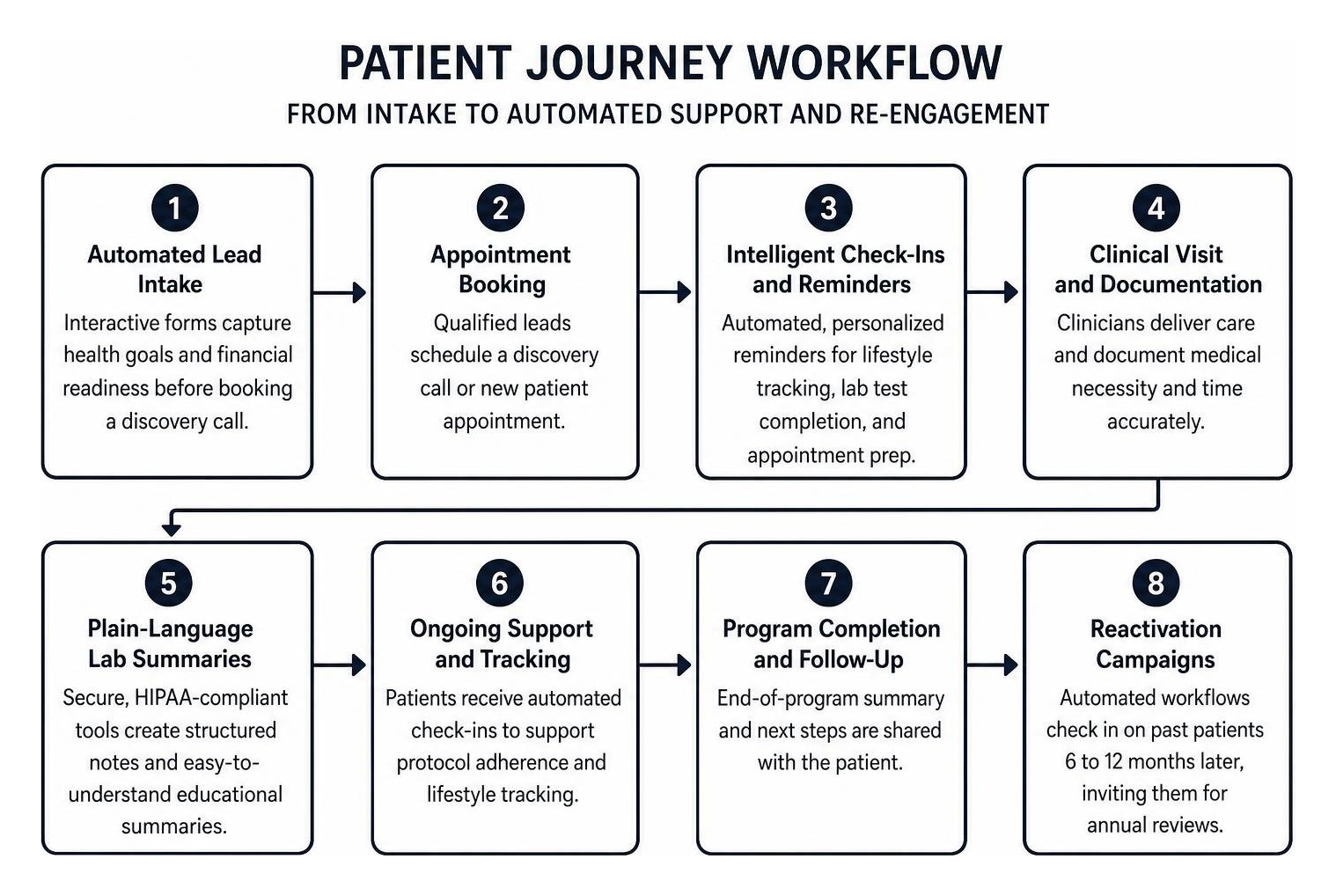
Automated Lead Intake and Qualification: Deploy interactive forms on your website to qualify prospective patients based on health goals and financial readiness before they book a discovery call.
Intelligent Check-Ins and Reminders: Schedule automated, personalized reminders for lifestyle tracking, lab test completion, and appointment preparations.
Plain-Language Lab Summaries: Use secure, HIPAA-compliant tools to generate structured visit notes and easy-to-understand educational summaries that help patients comprehend their lab trends.
Reactivation Campaigns: Set up automated workflows to check in on past patients who completed their care programs 6 to 12 months prior, inviting them for annual reviews.
Streamlining Clinical Workflows
Consolidating your operational tech stack reduces software overhead and minimizes staff errors:
Clear Patient Journeys: Map each stage of care, from first inquiry through ongoing support, so patients and team members know what happens next.
Consistent Team Processes: Document routine administrative steps and communication expectations to reduce avoidable delays and staff errors.
Standardized Clinical Roadmaps: Develop structured clinical templates for common presentations, such as metabolic, gut, or endocrine concerns, to support consistent care delivery.
Many practitioners spend years pursuing extra credentials, yet clinical expertise alone cannot fix a broken business model. Many discover that you don't need another certification, you need a system to organize clinical delivery, marketing, and practice management into a cohesive workflow.
Sustainable Growth Strategies: Patient Acquisition and Retention Metrics
A profitable practice requires an intentional client acquisition strategy combined with systems that foster long-term patient retention.
Building Predictable Marketing and Patient Retention Funnels
Relying solely on unpredictable word-of-mouth creates cash flow swings. A predictable practice marketing system combines local visibility with value-driven educational content:
Optimize Local SEO and Google Business Profile: Claim and update your local business profiles with clear service categories, accurate operational hours, and regular patient review collection.
Educational Workshops and Community Talks: Host virtual or in-person health masterclasses on root-cause topics to demonstrate authority and attract qualified leads.
Proactive Patient Onboarding: Provide patients with structured welcome guides, app-based communication, and clear progress milestones to minimize early drop-offs.
Understanding a structured functional medicine marketing strategy allows clinics to attract committed clients consistently. Furthermore, recognizing the real reason functional medicine patients don't stay helps teams fix onboarding gaps, set better expectations, and maintain high retention rates.
Calculating Capacity, Panel Size, and Essential Practice Metrics
To maintain profitability and protect your schedule, track these key performance indicators monthly:
Clinician Capacity: The maximum number of clinical hours available per week multiplied by your target hourly revenue yield.
Cost per Lead (CPL): Total marketing expenses divided by the number of new inquiries generated.
Customer Acquisition Cost (CAC): Total sales and marketing spend divided by the number of enrolled program patients.
Patient Lifetime Value (LTV): The average total revenue generated by a patient throughout their entire relationship with your clinic.
Retention Rate / Churn Rate: The percentage of patients who complete their initial program and transition into ongoing wellness memberships versus those who discontinue care early.
Practitioners looking to transition gradually can learn how to build a functional medicine side practice with low overhead, validating their pricing and workflows before scaling to full-time operations.
Frequently Asked Questions About Functional Medicine Profitability
How many active patients are needed for a sustainable cash-pay practice?
Because cash-pay functional medicine practices rely on comprehensive programs rather than brief transactional encounters, they require far fewer active patients than traditional insurance clinics. Many solo practitioners maintain a highly profitable, sustainable practice with an active panel of 50 to 150 patients enrolled in structured programs or recurring memberships.
How can documentation errors reduce functional medicine clinic revenue?
Documentation errors reduce clinic revenue by triggering claim rejections, downcoded E/M visit levels, and denied specialty lab orders when submitting insurance claims or superbills. Missing time logs for extended appointments and omitting specific clinical rationale for specialty diagnostics frequently result in unpaid claims and non-reimbursed clinical time.
What is the most effective compensation structure for collaborating physicians?
For practices utilizing a collaborating or supervising medical director, a predictable monthly flat-fee agreement is generally the most straightforward and compliant approach. Structuring compensation around a flat monthly stipend for regular chart reviews and clinical oversight avoids disputes over revenue-sharing calculations and simplifies monthly overhead budgeting.
Conclusion
Building a financially rewarding functional medicine practice does not require endless clinical hours or large patient panels. By moving away from inefficient billing structures, packaging services into outcomes-focused programs, and leveraging modern automated workflows, you can build a predictable, low-stress practice model.
At Functional Medicine Fast Track, we help licensed healthcare professionals transform their clinical knowledge into thriving, sustainable practices. Our integrated three-pillar system combines comprehensive clinical mentorship, proven marketing funnels, and an all-in-one patient platform delivered under your practice's brand.
To begin restructuring your clinical model for better patient outcomes and sustainable cash flow, download our complimentary clinical and nutritional implementation resources today.