

Smart Marketing and Content Blueprints to Expand Your Functional Medicine Practice
A Functional Medicine Marketing Strategy Built on Trust and Education
A strong functional medicine marketing strategy helps the right patients find you, understand your approach, and feel ready to book. Start with four essentials:
Define a clear niche, such as gut health, hormones, metabolic health, or autoimmune support.
Build condition-specific pages that explain your root-cause, personalized care process.
Publish evidence-based education that answers the questions patients research before they book.
Use email follow-up, reviews, and a simple discovery-call path to nurture longer decisions.
Functional medicine patients rarely choose care after seeing one ad. They often have persistent symptoms, past disappointment, and many questions. Your marketing must show how you assess contributing factors, track progress, and create practical plans tailored to the individual.
That does not mean making cure claims or attacking conventional care. It means clearly communicating your clinical process, credentials, evidence standards, and the value of sustained health investment over short-term symptom management.
This guide shares practical content and growth blueprints for turning clinical expertise into a high-trust patient acquisition system.
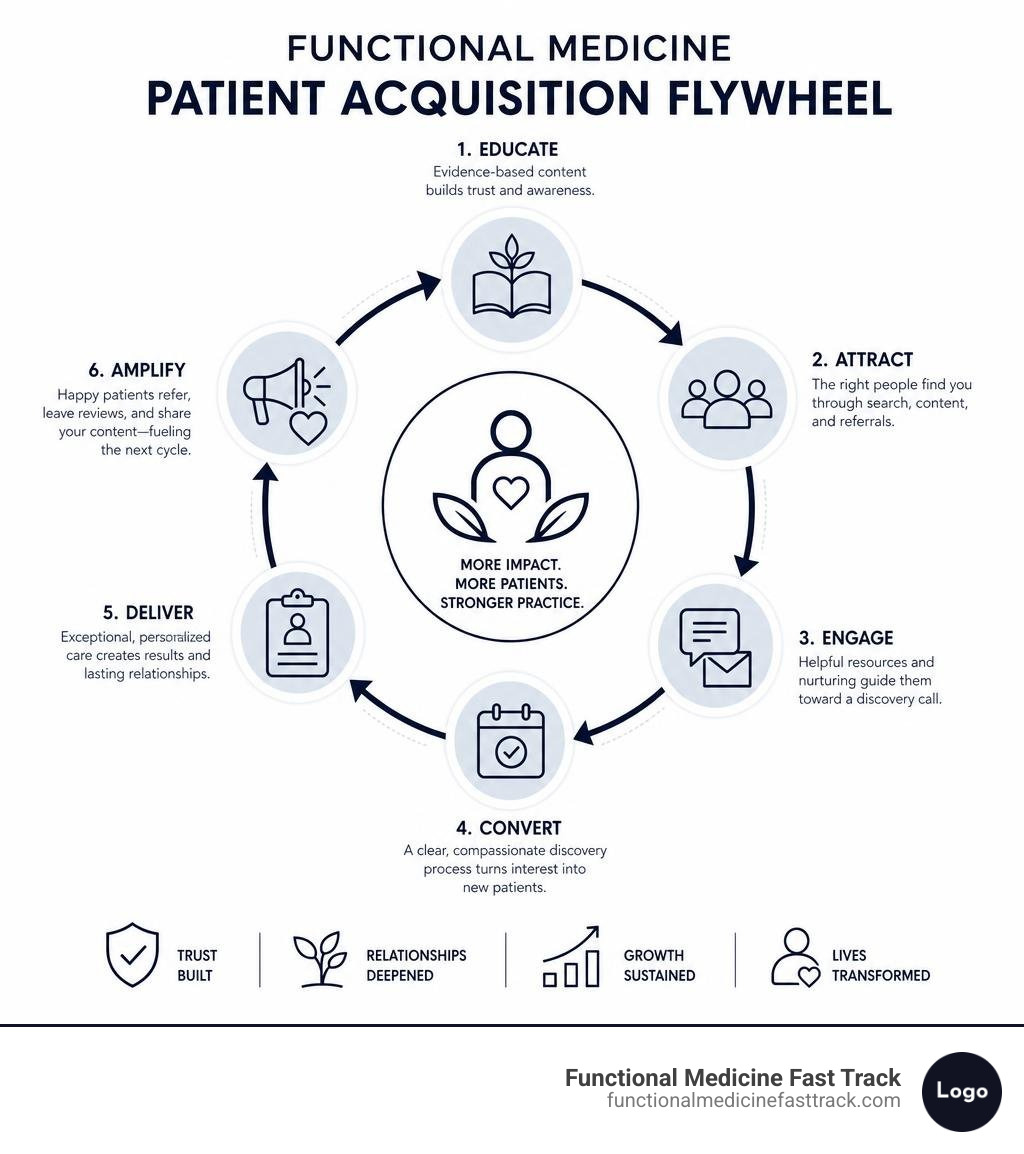
Building an Evidence-Based Functional Medicine Marketing Strategy
Most conventional healthcare practices rely on geographic proximity, insurance in-network lists, or transactional symptom searches ("urgent care near me"). Functional and integrative medicine is entirely different. Our patients typically face chronic, complex challenges and have spent months—if not years—navigating standard clinical systems without finding deep resolution.

To build sustainable practice authority, your marketing cannot read like standard medical advertising. It must operate as an evidence-based educational engine. By positioning your clinic around root-cause investigation, personalized diagnostic mapping, and transparent clinical standards, you bridge the gap between patient skepticism and patient commitment.
Industry data shows that 71% of patients review online feedback before scheduling an appointment, and in cash-pay or hybrid models—where multi-month programs range from $2,000 to over $10,000—trust is the foundational currency. When you pair verified clinical insight with modern distribution channels, you attract high-intent individuals who value sustained health optimization. For a deeper breakdown of operational foundations, thinking through how to market a functional medicine practice in 2026 offers vital perspective on modern digital positioning.
Aligning Your Functional Medicine Marketing Strategy with Root-Cause Care
Conventional medicine excels in acute triage, but it often isolates symptoms into discrete clinical siloes. A patient experiencing brain fog, bloating, and joint discomfort might see three different specialists and walk away with three distinct prescriptions.
In our marketing, we must visually and conceptually illustrate the interconnected nature of biological systems. Rather than positioning your practice against conventional practitioners—which creates unnecessary friction and compliance risks—position your practice as the investigative partner uncovering the underlying drivers.
Highlight upstream dysfunction: Use diagrams of physiological pathways to explain how systemic gut dysbiosis triggers chronic inflammation that manifests as cutaneous or neurological symptoms.
Detail personalized diagnostics: Educate prospective clients on how specialized panels (comprehensive stool analysis, organic acids, advanced lipid subfractionation) reveal patterns that routine blood chemistry often misses.
Emphasize lifestyle medicine: Clarify that sustainable recovery requires addressing daily habits, nutrition, stress resilience, and environmental inputs.
Practitioners transitioning out of hospital environments often find it helpful to review how to build functional medicine side practice workflows, ensuring their messaging effectively highlights this diagnostic differentiation.
Sustained Health Investment vs Symptom Management
One of the largest hurdles in integrative practice growth is helping prospective patients understand the difference between transactional fee-for-service appointments and multi-month restorative programs. When patients view care through an acute lens, they expect instant symptom resolution in a single 30-minute visit.
In specialized clinical research—such as veterinary oncology studies evaluating curative-intent protocols (like complete surgical excision paired with high-dose radioiodine therapy for invasive carcinomas)—data illustrates that sustained, comprehensive multi-modal care yields median survival times exceeding 795 to 946 days compared to palliative measures alone. We can borrow this overarching principle: true resolution requires multi-phase, dedicated intervention rather than quick patches.
When we explain our care packages, we frame them around longitudinal outcomes:
Initial De-escalation & Stabilization (Weeks 1–4): Identifying primary triggers, removing inflammatory dietary stressors, and optimizing sleep and micronutrient foundations.
Systemic Restoration & Targeted Support (Weeks 5–12): Utilizing targeted botanical or nutrient protocols, microbiome balancing, and cellular mitochondrial support.
Long-Term Resilience & Metabolic Maintenance (Weeks 13+): Retesting key objective biomarkers, reinforcing lifestyle strategies, and building enduring wellness habits.
Practitioners who fail to educate their market on this long-term investment often struggle with high churn rates. Reviewing why functional medicine practices fail year one highlights how structuring comprehensive programs protects practice sustainability and dramatically improves patient outcomes. For more omni-channel perspectives, comparing the main functional medicine marketing channels helps benchmark sustainable acquisition pipelines.
Translating Clinical Research into High-Trust Marketing Content
To establish authority in a crowded digital space, practitioners must move away from generic wellness tips and adopt the scientific rigor of clinical research. High-converting educational content translates complex trial designs into clear, patient-friendly narratives.
Consider how major Phase 3 trials evaluate novel protocols—such as multi-site studies measuring ultra-high dose intramuscular methylcobalamin (50 mg twice weekly) over 16-week intervals for amyotrophic lateral sclerosis (ALS). Rather than relying on subjective feelings, these studies measure exact endpoints using validated instruments like the Revised Amyotrophic Lateral Sclerosis Functional Rating Scale (ALSFRS-R) and forced vital capacity.
When we create marketing material, adopting this objective framework elevates your clinical credibility:
Content Element | Conventional Symptom Marketing | Evidence-Based Functional Content |
|---|---|---|
Headline Focus | "Struggling with Brain Fog? Try B12!" | "How High-Dose Methylation Pathways Support Neuronal Integrity: The Clinical Data" |
Diagnostic Context | General fatigue, low energy complaints | Baseline metabolic markers, homocysteine, methylmalonic acid levels |
Intervention Detail | Over-the-counter multivitamin suggestions | Specific targeted dosages, bioavailability forms, and delivery methods |
Progress Metrics | "Feel more energized in days" | Validated symptom inventories, 12-week re-testing milestones |
Evidence Basis | Anecdotal assertions | Multi-center randomized clinical trials and peer-reviewed literature |
By presenting care through measurable frameworks, you demonstrate to cautious searchers that functional medicine is grounded in clinical science.
Adapting Oncology Case Study Frameworks for Patient Success Stories
In advanced veterinary and human oncology literature, clinical case reports follow a strict structure: baseline signalment, staging investigations (such as scintigraphy or CT imaging), multi-modal intervention details, histopathological confirmation, and longitudinal survival or quality-of-life tracking.
We can adapt this exact case study framework to publish compelling, compliant patient success narratives:
Initial Clinical Presentation: Anonymized history, presenting symptom scores, and duration of chronic complaints.
Objective Baseline Biomarkers: Quantifiable lab metrics (e.g., elevated hs-CRP, fasting insulin, zonulin, or thyroid autoantibody titers).
Environmental & Modifiable Burden: Documenting toxic exposures, such as high ambient fine particulate matter ($PM_{2.5}$) or nitrogen dioxide ($NO2$), which recent clinical studies correlate with systemic metabolic disruption (e.g., a 10 $\mu g/m^3$ increase in $PM{2.5}$ significantly raising the odds ratio for general obesity).
Personalized Multi-Modal Protocol: Nutritional elimination plans, lifestyle modifications, targeted supplementation, and circadian realignment.
Longitudinal Re-Evaluation: Objective follow-up lab numbers after 90 to 180 days alongside functional improvement scores.
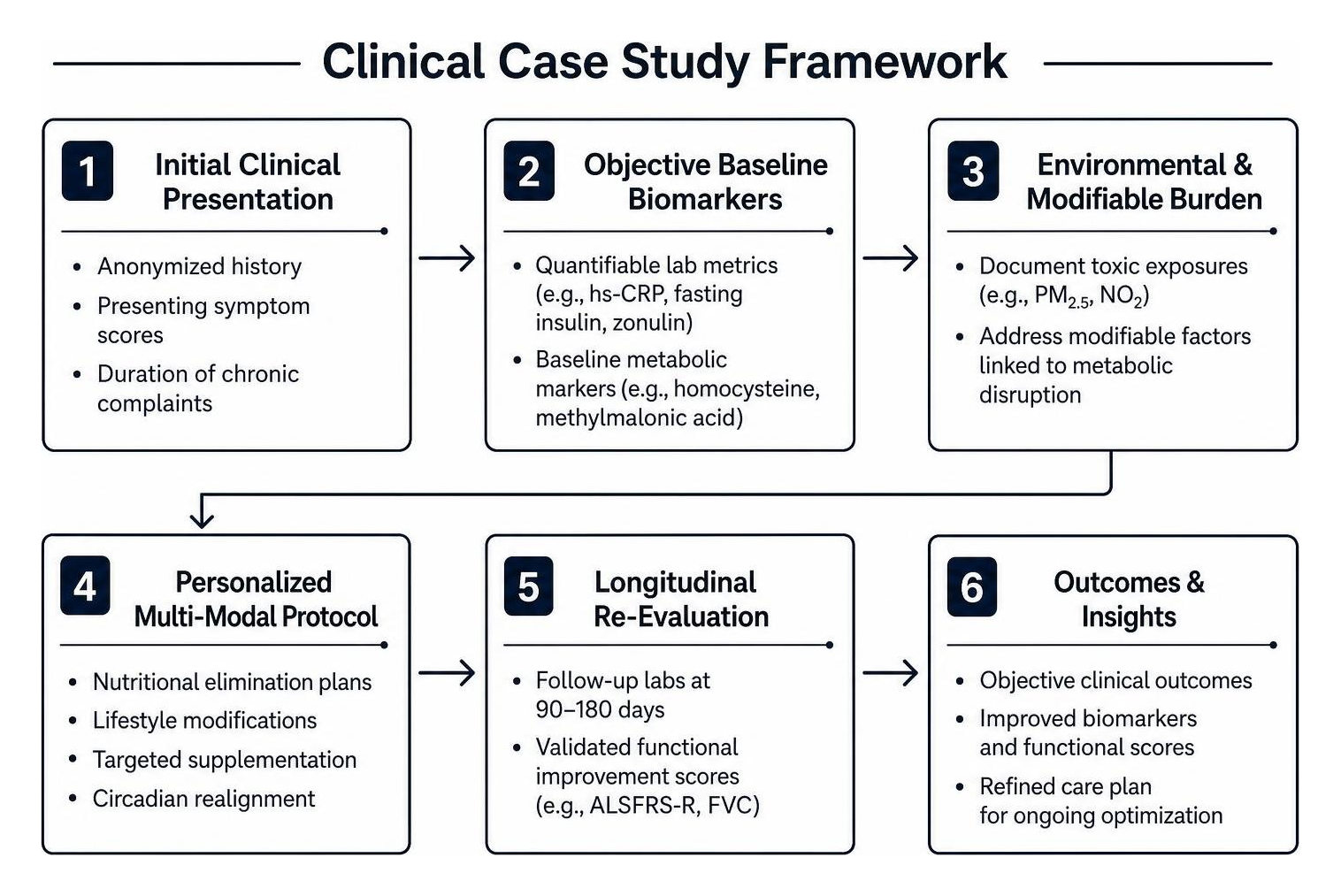
This structured storytelling moves prospective patients from passive reading to active confidence in your clinical methodology.
Implementing a Data-Driven Functional Medicine Marketing Strategy
Search behavior in 2026 has evolved beyond standard keyword queries. Patients now leverage AI search assistants alongside traditional engines to evaluate complex health questions. Maximizing your online presence requires structured technical precision.
Condition-Specific SEO Pages: Create dedicated, comprehensive pillar pages for specific conditions (such as Hashimoto's, SIBO, small intestinal bacterial overgrowth, or perimenopause) rather than packing all services onto a single generic homepage.
Generative Engine Optimization (GEO): Structure your content with concise definitions, clinical logic, and cited research so AI retrieval models can surface your clinical insights directly in synthesized search overviews.
MedicalCondition Schema Markup: Implement structured data code on every condition page, signaling to search engines the exact health conditions, treatments, and credentialed medical authors associated with your practice.
Strict HIPAA & FTC Compliance: Ensure every intake form, web chat widget, and scheduling flow uses Business Associate Agreement (BAA)-covered software to protect protected health information (PHI). Never publish non-compliant outcome promises.
As you expand digital outreach, review our scale frameworks to align practice growth with smooth technical delivery. To explore comprehensive digital systems, consider functional medicine marketing and digital marketing for functional medicine as part of one plan.
Repurposing Clinical Risk Assessments into Proactive Educational Blueprints
In hospital settings, preoperative evaluation frameworks (such as the Lawrence Risk Index, Cardiopulmonary Risk Index, and ASA physical status classifications) are routinely used to quantify risk and predict complications before non-cardiac or thoracic surgical procedures. For instance, data shows that high risk scores can predict a 22-fold increase in cardiopulmonary complications, while proactive preoperative lifestyle changes (like smoking cessation for over six months) return risk profiles toward baseline.

We can repurpose this proactive stratification concept into high-value marketing and educational content. Chronic diseases develop along a spectrum long before clinical diagnostic thresholds are crossed. By teaching prospective patients how to assess their subtle, modifiable risk factors, you position functional medicine as the premier proactive health strategy.
Metabolic Risk Self-Assessments: Interactive guides demonstrating how waist-to-hip ratio, fasting triglycerides, and glucose variability predict cardiometabolic stress years ahead of standard diagnoses.
Pulmonary & Environmental Scorecards: Educational resources explaining how indoor air quality, subclinical reactive airway issues, and toxic burdens alter systemic vitality.
Symptom Burden Inventories: Standardized questionnaires that allow prospective patients to quantify their total systemic load.
Our resource on health care online business functional medicine outlines how to turn clinical questionnaires into interactive educational assets that engage proactive consumers.
Educational Funnels That Pre-Qualify High-Intent Patients
Not every website visitor is ready for a multi-month functional medicine program. An automated educational funnel gently filters and pre-qualifies incoming prospects so your clinical team spends time only with committed candidates.
Top-of-Funnel Lead Magnet: Provide an interactive self-audit, such as an environmental burden checklist or a comprehensive elimination diet overview.
Automated Nurture Sequence: Deliver an automated 5-part email series exploring lab interpretation, lifestyle modifications, and anonymized case histories. Healthcare email sequences frequently achieve open rates exceeding 40% when content provides genuine clinical education.
Interactive Intake Assessment: Use a brief questionnaire to understand the prospect's health history, primary goals, and readiness to invest in a root-cause approach.
The 15-Minute Discovery Call: Conduct a structured consultation focused on assessing mutual fit, clarifying practice structure, and setting realistic expectations.
Many practitioners falsely believe they need endless certifications to scale, but as we explore in you don't need another certification, you need a system, growth comes from implementing predictable, reliable patient communication systems. For practitioners exploring modern automation, AI marketing for functional medicine can illuminate how AI streamlines education workflows without sacrificing clinical oversight.
Frequently Asked Questions About Practice Growth
How does functional medicine marketing differ from conventional healthcare marketing?
Conventional medical marketing typically relies on geographical proximity, urgent transactional needs, and insurance network participation. Functional medicine marketing focuses on education-driven trust building, root-cause methodology, and longer decision cycles. Because patients often invest out-of-pocket for comprehensive multi-month programs, marketing must clearly demonstrate clinical depth, personalized diagnostics, and sustained health outcomes.
How can practitioners leverage clinical research to build patient authority?
Practitioners can reference peer-reviewed clinical trials, objective functional outcome scales (such as validated functional assessment scoring), and multi-modal case studies in their blog posts, newsletters, and video content. Citing published literature on environmental toxins, nutrient biochemistry, and microbiome science builds undeniable authority and reassures cautious prospective patients.
What is the fastest way to attract cash-pay patients without burnout?
The most sustainable pathway is creating condition-specific pillar landing pages paired with automated educational email sequences and high-value lead magnets. Rather than posting endlessly on social media without a conversion mechanism, a structured educational funnel pre-qualifies prospects and guides them directly into scheduled discovery calls.
Conclusion
Building a thriving functional medicine practice requires shifting away from passive marketing habits and embracing an evidence-led, educational approach. When you highlight root-cause resolution, structure care around long-term outcomes, and translate clinical science into clear patient resources, your practice naturally becomes the premier choice for motivated health seekers.
At Functional Medicine Fast Track, we empower healthcare professionals to build fulfilling, sustainable practices. Our integrated three-pillar system combines comprehensive clinical mentorship, pre-built educational marketing funnels, and a turnkey client platform delivered directly under your brand. Discover our specialized resources on the blog and the FMFT blog, read about real practitioner transformations on our results page, or explore our about and team backgrounds.
Ready to launch or grow your practice? Take the first step by reviewing our program to start, and download our complimentary clinical resource, the Elimination Diet Food Plan Blueprint, to see how structured protocols elevate patient care and clinical authority.