
Transform Your Passion for Healing into a Functional Nutrition Career
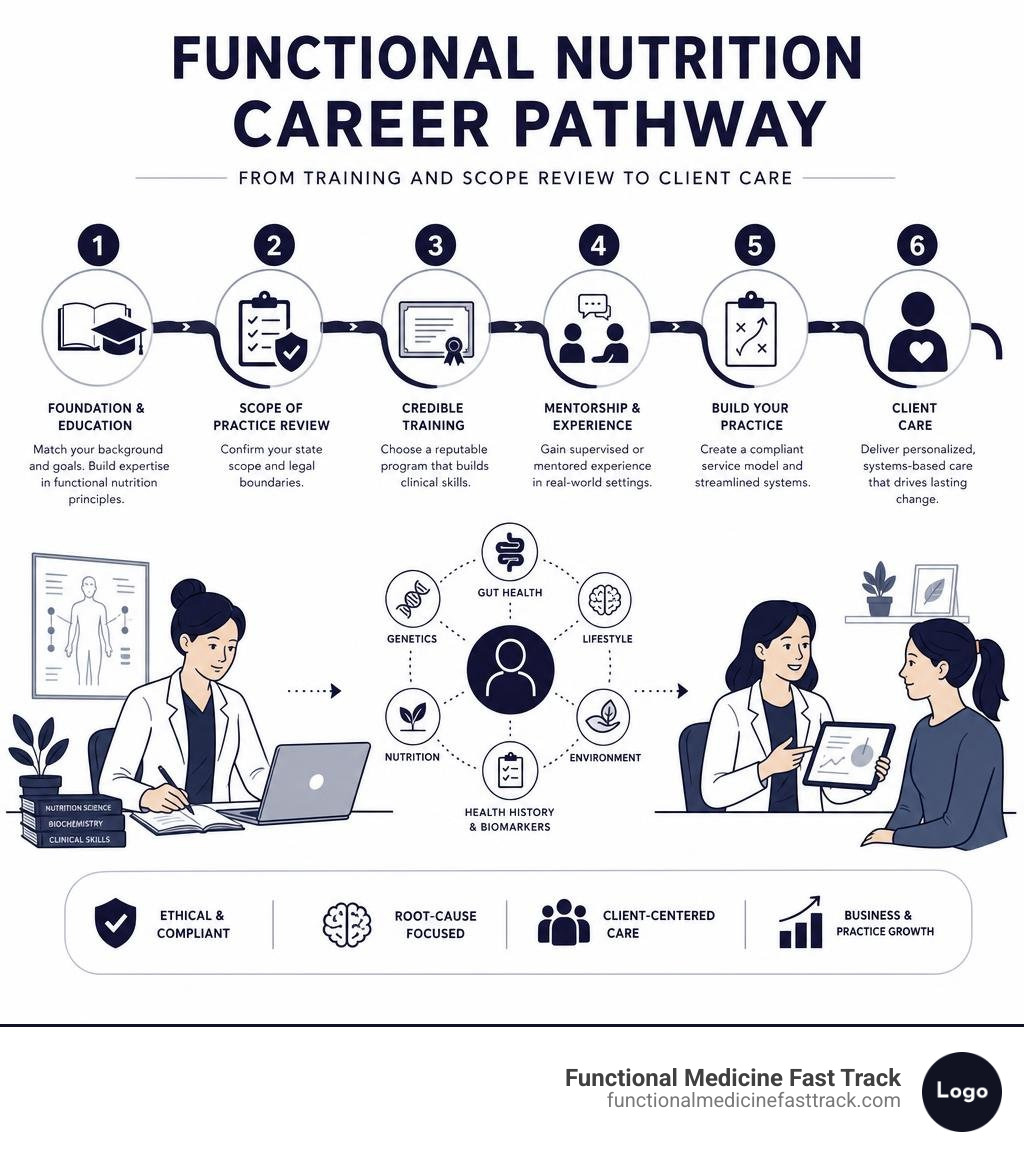
A Practical Path to a Functional Nutrition Career
To learn how to become a functional nutritionist, start by matching your education and license to your goals. Licensed healthcare professionals can add functional nutrition training to build skills in systems-based assessment, nutrition planning, lifestyle care, and appropriate lab interpretation. Then choose a credible program, confirm your state scope of practice, gain supervised or mentored experience, and build a compliant service model.
Functional nutrition looks beyond a meal plan. It connects food, symptoms, lifestyle, environment, health history, and biomarkers to help uncover patterns that may affect long-term health.
For clinicians, this can be a practical way to expand beyond short visits and symptom-focused care. Demand is clear: many Americans live with more than one chronic condition, while consumers increasingly rank wellness and healthier eating as priorities.
The key is to pair root-cause thinking with sound clinical judgment. Your existing license may shape what you can do with labs, diagnoses, supplements, and medical nutrition therapy, especially across state lines. A certification can strengthen your knowledge, but it does not automatically expand your legal scope.
This guide explains the education routes, credentials, legal guardrails, and practice-building steps that can help turn an interest in functional nutrition into a sustainable clinical service.
Functional Nutrition vs. Conventional Nutrition: Understanding the Core Differences
Conventional nutrition and dietetics traditionally operate within established dietary guidelines, emphasizing macro- and micronutrient targets to manage existing diagnoses and mitigate acute symptoms. In contrast, functional nutrition applies a systems biology model. We evaluate the human body as an integrated physiological network rather than a collection of isolated organ systems.
Functional nutrition focuses on biochemical individuality. Two individuals presenting with identical complaints—such as chronic fatigue or joint pain—may have entirely distinct underlying drivers ranging from intestinal dysbiosis to nutrient depletions. Rather than matching a standard diet sheet to a symptom, a functional nutritionist analyzes genetics, environment, gut health, toxic exposures, and lifestyle factors.
Clinical Parameter | Conventional Nutrition & Dietetics | Functional Nutrition |
|---|---|---|
Primary Focus | Symptom management & standard guidelines | Root-cause resolution & whole-body systems biology |
Assessment Approach | Caloric intake, standard macros, basic labs | In-depth health timeline, lifestyle, functional biomarkers |
Dietary Philosophy | Standardized dietary recommendations | Highly personalized protocols based on biochemical individuality |
Intervention Scope | Food plans & general lifestyle advice | Therapeutic diets, targeted nutraceuticals, lifestyle & stress modulation |
View of the Body | Segmented systems and isolated disease categories | Interconnected physiological networks |
The Science of Root-Cause Wellness
The clinical validity of functional nutrition rests upon peer-reviewed research in mucosal immunology, endocrinology, and the microbiome. For example, the gut-brain axis is supported by extensive biomedical literature demonstrating that intestinal barrier integrity directly modulates neuroinflammation, mood, and systemic immune balance.
Chronic, low-grade metabolic inflammation is recognized as a primary driver of modern lifestyle conditions. By utilizing comprehensive nutritional strategies, clinicians can influence epigenetic expression and metabolic signaling pathways. Those seeking detailed evidence on root-cause nutrition science can explore how targeted dietary interventions actively alter inflammatory markers and metabolic health profiles.
Scope of Practice: Functional Labs and Targeted Supplementation
A core operational distinction in functional nutrition is the evaluation of functional lab ranges. While standard laboratory reference ranges represent statistical averages designed to identify overt disease states, functional ranges aim to identify subclinical shifts before advanced pathology develops.
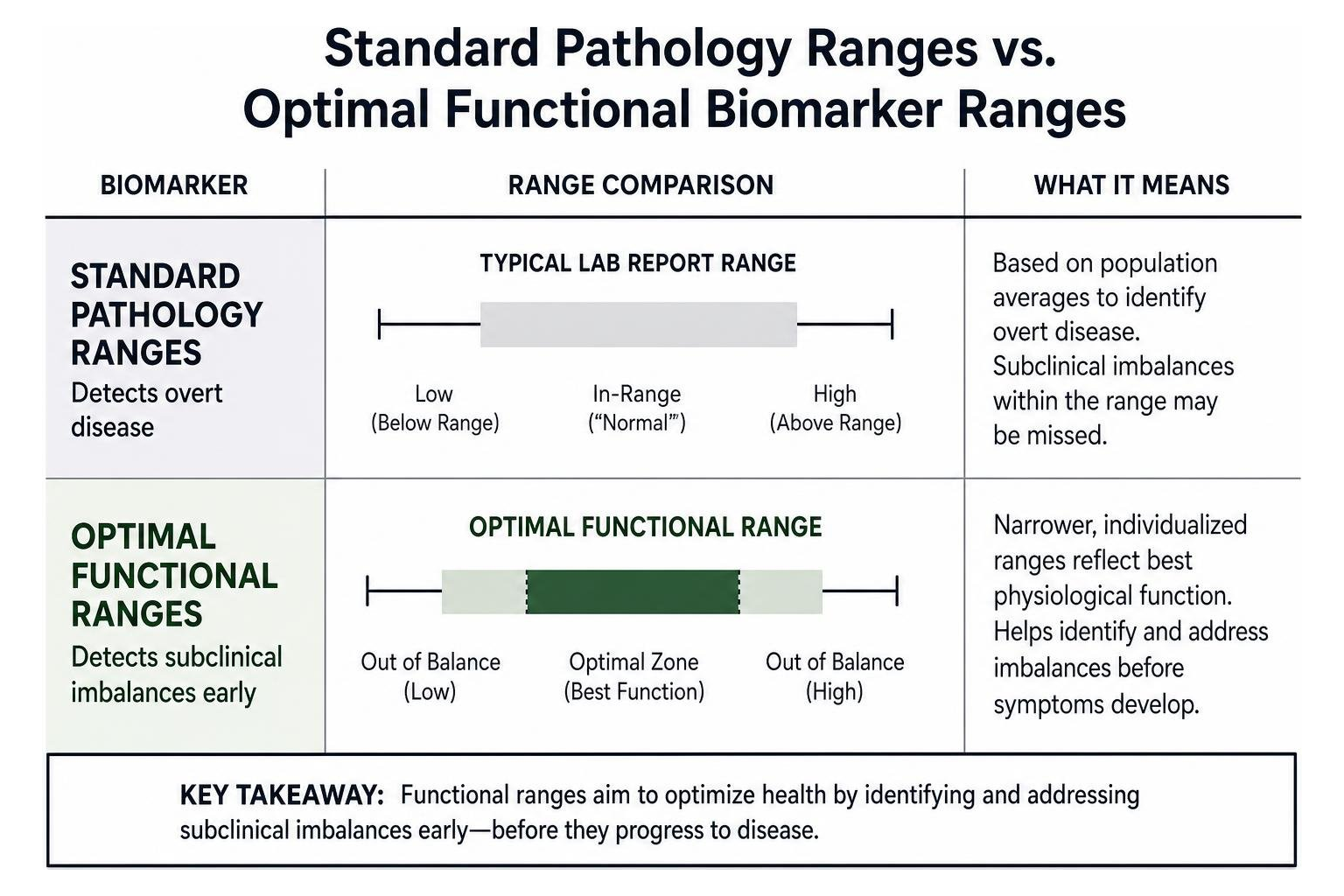
Depending on your baseline professional license and state laws, functional nutrition practitioners may assess comprehensive stool analyses, organic acid profiles, nutrient panels, and salivary hormone markers. Targeted nutraceutical protocols are then introduced to replete biochemical pathways rather than simply suppressing discomfort. Practitioners who do not hold diagnostic or lab-ordering privileges under their state license routinely operate through collaborative agreements with licensed medical providers.
Step-by-Step Roadmap: How to Become a Functional Nutritionist
Transitioning into functional nutrition requires deliberate planning. Whether you are an experienced healthcare professional or entering the wellness space, following a structured pathway ensures both clinical competency and regulatory compliance.

Step 1: Educational Prerequisites on How to Become a Functional Nutritionist
Every credible route begins with a strong foundation in human biological sciences. Essential baseline coursework includes:
General and organic chemistry
Human anatomy and physiology
Nutritional biochemistry
Cellular biology
Most advanced credentialing boards require candidates to hold a minimum of a bachelor’s degree in nutrition, dietetics, biology, kinesiology, or a related healthcare field from an accredited institution.
Step 2: Selecting Programs and Degrees for Functional Nutrition
Choosing the appropriate educational pathway depends on your starting credentials and career objectives. Academic options range from post-baccalaureate university certificates to comprehensive Master of Science (MS) degrees in Human Nutrition and Functional Medicine.
Prospective students can access comprehensive training guidance to compare academic curricula, accreditation standards, and institutional frameworks across various accredited universities and institutes. Ensure your chosen program covers core functional medicine matrices, gastrointestinal physiology, immunology, nutrigenomics, and clinical assessment methodologies.
Step 3: Clinical Hours and Credentialing Pathways
Earning recognized professional designations requires demonstrating real-world clinical application through supervised practice hours:
Certified Nutrition Specialist (CNS): Administered by the Board for Certification of Nutrition Specialists (BCNS), requiring an advanced degree (Master’s or Doctorate), specific biological science coursework, 1,000 hours of supervised clinical practice, and passing the rigorous CNS board exam.
Certified Clinical Nutritionist (CCN): Offered by the Clinical Nutrition Certification Board (CNCB), demanding specific core scientific training, postgraduate clinical modules, and successful completion of the national credentialing examination.
Mentorship under an approved clinical supervisor during these hours ensures you master the art of complex client case reviews and therapeutic plan formulation.
Navigating Licensure, Certifications, and Legal Considerations
Understanding legal boundaries is essential when establishing your practice. Nutrition practice acts vary significantly across states, creating distinct regulatory categories:

Exclusive Licensure States: States where only Registered Dietitians (RDs) or individuals holding specific state licenses can legally provide individualized nutrition assessment and medical nutrition therapy (MNT).
Certification/Title Protection States: States where non-licensed individuals may provide nutritional counseling, provided they do not use legally protected professional titles.
Non-Restrictive States: States that allow broad nutritional consulting and lifestyle education without requiring state licensure, provided services do not cross into diagnosing or treating specific medical conditions.
Certificates vs. Certifications vs. Graduate Degrees
Understanding the hierarchy of educational credentials protects your financial investment and career reputation:
Certificate of Completion: Awarded after completing a specific educational course or module series. It verifies course participation but does not confer a professional title or legal scope.
Board Certification (e.g., CNS, CCN): A credential granted by an independent certifying board verifying that an individual has demonstrated mastery through rigorous coursework, standardized exams, and supervised clinical practice.
Graduate Degree (MS or Ph.D.): An accredited academic degree providing deep scientific education in biochemistry and clinical research, serving as the foundational requirement for elite board certifications and clinical licensure.
How to Become a Functional Nutritionist Across State Lines Without an RD
Practicing across state lines—especially through virtual clinics—requires rigorous adherence to telehealth laws and jurisdictional nutrition regulations. Many non-RD healthcare providers successfully navigate these parameters by offering generalized functional health education, lifestyle coaching, and bio-individual wellness support while refraining from diagnosing disease or prescribing treatment.
To understand how other clinicians adapt their current scope, explore how healthcare professionals transition to functional medicine within their legal practice boundaries.
Building a Profitable Functional Nutrition Practice
A clinical skill set must be paired with an effective business model to achieve long-term professional sustainability. Modern functional nutritionists frequently step outside the constraints of insurance billing to build cash-based practices that allow for thorough, personalized care.
Designing High-Impact Client Packages
Selling single hourly sessions often leads to poor client outcomes and inconsistent clinic revenue. Chronic health challenges require time, behavioral change, and iterative protocol adjustments. Structuring comprehensive 3- to 6-month wellness packages yields superior results:
Comprehensive Intake: 75–90 minute evaluation covering complete timeline mapping, lifestyle factors, and biomarker review.
Active Support Phase: Bi-weekly video consultations to refine therapeutic food plans, address barriers, and monitor progress.
Between-Session Messaging: Secure, HIPAA-compliant messaging to enhance compliance and provide ongoing encouragement.
Re-Evaluation Milestone: Strategic protocol review and functional biomarker re-testing to document objective progress.
Scaling Your Business Beyond One-on-One Care
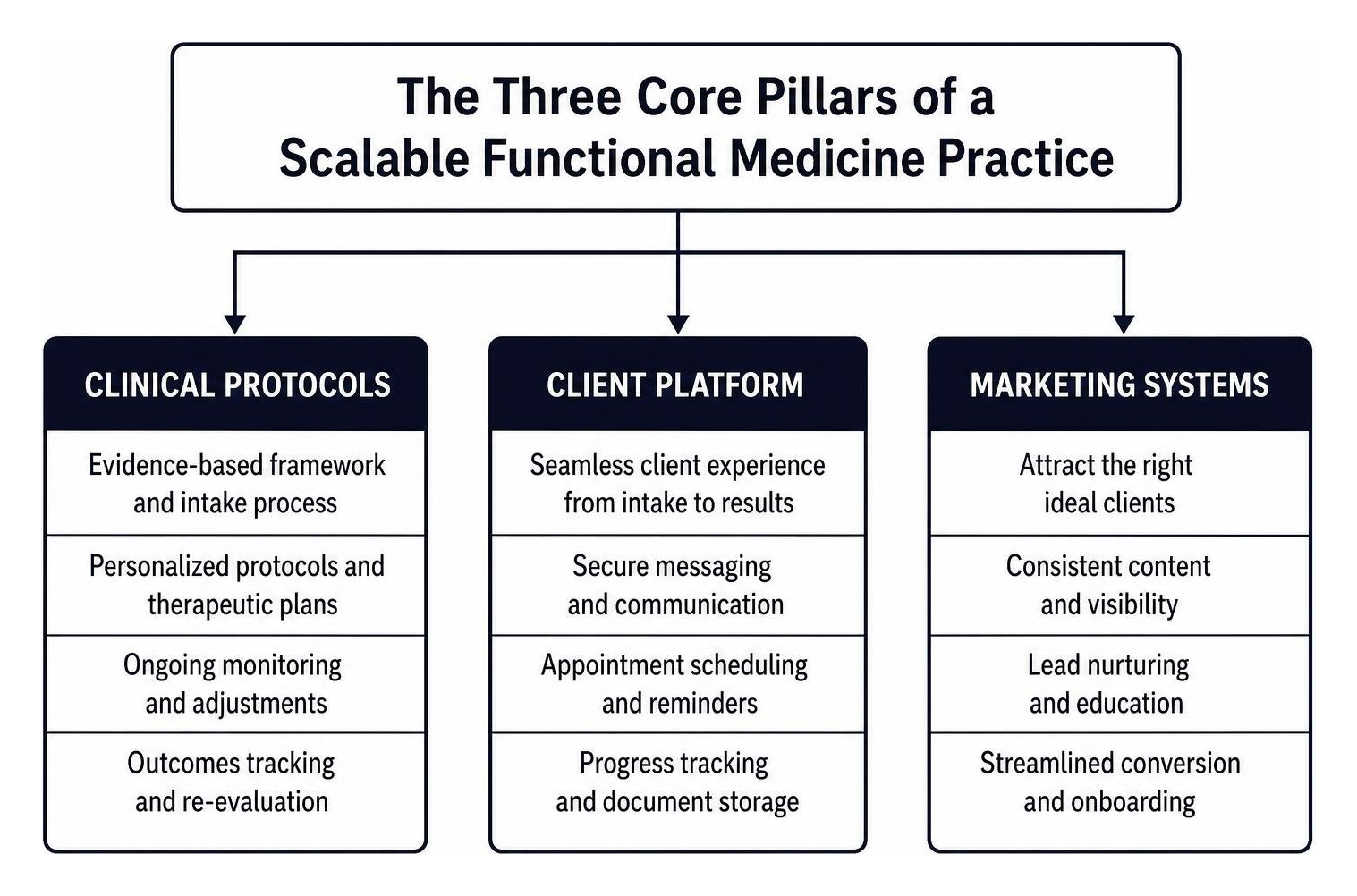
As your individual client roster reaches capacity, scaling requires shifting from trading time for money into scalable delivery systems. Practitioners looking for a step-by-step strategy can learn more about building a sustainable functional side practice while maintaining clinical excellence.
Many practitioners fall into the trap of pursuing credential after credential, believing another title will suddenly generate clients. In reality, why you need a practice system over endless credentials is clear: business growth depends on streamlined clinical workflows, client acquisition systems, and effective delivery models.
Frequently Asked Questions About Becoming a Functional Nutritionist
How long does it take and how much does it cost to become a functional nutritionist?
The timeline and financial investment depend entirely on your chosen pathway:
Accelerated Clinical Training: 4 to 12 months for licensed healthcare professionals seeking to integrate functional nutrition principles rapidly. Review our breakdown of what an accelerated functional medicine program actually produces in terms of clinical systems and practice growth.
Master’s Degree Route: 2 to 3 years for individuals pursuing a full academic MS in Human Nutrition and Functional Medicine.
Financial Investment: Continuing education and specialized certifications range between $5,000 and $20,000, while university master’s programs range from $25,000 to over $45,000.
Do you have to be a Registered Dietitian to practice functional nutrition?
No, you do not have to be a Registered Dietitian to practice functional nutrition. While RDs hold the broadest legal recognition for medical nutrition therapy in all 50 states, non-RD practitioners holding advanced certifications (like the CNS) or healthcare licenses (such as DCs, RNs, NPs, NDs, or MDs) can provide functional nutrition services within their legal scope of practice. Health coaches and unlicensed practitioners can offer non-medical dietary education and wellness consulting in non-restrictive states.
What career settings and earning potential can you expect?
Functional nutritionists operate across diverse settings, including:
Private independent virtual or brick-and-mortar clinics
Integrative and functional medicine group practices
Corporate health and executive wellness programs
Nutraceutical formulation and clinical research
Digital health platforms and specialized telehealth companies
Private functional nutrition practitioners generally charge between $150 and $300 per hour or offer multi-month transformation packages ranging from $1,500 to $5,000+, depending on program depth and market positioning.
Conclusion
Transitioning into functional nutrition allows you to break free from reactive healthcare and deliver the deep, root-cause transformations your clients are searching for. By integrating scientific systems biology, mastering clinical assessments, and operating within legal guardrails, you can build a fulfilling and financially sustainable career.
If you are ready to implement a proven clinical framework, attract qualified clients, and launch your practice without years of trial and error, we are here to support your journey. Learn how to scale your functional medicine nutrition practice with an integrated system designed to deliver lasting client outcomes and business success.