
Creative Prescriptions: The Emerging Role of Expressive Arts in Integrative Care
Defining Functional Medicine Art Therapy and Root-Cause Healing
At its core, functional medicine art therapy represents the deliberate fusion of non-verbal, expressive modalities with the principles of systems biology and root-cause resolution. Traditional art therapy primarily focuses on psychological processing, emotional catharsis, and psychodynamic exploration within a mental health framework. While undeniably valuable, it often operates in isolation from the patient's underlying physiological state, cellular metabolism, and autonomic neurobiology.
In contrast, our approach within functional medicine views creative expression as a targeted physiological intervention. We evaluate how chronic emotional distress, unaddressed trauma, and autonomic nervous system dysregulation contribute to systemic inflammation, hormonal imbalances, and gastrointestinal dysfunction. By engaging the creative process, patients tap into their innate salutogenic (health-generating) capacities.
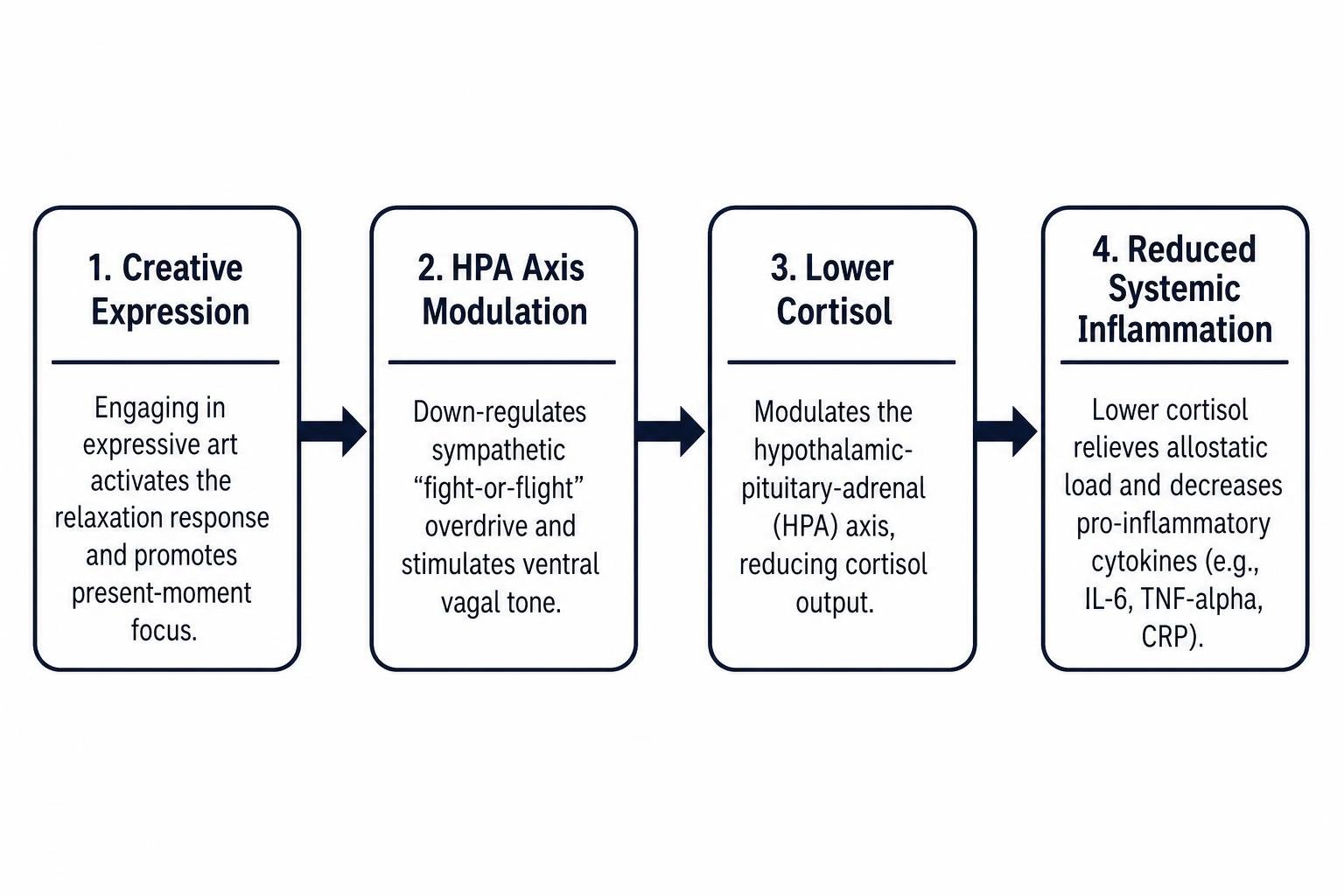
Expressive modalities directly interface with the mental, emotional, and spiritual (M-E-S) nodes of the functional medicine matrix. When patients externalize complex internal states through art, they actively down-regulate sympathetic "fight-or-flight" overdrive and stimulate ventral vagal tone, fostering the physiological safety necessary for cellular repair. As highlighted in clinical insights on art therapy programs, integrating creative expression into integrative medicine empowers patients by translating abstract physical suffering into tangible visual narratives of survivorship and recovery.
Therapeutic Dimension | Traditional Art Therapy | Functional Medicine Art Therapy |
|---|---|---|
Primary Focus | Psychological insight, psychodynamic processing, and emotional catharsis | Root-cause resolution, systems biology, autonomic regulation, and mind-body physiology |
Clinical Context | Mental health clinics, psychotherapy practices, and psychiatric facilities | Integrative practices, functional medicine clinics, and multidisciplinary wellness centers |
Physiological Tracking | Primarily qualitative self-reports and behavioral observations | Correlated with biomarkers (e.g., cortisol, HRV, inflammatory cytokines) and metabolic status |
Integration Level | Standalone therapy or paired with conventional psychotherapy | Synchronized with personalized nutrition, targeted detoxification, gut restoration, and lifestyle protocols |
Mechanism Target | Cognitive reframing, emotional expression, and psychological trauma integration | Polyvagal regulation, default mode network rewiring, HPA-axis modulation, and neuro-immune balance |
Biomarkers, Neurobiology, and the Immune Response
The therapeutic mechanisms of expressive arts are grounded in measurable neurobiology and psychoneuroimmunology. Chronic physiological and psychological stress triggers persistent activation of the hypothalamic-pituitary-adrenal (HPA) axis, leading to sustained glucocorticoid output, receptor resistance, and systemic pro-inflammatory cytokine production (such as IL-6, TNF-alpha, and CRP).
Engaging in therapist-guided visual art creation acts as a neurobiological interrupt. Research indicates that just 45 minutes of structured art-making significantly reduces salivary cortisol levels in approximately 75% of participants, regardless of their prior artistic skill or experience. This acute down-regulation of stress hormones relieves allostatic load across multiple physiological systems.
Furthermore, neuroimaging studies explored in a narrative review on neuro-psycho-cultural mechanisms demonstrate that art-making actively modulates large-scale brain networks. Specifically, it reconfigures functional connectivity within the Default Mode Network (DMN), the Salience Network (SN), and the Central Executive Network (CEN). Overactivity and maladaptive connectivity within the DMN are strongly correlated with depressive rumination, chronic pain amplification, and severe anxiety.
By immersing a patient in the tactile, present-moment sensory flow of art creation, expressive therapy promotes neuroplasticity, enhances interpersonal neural synchrony between patient and practitioner, and strengthens executive emotional regulation.
Integrating Functional Medicine Art Therapy with Nutrition and Detoxification
One of the most powerful applications of expressive arts lies in its clinical synergy with metabolic interventions, elimination diets, and detoxification pathways. Chronic stress alters gut motility, compromises intestinal mucosal integrity (leading to increased intestinal permeability), and suppresses secretory IgA production. When patients undergo intensive dietary transitions, the accompanying psychological friction can spike cortisol, undermining metabolic benefits.
A landmark study on metabolic syndrome and art therapy demonstrated the clinical efficacy of combining dietary interventions—such as a plant-based detox and fasting-mimicking protocols—with structured physical movement and daily creative art therapy (including mural work and free-hand drawing). Over a 10-day residential program, participants exhibited marked reductions in waist-to-height ratio, glycemic values, and both systolic and diastolic blood pressure:
Participants in the high metabolic-risk category (waist-to-height ratio $\ge 0.56$) dropped from 38% to 23%.
Individuals with high-risk fasting glycemia ($\ge 95\text{ mg/dL}$) fell from 53% to 36%.
Elevated systolic blood pressure ($\ge 140\text{ mmHg}$) decreased from 18% to just 7%.
By simultaneously targeting cellular autophagy through fasting and central nervous system calming through creative expression, practitioners can suppress NLRP3 inflammasome activation, stabilize the gut-brain axis, and achieve profound metabolic re-alignment.
Modalities, Patient Assessment, and Clinical Evidence
Expressive therapies encompass a rich spectrum of artistic media, each engaging distinct neurological, tactile, and somatic pathways. In functional medicine, we match the artistic medium to the patient's individual physiological state, autonomic tone, and therapeutic requirements.
For example, fluid media such as watercolor painting encourage emotional release, intuitive processing, and cognitive flexibility, making them ideal for patients experiencing rigid stress patterns or perfectionistic tendencies. Conversely, resistive media like clay modeling and wood sculpting provide deep proprioceptive feedback, grounding patients stuck in dissociative trauma loops or severe autonomic hyperarousal.
The clinical efficacy of these artistic modalities is well-documented in a multicenter, 4-year cohort study on Anthroposophic art therapy. Evaluating chronic disease patients across 54 clinical practices who engaged in structured modalities—including painting, drawing, clay modeling, and music therapy—the study revealed:
Disease severity scores decreased significantly from a baseline mean of 6.69 down to 2.46 over 12 months ($p < 0.001$), with a large standardized effect size (SRM = 1.76).
Chronic symptom burden scores fell from 5.99 to 3.40 ($p < 0.001$).
Health-related quality of life (SF-36 mental component) rose from 35.07 to 42.13.
Annual physician visits decreased from an average of 22.0 to 16.56 ($p = 0.002$), while hospital days dropped from 5.43 to 1.62 per year ($p = 0.008$), with improvements persisting through 48 months of follow-up.
Multimodal Protocols and Chronic Disease Outcomes
Bundling diverse artistic modalities into a structured, progressive program addresses varied cognitive styles and physical capabilities. A clear example of this approach is evaluated in a randomized controlled trial on multimodal arts programming studying the 8-week HeRe We Arts® curriculum (Gallagher et al., 2024). The intervention combined visual art creation, music therapy, expressive movement, creative writing, and theater games in community-dwelling adults with chronic medical conditions.
The trial demonstrated statistically significant improvements ($p < 0.05$) across several validated clinical metrics:
Resilience and Coping: Marked increases on the Brief Resilient Coping Scale (BRCS) sustained at both Week 8 and Week 16.
Mental Well-Being: Substantial elevations on the Short Warwick-Edinburgh Mental Well-Being Scale (SWEMWBS).
Mood Elevation: 91.4% of participants reported improved mood on the Short Depression-Happiness Scale at Week 16 follow-up.
Physical and Mental Functioning: Significant gains in PROMIS global physical and mental health T-scores.
Participant Engagement: 98.6% of participants rated the program as very good or excellent, and 98.6% reported that arts programming actively improved their overall health and well-being (compared to 76% holding that belief prior to the study).
Assessing Patient Candidacy for Functional Medicine Art Therapy
Not every patient is immediately prepared to engage in expressive therapy, making careful clinical intake essential. Practitioners must assess autonomic stability, somatic readiness, and trauma history.
We utilize comprehensive screening questions during functional medicine evaluations to identify whether patients are caught in chronic sympathetic dominance, freeze states, or overwhelming emotional suppression. Reviewing evidence-based strategies in our blog helps clinicians identify when patients with complex autoimmune conditions, chronic fatigue syndrome, or treatment-resistant gut disorders are hitting physiological plateaus due to underlying neuro-emotional blockages.
Key indicators of strong patient candidacy include:
High Allostatic Load: Elevated perceived stress scores alongside altered diurnal cortisol curves or reduced heart rate variability (HRV).
Verbal Therapy Fatigue: Patients who report feeling stuck, intellectualizing their trauma, or hitting cognitive walls during traditional talk therapy.
Somatic Symptom Amplification: Individuals experiencing visceral hypersensitivity, fibromyalgia, or migraines exacerbated by emotional triggers.
Desire for Creative Agency: Patients seeking an active, empowering role in their healing journey rather than passive symptom management.
Practical Implementation and Self-Care Protocols
To maximize clinical efficacy, expressive arts should extend beyond the clinic walls into sustainable daily self-care routines. Patients do not need artistic talent; the therapeutic power lies entirely in process-oriented creation and sensory engagement.

Practitioners can guide patients to establish simple, low-barrier daily rituals. For instance, incorporating a 15-minute daily creative reset—combining intention setting, somatic breath awareness, focused visual or tactile creation, and a closing reflection of gratitude—can significantly disrupt chronic stress patterns.
Brief, non-demanding creative routines provide profound relief not only for chronic illness sufferers but also for exhausted caregivers battling empathy fatigue. Utilizing accessible tools such as open-ended mandala coloring, neurographic sketching, or intuitive watercolor blending provides rapid parasympathetic resets without performance anxiety.
Clinical Workflow and Multidisciplinary Practice Integration
For integrative practitioners, incorporating expressive arts into practice models enhances clinical outcomes while building scalable, community-centered care. We recommend several structured integration workflows:
Integrative Group Medical Visits: Delivering expressive arts within shared medical appointments fosters social cohesion, normalizes chronic illness challenges, and reduces feelings of isolation.
Biofeedback Pairing: Coupling real-time Heart Rate Variability (HRV) or electrodermal biofeedback with expressive art sessions allows patients to visually observe their autonomic nervous system shift from sympathetic tension into parasympathetic coherence as they paint or sculpt.
Multidisciplinary Team Collaboration: Building a cohesive care team—pairing functional medicine providers with certified art therapists, nutritionists, and mind-body coaches—ensures that physiological diagnostics and expressive therapies reinforce each other. Learn more about how we structure multidisciplinary care on our team page.
Frequently Asked Questions about Expressive Arts in Functional Medicine
How does expressive art impact stress biomarkers and immune function?
Expressive art down-regulates the sympathetic nervous system and the HPA axis, resulting in measurable decreases in salivary cortisol and systemic inflammatory cytokines (such as IL-6). By activating the parasympathetic nervous system, it supports heart rate variability, promotes cellular repair, and enhances mucosal immune defenses (e.g., salivary IgA).
Can patients without artistic skills participate effectively?
Yes. Clinical expressive arts therapy is entirely process-oriented rather than product-driven. The therapeutic mechanism relies on sensory engagement, proprioceptive feedback, emotional externalization, and neurobiological state shifting. Artistic skill, technique, and prior experience do not affect the physiological and psychological benefits.
How do expressive therapies complement nutritional and detoxification protocols?
Chronic psychological stress alters intestinal permeability, compromises the gut microbiome, and impedes metabolic detoxification pathways. By mitigating autonomic stress, expressive therapies reduce cortisol-mediated gut barrier breakdown, lower blood pressure, improve insulin sensitivity, and help patients maintain dietary and lifestyle protocols.
Conclusion
The integration of expressive arts into functional medicine represents a vital evolution toward true whole-person healthcare. Chronic, complex illnesses are rarely purely biochemical or purely psycho-emotional; they are dynamic, interconnected systemic disorders. By utilizing expressive arts to modulate autonomic tone, optimize neuro-immune pathways, and support metabolic health alongside root-cause diagnostics, clinicians can activate profound self-healing capacities within their patients.
At Functional Medicine Fast Track, we empower healthcare professionals to build, launch, and scale transformative integrative practices. We combine clinical mentorship, pre-built marketing systems, and an all-in-one client delivery platform so practitioners can deliver comprehensive, root-cause care under their own brand. Discover our mission and explore how we support visionary providers on our about page.
References
Gallagher L, Shella T, Bates D, Briskin I, Jukic M, Bethoux F. "Utilizing the arts to improve health, resilience, and well-being (HeRe We Arts®): a randomized controlled trial in community-dwelling individuals with chronic medical conditions.." Frontiers in public health, 2024. PMCID PMC10879815.