

Giving Low Dose Naltrexone Your Best Shot Against Fibromyalgia Flare-Ups
Can Low-Dose Naltrexone Help With Fibromyalgia?
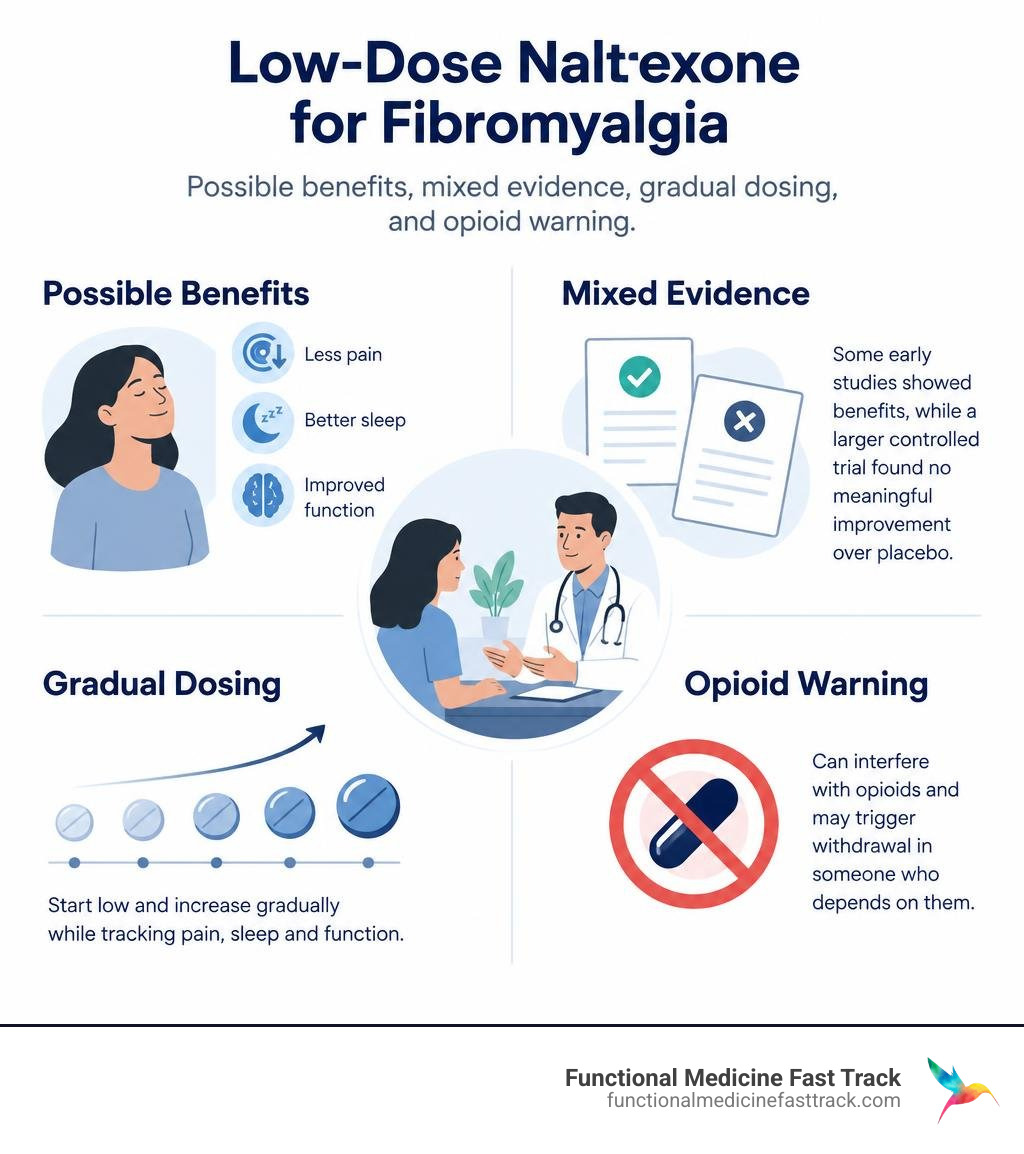
Low-dose naltrexone (LDN) may help some people with fibromyalgia pain, but the evidence is mixed. Small early studies found benefits, while a larger controlled trial found no meaningful improvement over placebo. It is not FDA-approved for fibromyalgia. If you are considering it for a patient, review their medications first: LDN can interfere with opioids and may trigger withdrawal in someone who depends on them.
Clinicians who prescribe LDN often start with a small dose and increase it gradually while tracking pain, sleep, and function. It is best viewed as a possible addition to a broader care plan, not a proven way to prevent flare-ups.
I'm Garric Vosloo, CEO of Functional Medicine Fast Track and a former Institute for Functional Medicine Certified Practitioner, with more than 30 years of experience consulting with patients and running two practices. I bring that background to this guide on low-dose naltrexone for fibromyalgia to help clinicians weigh the evidence and make safer treatment decisions.
Introduction
Fibromyalgia (FM) is a complex chronic pain disorder characterized by widespread musculoskeletal discomfort, profound fatigue, cognitive disturbances, and restorative sleep deficits. It affects a substantial portion of the global population—with a significantly higher prevalence in women—and carries a substantial socioeconomic and personal burden.
Modern pain neuroscience categorizes fibromyalgia as a nociplastic pain state driven by central sensitization. Rather than localized tissue injury or active joint damage, the central nervous system amplifies sensory inputs, lowering pain thresholds and producing widespread hyperalgesia and allodynia.
Mounting scientific interest focuses on the role of neuroinflammation in this process. Central nervous system immune cells, known as microglia, can become chronically primed and reactive. For clinicians and patients seeking therapies beyond conventional pharmaceuticals for fibromyalgia, low dose naltrexone represents an off-label therapeutic option aimed at modulating these neuroinflammatory and neurochemical pathways.
Understanding Fibromyalgia Low Dose Naltrexone Therapy
Naltrexone hydrochloride was originally developed and approved by the FDA in the 1980s as an orally active, long-acting opioid antagonist. At standard therapeutic doses, it blocks mu-, kappa-, and delta-opioid receptors, making it a primary pharmacotherapy for opioid and alcohol dependence.
However, naltrexone exhibits a notable biphasic dose response. When administered at a fraction of its conventional addiction-treatment dose, naltrexone displays distinct pharmacodynamic properties that transition it from an opioid-blocking agent to a neuro-immunomodulating compound.
Standard vs. Low-Dose Naltrexone Differences
The divergence between standard and low-dose applications centers around dosage size, receptor occupancy duration, and cellular targets:
Standard-Dose Naltrexone (50 mg to 100 mg daily): Produces continuous, long-lasting blockade of central and peripheral opioid receptors. This prevents exogenous opioids from binding and blunts the dopamine-mediated reward feedback loops associated with substance dependence.
Low-Dose Naltrexone (0.5 mg to 4.5 mg daily): Induces a transient, temporary blockade of opioid receptors lasting roughly 4 to 6 hours. Rather than suppressing the body's natural pain pathways, this short-lived blockade stimulates compensatory homeostatic mechanisms, encouraging endogenous endorphin production and dampening neuroinflammatory cascades.
Mechanisms: Microglial Suppression and Endorphin Rebound
The therapeutic rationale for LDN in central pain syndromes rests upon two distinct, complementary biological mechanisms:
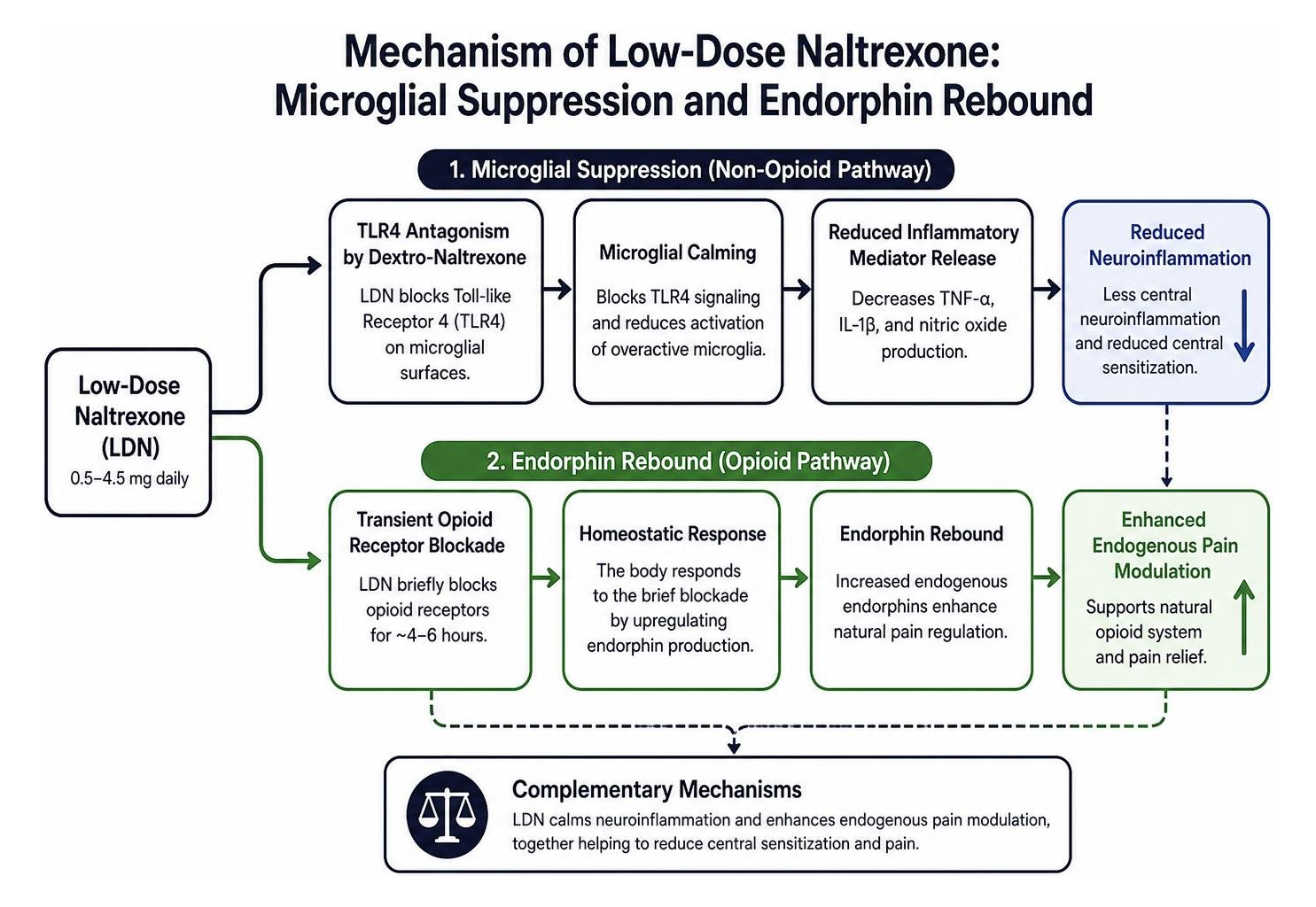
1. Non-Opioid Toll-Like Receptor 4 (TLR4) Antagonism and Microglial Calming
Within the central nervous system, microglial cells serve as the resident immune defenders. Under conditions of chronic physical stress, peripheral inflammation, or trauma, microglia can shift into a pro-inflammatory state. In this state, they release inflammatory mediators including tumor necrosis factor-alpha (TNF-alpha), interleukin-1 beta (IL-1beta), and nitric oxide, sustaining central sensitization and lowering pain thresholds.
Naltrexone exists as a racemic mixture of two enantiomers: dextro-naltrexone and levo-naltrexone. While levo-naltrexone acts on traditional opioid receptors, dextro-naltrexone acts as an antagonist at Toll-like Receptor 4 (TLR4) on microglial surfaces. By blocking microglial TLR4 signaling, LDN reduces the production of pro-inflammatory cytokines, calming overactivated microglia and reducing central neuroinflammation.
2. Endogenous Opioid Rebound and Descending Pain Inhibition
When taken at bedtime, a 1.5 mg to 4.5 mg dose of LDN temporarily occupies opioid receptors for a few hours. The body perceives this brief blockade as a deficit in opioid signaling. In response, cells upregulate opioid receptor expression and increase endogenous production of beta-endorphins and enkephalins.
Once the small dose clears the system in the early morning hours, the elevated pool of natural endorphins binds to the upregulated receptors. This enhances the brainstem's descending inhibitory pain pathways, naturally dampening ascending nociceptive pain signals.
Clinical Evidence and Efficacy for Flare-Up Relief
The clinical evidence for LDN in fibromyalgia includes small randomized trials, open-label pilot studies, and more recent crossover investigations.
What the Research Shows for Fibromyalgia Low Dose Naltrexone
In an initial pilot crossover study conducted at Stanford University by Younger and Mackey, 10 women with fibromyalgia received 4.5 mg of LDN daily. LDN reduced overall fibromyalgia symptom severity by 32.5% compared to 2.3% with placebo. The study also demonstrated statistically significant increases in both mechanical pain thresholds (pressure algometry) and heat pain thresholds, alongside improvements in daily fatigue and stress levels.
A subsequent double-blind, placebo-controlled crossover study involving 31 women confirmed significant pain-reduction benefits, with a majority of participants meeting the criteria for a clinical responder by experiencing meaningful daily pain relief.
However, scientific evaluation requires looking at the entire body of literature. A 2023 randomized, double-blind, placebo-controlled crossover trial conducted by Johansen and colleagues evaluated 58 women with fibromyalgia using 4.5 mg daily LDN. In that trial, the median difference in Revised Fibromyalgia Impact Questionnaire (FIQR) scores and Summed Pain Intensity Ratings (SPIR) did not demonstrate a statistically significant analgesic advantage over placebo.
A systematic review published in 2023 synthesized data across 9 studies representing 431 total participants (159 with fibromyalgia). The authors concluded that while LDN displays an encouraging safety profile and clinically meaningful improvements in pain, fatigue, and quality of life for certain subsets of patients, further large-scale, multi-center trials are necessary to standardize approaches and clarify responder profiles. For a broader look at the evidence base, the Stanford randomized clinical trial provides additional context on how these early fibromyalgia studies were designed.
Comparing LDN to Standard FDA-Approved Medications
Currently, the FDA has approved three medications specifically for fibromyalgia management: pregabalin (an alpha-2-delta ligand calcium-channel modulator), duloxetine (an SNRI), and milnacipran (an SNRI).
Treatment Option | Primary Mechanism of Action | Common Clinical Responder Rate (Clinically Meaningful Relief) | Frequent Adverse Effects | Typical Treatment Discontinuation Rate |
|---|---|---|---|---|
Low-Dose Naltrexone (LDN) | TLR4 microglial antagonism; Endorphin rebound | Varies across pilot and cohort trials | Vivid dreams, transient insomnia, mild initial headache | Low |
Pregabalin | Modulates voltage-gated calcium channels; reduces excitatory neurotransmitters | Varies | Dizziness, somnolence, peripheral edema, weight gain, cognitive fog | Moderate to High |
Duloxetine | Inhibits presynaptic reuptake of serotonin and norepinephrine | Varies | Nausea, dry mouth, constipation, hyperhidrosis, sexual dysfunction | Moderate |
Milnacipran | Inhibits norepinephrine and serotonin reuptake | Varies | Nausea, tachycardia, hypertension, palpitations, hot flashes | Moderate to High |
While FDA-approved medications offer relief for some individuals, their clinical utility can be constrained by tolerability issues and side-effect burdens. By contrast, LDN works through an immune-modulating pathway rather than altering monoamine neurotransmitters or calcium channels directly, addressing central sensitization from a distinct therapeutic angle.
Furthermore, real-world population data highlights LDN's potential to alter pain medication reliance. A pharmacoepidemiological analysis of patients in Norway who initiated LDN therapy observed a substantial reduction in long-term opioid consumption, underscoring its utility as an opioid-sparing agent in complex pain cohorts.
Dosing Plans, Titration, and Safe Administration
Because commercial naltrexone is manufactured exclusively as a 50 mg tablet designed for addiction medicine, low-dose approaches require extemporaneous compounding by an accredited, licensed compounding pharmacy.
Prescribers must specify immediate-release formulations. Slow-release or enteric-coated preparations can defeat the core pharmacodynamic goal: creating a sharp, short-lived peak followed by rapid clearance to trigger the endogenous endorphin rebound.
Practical Plans for Fibromyalgia Low Dose Naltrexone
Clinical research into dosing for common fibromyalgia symptoms has generally pointed to 4.5 mg once daily as the standard clinical target for most adults.
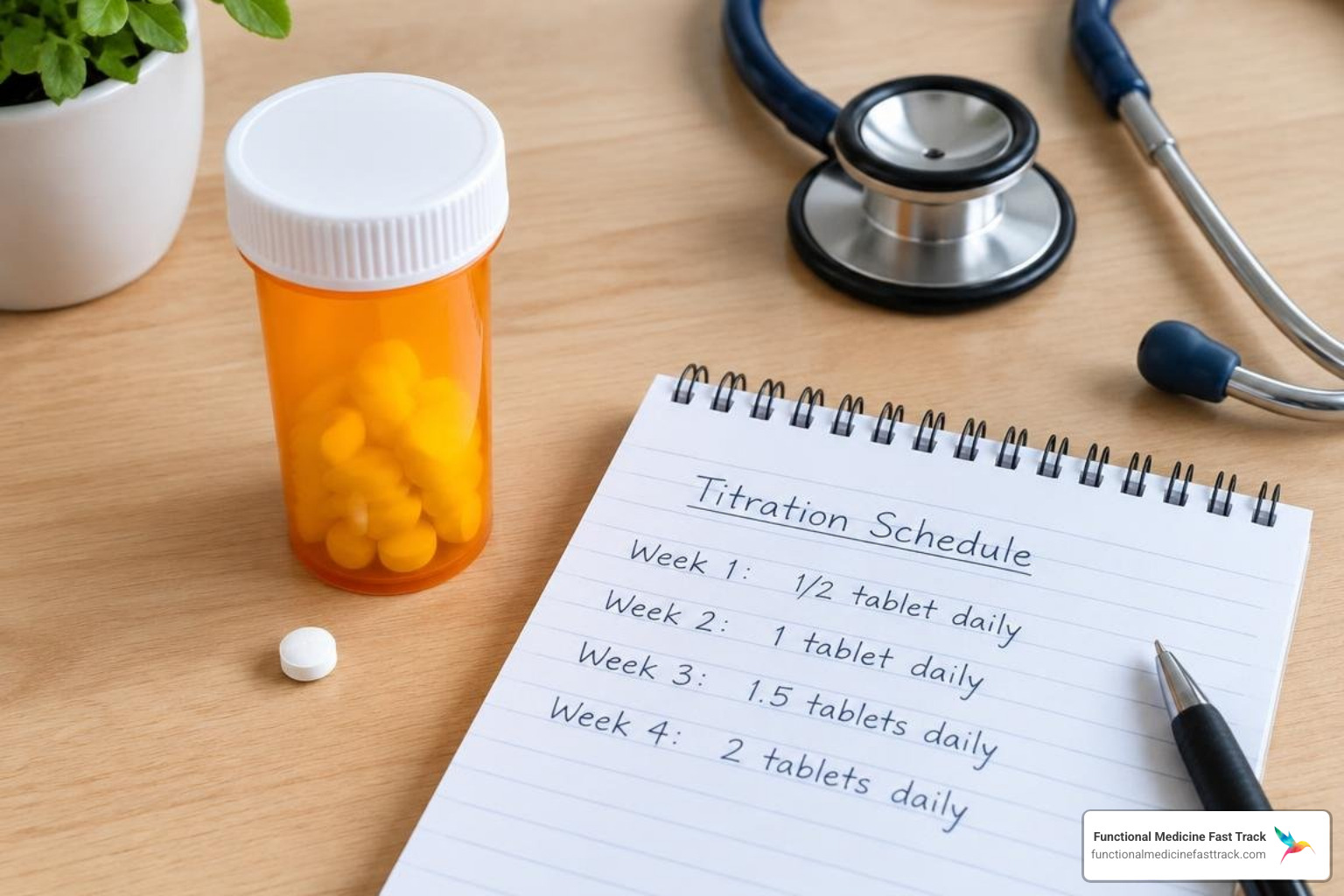
To minimize early transient side effects, clinical best practices emphasize a gradual titration approach:
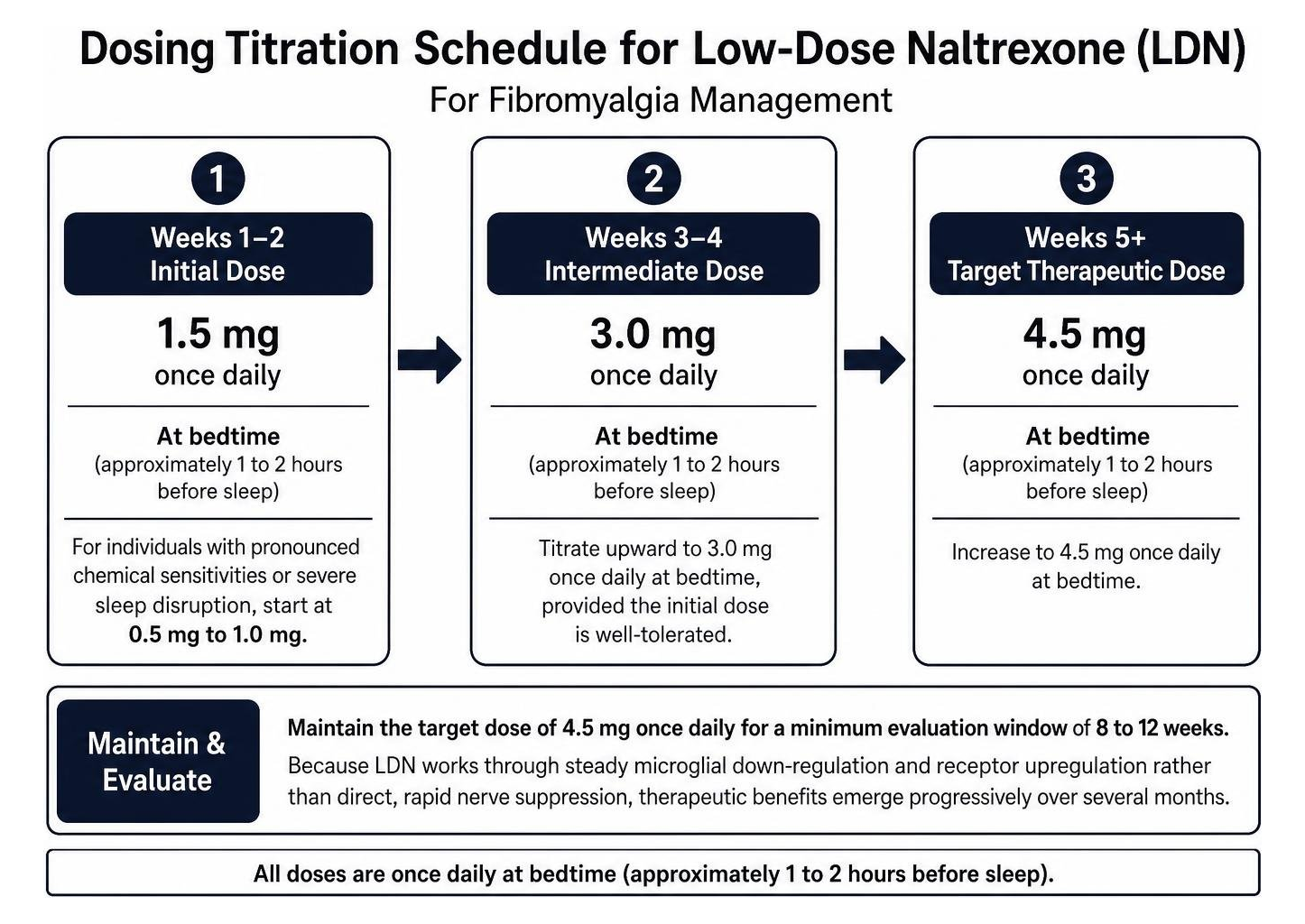
Weeks 1–2 (Initial Dose): 1.5 mg once daily taken at bedtime (approximately 1 to 2 hours before sleep). For individuals with pronounced chemical sensitivities or severe sleep disruption, starting at 0.5 mg to 1.0 mg is advisable.
Weeks 3–4 (Intermediate Dose): Titrate upward to 3.0 mg once daily at bedtime, provided the initial dose is well-tolerated.
Weeks 5+ (Target Therapeutic Dose): Increase to 4.5 mg once daily at bedtime.
Patients should maintain this target dose for a minimum evaluation window of 8 to 12 weeks. Because LDN relies on steady microglial down-regulation and receptor upregulation rather than direct, rapid nerve suppression, therapeutic benefits emerge progressively over several months.
If a patient experiences sleep disruption or vivid dreams that do not settle after two weeks, switching the administration time to the morning provides comparable microglial TLR4 suppression without interfering with nocturnal sleep architecture.
Managing Side Effects and Contraindications
A systematic review examining safety across clinical trials of naltrexone confirmed no increase in severe adverse events relative to placebo.
Common, Mild Adverse Effects:
Vivid Dreams / Sleep Architecture Changes: Reported by a notable minority of patients. This effect is generally self-limiting, resolving within 7 to 14 days as central opioid receptors adjust.
Transient Insomnia: Can typically be resolved by shifting the daily dose from evening to morning.
Mild Morning Headaches or Nausea: Managed by slowing the titration schedule (e.g., escalating every 3 to 4 weeks instead of every 2 weeks).
Critical Contraindications and Drug Interactions:
Concurrent Full-Agonist Opioid Analgesics: Absolute contraindication. Taking LDN alongside opioids (such as oxycodone, hydrocodone, morphine, methadone, tramadol, or fentanyl) will displace the opioid from receptors, triggering acute, precipitated opioid withdrawal. Patients must undergo a medically supervised taper and remain completely opioid-free for a minimum of 7 to 14 days (longer for long-acting agents like buprenorphine or methadone) before starting LDN.
Acute Liver Failure or Active Hepatitis: Naltrexone undergoes hepatic metabolism. While hepatotoxicity is primarily associated with doses exceeding 300 mg daily, baseline liver function tests (ALT, AST, Total Bilirubin) are recommended before initiation.
Organ Transplantation / Immunosuppressive Therapy: Due to its immune-modulatory properties, LDN should be used with caution in patients taking active post-transplant immunosuppressants.
Thyroid Hormone Replacement Adjustment: As systemic inflammation declines and immune balance improves, individuals taking levothyroxine for Hashimoto's thyroiditis may experience increased sensitivity to their thyroid medication, occasionally requiring a downward dose adjustment to prevent mild hyperthyroid symptoms.
Integrating LDN into a Root-Cause Functional Medicine Plan
Within a functional medicine framework, medication is rarely viewed as a standalone cure. Instead, LDN serves as a clinical therapy enabler—a gentle tool that quiets microglial irritability, dampens central pain amplification, and opens a therapeutic window for deeper root-cause interventions.
When central sensitization is eased, patients regain the physiological reserve needed to engage in restorative movement, sleep optimization, nervous system regulation, and anti-inflammatory nutrition.
Synergy with Anti-Inflammatory Nutrition and Lifestyle
The gut-brain-immune axis plays a primary role in systemic neuroinflammation. Circulating endotoxins (such as lipopolysaccharides from gut dysbiosis) cross compromised mucosal and blood-brain barriers, directly stimulating microglial TLR4 receptors and promoting central pain.
To maximize LDN's clinical utility, practitioners combine pharmacotherapy with targeted lifestyle medicine:
Dietary Approaches: Implementing an anti-inflammatory food list rich in polyphenol antioxidants, omega-3 fatty acids, and clean protein sources while eliminating ultra-processed foods, refined sugars, and industrial seed oils.
Gut Health Restoration: Utilizing a structured elimination diet to identify latent food sensitivities, repair intestinal barrier integrity, and optimize microbiome diversity.
Autonomic and Vagal Pacing: Chronic sympathetic dominance heightens pain perception. Incorporating heart-rate variability (HRV) biofeedback, restorative somatic movement, breathwork, and structured energy pacing shields the nervous system from post-exertional flare-ups.
Baseline Inflammatory Biomarkers and Progress Tracking
Objective tracking ensures that therapy remains targeted and measurable. In clinical studies, baseline systemic inflammation has emerged as a meaningful predictor of response: Younger and colleagues observed that baseline erythrocyte sedimentation rate (ESR) correlated strongly with LDN-driven symptom reduction.
Essential baseline and progress markers include:
Erythrocyte Sedimentation Rate (ESR) and High-Sensitivity C-Reactive Protein (hs-CRP): Monitoring low-grade systemic inflammatory burden.
Comprehensive Metabolic & Thyroid Panels: Moving beyond basic pathology cutoffs to detect functional imbalances in hepatic, metabolic, and endocrine health.
Validated Symptom Metrics: Tracking subjective progress at weeks 4, 8, and 12 using validated tools such as the Revised Fibromyalgia Impact Questionnaire (FIQR), visual analog scales (VAS) for pain and fatigue, and the Insomnia Severity Index (ISI).
Frequently Asked Questions about LDN for Fibromyalgia
How long does it take for LDN to work for fibromyalgia?
Unlike acute analgesics that numb pain immediately, LDN works by slowly re-educating the central immune system and upregulating natural endorphin tone. While some patients report improved sleep quality and reduced morning stiffness within the first two weeks, meaningful reductions in widespread pain and fatigue typically take 4 to 12 weeks of consistent daily dosing at the therapeutic target (usually 4.5 mg).
Can I take LDN if I am currently prescribed opioid pain medication?
No. Combining LDN with full or partial opioid agonists can displace the opioid from cell receptors, precipitating immediate, severe opioid withdrawal. Patients must work with their prescribing physician to gradually taper off all opioid medications, maintaining a clear washout window of at least 7 to 14 days before taking their first dose of LDN. Non-opioid pain relievers (such as acetaminophen or NSAIDs) do not interact with LDN and can be used as needed.
Why do I need a compounding pharmacy for low-dose naltrexone?
Commercial naltrexone manufactured for conventional medical use is available only in 50 mg oral tablets. Attempting to split a 50 mg tablet into micro-doses (such as 1.5 mg or 4.5 mg) at home leads to uneven dosing. A licensed compounding pharmacy prepares exact, sub-milligram immediate-release capsules or standardized liquid solutions using hypoallergenic, inert fillers (such as microcrystalline cellulose or ginger powder), ensuring consistent dosing and absorption.
Conclusion
Low-dose naltrexone represents an innovative, biologically sound approach to addressing the neuroinflammatory and endorphin-deficient components of fibromyalgia. By modulating microglial TLR4 signaling and restoring descending endogenous opioid pathways, LDN offers an alternative with a mild side-effect profile for patients struggling with central sensitization.
While clinical evidence remains mixed, its safety, low cost, and tolerability make it a valuable option when conventional pharmaceutical therapies have proven insufficient or difficult to tolerate.
At Functional Medicine Fast Track, we empower licensed healthcare professionals to look beyond isolated symptom management and build thriving, root-cause practices. True, lasting relief from fibromyalgia requires an integrative strategy—one that combines targeted therapies like LDN with lifestyle medicine, gut-immune restoration, and nervous system reconditioning.
References
Yang J, Shin KM, Do A, Bierle DM, Abu Dabrh AM, Yin Z, Bauer BA, Mohabbat AB. "The Safety and Efficacy of Low-Dose Naltrexone in Patients with Fibromyalgia: A Systematic Review.." Journal of pain research, 2023. PMCID PMC10039621. Kirsten Bested, Lotte M. Jensen, Trine Andresen, Grete Tarp, Louise Skovbjerg, Torben S.D. Johansen, Anne V. Schmedes, Ida K. Storgaard, Jonna S. Madsen, Mads U. Werner, Anette Bendiksen. "Low-dose naltrexone for treatment of pain in patients with fibromyalgia: a randomized, double-blind, placebo-controlled, crossover study." PAIN Reports, 2023. DOI 10.1097/pr9.0000000000001080. Younger J, Mackey S. "Fibromyalgia symptoms are reduced by low-dose naltrexone: a pilot study.." Pain medicine (Malden, Mass.), 2009. PMCID PMC2891387.