
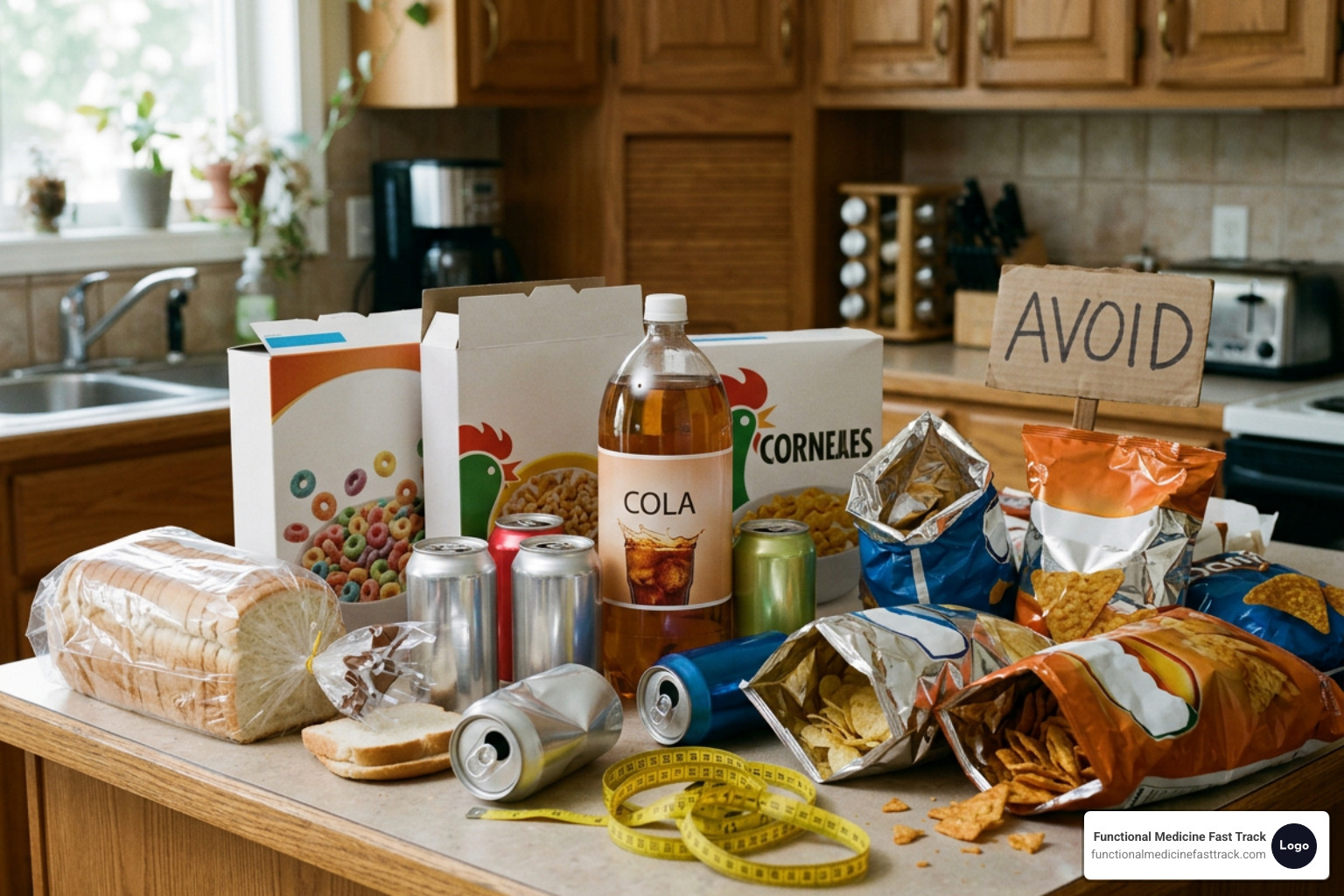
Ditch These Fast Tract Diet Foods to Avoid to Finally Tame Heartburn
Fast Tract Diet Foods to Avoid for Less Heartburn and Bloating
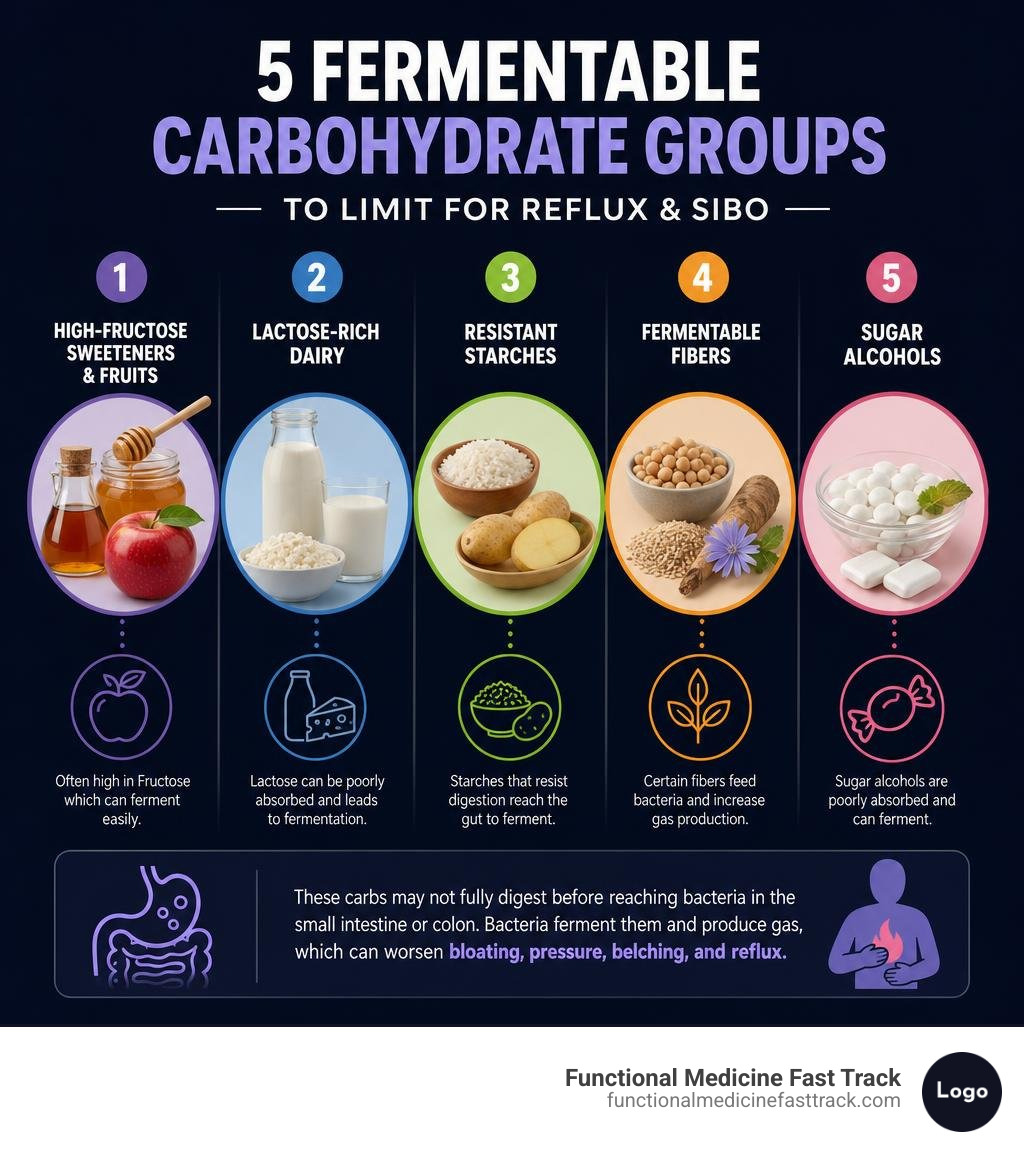
The main Fast Tract Diet foods to avoid are those most likely to feed gut fermentation: high-fructose sweeteners and fruits, lactose-rich dairy, resistant starches, fermentable fibers, and sugar alcohols. Start by removing or sharply limiting foods such as agave, honey, apples, milk, beans, whole grains, cooled potatoes or rice, chicory root fiber, and sorbitol-containing products.
These carbohydrates may not fully digest before reaching bacteria in the small intestine or colon. Bacteria ferment them and produce gas, which can worsen bloating, pressure, belching, and reflux symptoms in people with SIBO or other digestive issues.
The Fast Tract Diet uses Fermentation Potential (FP) to estimate this risk. Its general target is fewer than 45 grams of FP per day, rather than simply labeling foods as "good" or "bad." That matters because a food can be allowed on another gut-focused diet yet still create a high fermentation load at a certain serving size.
Research cited in Fast Tract Diet materials notes that 30 grams of poorly absorbed carbohydrate can produce roughly 10 liters of intestinal gas. The goal is not to fear every carbohydrate. It is to identify the types, portions, and ingredient combinations that consistently raise symptoms.
The Science of Fermentation Potential: Why Certain Carbs Trigger GERD
For decades, standard medical advice for gastroesophageal reflux disease (GERD) focused almost exclusively on mechanical dysfunction: a weak lower esophageal sphincter (LES) or excess stomach acid. Patients were routinely told to cut dietary fats and rely on acid-suppressing proton pump inhibitors (PPIs). However, emerging clinical insights show that carbohydrate malabsorption—rather than dietary fat—is often the primary driver of intragastric pressure and acid reflux.
When we consume carbohydrates that our digestive enzymes cannot rapidly absorb in the upper digestive tract, those residual sugars become microbial fuel. In individuals dealing with Small Intestinal Bacterial Overgrowth (SIBO) or dysbiosis, bacterial colonies residing higher up in the gut feast on these undigested compounds.
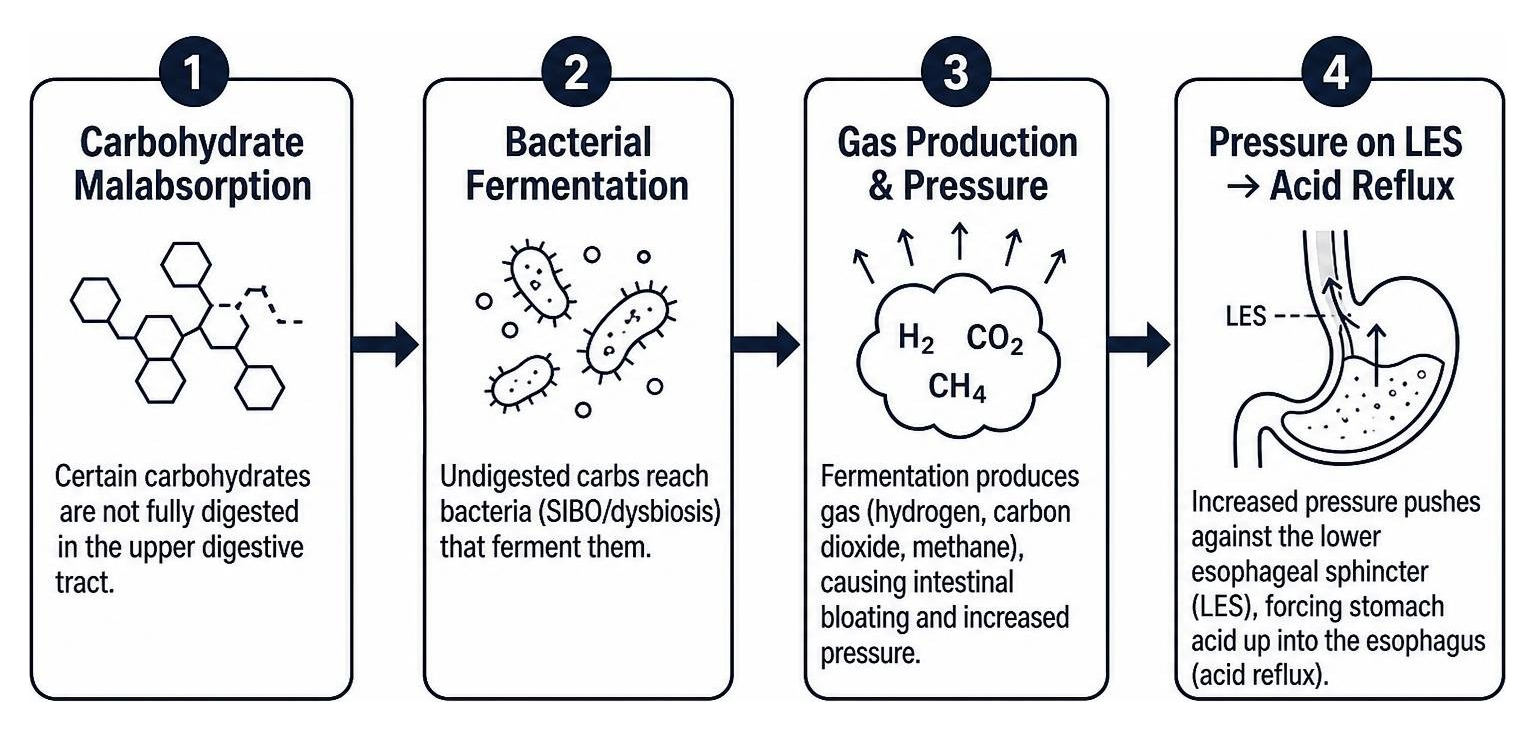
This microbial feast results in rapid fermentation, generating large volumes of hydrogen, carbon dioxide, and methane gas. Just 30 grams of undigested carbohydrate can generate up to 10 liters of gas inside the digestive tract. Think of dropping a pack of candies into a bottle of soda—the rapid build-up of pressure pushes upward against the LES, forcing acidic stomach contents up into the esophagus.
The core Fast Tract Diet principles measure this symptom-causing risk using Fermentation Potential (FP). FP is a mathematical calculation that combines a food's total carbohydrates, fiber content, glycemic index (GI), and typical serving size to predict how much residual sugar will remain unabsorbed for gut microbes to ferment.
While the Standard American Diet delivers over 300 grams of carbohydrates daily—yielding an FP load well over 100 grams per day—the Fast Tract protocol recommends reducing daily net carbohydrates to roughly 75 grams to keep total daily FP below 45 grams.
The Primary Fast Tract Diet Foods to Avoid by Carbohydrate Category
Managing your gut fermentation requires knowing which everyday staples carry a high FP score. The table below outlines high-FP trigger foods alongside gut-friendly, low-FP alternatives to keep your daily score under the 45-gram threshold:
Carbohydrate Category | High-FP Trigger Foods to Avoid | Low-FP Gut-Friendly Alternatives |
|---|---|---|
Fructose & Sugars | Agave nectar, honey, high-fructose corn syrup, apples, mangoes, pears, dried fruits | Strawberries, blueberries, raspberries, pure maple syrup, dextrose |
Lactose & Dairy | Regular cow's milk, half-and-half, condensed milk, soft fresh cheeses, ice cream | Hard aged cheeses (cheddar, parmesan), butter, ghee, lactase-treated cream |
Starches & Grains | Whole wheat, barley, rye, brown rice, cooled/reheated starches, green bananas | Freshly cooked white jasmine rice, skinless white potatoes (hot), rice noodles |
Fibers & Prebiotics | Inulin, chicory root, psyllium husk, legumes, lentils, garlic, onions | Zucchini, cucumber, baby spinach, cellulose-dominant vegetables |
Sugar Alcohols | Sorbitol, mannitol, xylitol, isomalt, commercial baking blends (Swerve) | Pure erythritol (in moderation), pure stevia, monk fruit extract |
1. High-Fructose Sweeteners and Fruits
Fructose malabsorption is remarkably widespread, yet it frequently slips under the diagnostic radar. The human small intestine absorbs free fructose through specialized carrier proteins known as GLUT5 transporters. When fructose intake exceeds the capacity of these transporters—or when fructose is present in excess of glucose—the unabsorbed fructose moves directly into the microbial fermentation zone.

Sweeteners like agave nectar, honey, and high-fructose corn syrup (HFCS) present a massive microbial load. For instance, just one teaspoon of agave contains around 5 grams of unabsorbed sugar, which can generate up to 1.6 liters of hydrogen gas in your gut.
High-fructose fruits to eliminate or strictly limit include:
Apples and pears (both whole and juiced)
Mangoes and cherries
Watermelon
Dried fruits (raisins, dates, prunes, figs)
Fruit concentrates and commercial fruit smoothies
Swapping these for low-fructose, portion-controlled berries (such as strawberries and raspberries) significantly curbs daily gas production.
2. High-Lactose Dairy and Sneaky Dairy Products
Lactose is a disaccharide that requires the brush-border enzyme lactase for breakdown into glucose and galactose. When lactase production declines—which is common in adulthood or when microvilli are damaged by SIBO and intestinal inflammation—unsplit lactose becomes prime fuel for gas-producing bacteria.
Liquid dairy products carry particularly heavy FP loads:
Fluid Cow's Milk & Goat's Milk: Whole, skim, and low-fat varieties deliver 12 grams of fermentable disaccharides per cup.
Half-and-Half: Often assumed to be safe due to higher fat content, standard half-and-half still contains significant lactose.
Lactose-Free Milk: Surprisingly, commercial "lactose-free" milk still carries an FP score around 5 per serving. While the lactase enzyme breaks down the initial lactose, residual oligosaccharides and simple sugars can linger and ferment.
To safely consume dairy without provoking reflux, choose aged cheeses (where bacteria have naturally consumed the lactose) or add over-the-counter lactase drops directly to dairy products well before consumption.
3. High-Amylose Grains and Resistant Starches
Dietary starch consists of two main glucose polymers: amylopectin (which has a branched structure and digests quickly) and amylose (a linear chain that resists enzymatic breakdown). Starches high in amylose take longer to break down, leaving undigested residues that travel down to gut bacteria.

Resistant starch (RS) forms when starches are cooked and then allowed to cool (such as leftover potato salad, chilled sushi rice, or reheated pasta). This cooling process triggers retrogradation, creating crystalline starch structures that resist stomach acid and pancreatic amylase:
Cooled or Reheated Rice and Potatoes: Greatly increases RS3 formation, driving up the FP score.
Whole Grains and Legumes: Brown rice, whole wheat, barley, rye, lentils, and kidney beans are rich in high-amylose starches and non-digestible oligosaccharides.
Green / Unripe Bananas: Packed with Type 2 resistant starch.
On the Fast Tract Diet, low-amylose starches like freshly cooked, steaming-hot white jasmine rice or baked skinless white potatoes eaten hot are preferred because they are rapidly absorbed in the upper jejunum, leaving minimal fuel for microbial fermentation.
4. Fermentable Fibers and Prebiotic Additives as Fast Tract Diet Foods to Avoid
While high-fiber diets are widely promoted for general gut health, fermentable and prebiotic fibers act like fuel on a fire for individuals with SIBO and acid reflux. Prebiotics are specifically designed to feed intestinal bacteria—which is counterproductive when an overgrowth is actively creating gas pressure against your esophagus.
Key prebiotic and fermentable fibers to eliminate include:
Inulin and Chicory Root: Frequently added to "keto," low-carb, and high-protein snack bars.
Psyllium Husk: A popular bulk-forming laxative that ferments into significant volumes of gas.
Fructooligosaccharides (FOS) & Galactooligosaccharides (GOS): Found in onions, garlic, leeks, and fortified processed foods.
Instead of consuming dense prebiotic supplements, focus on vegetables that contain non-fermentable cellulose fiber (like peeled cucumbers, zucchini, and spinach) that support gentle bulk without feeding bacterial fermentation.
5. Sugar Alcohols and Polyols in Diet Products
Sugar alcohols (polyols) are popular in sugar-free and keto-friendly foods because the human body cannot completely digest or absorb them. However, what our bodies fail to absorb, gut microbes readily ferment.
Common problematic polyols include:
Sorbitol & Mannitol: Found in sugar-free gums, mints, and stone fruits (plums, peaches).
Xylitol, Maltitol, & Isomalt: Frequently used in diet sweets and low-calorie desserts.
Swerve and Commercial Sweetener Blends: Often combined with fermentable oligosaccharide fillers that increase the overall FP score.
Liquid Medications & Reflux Syrups: Many liquid antacids, cough syrups, and throat lozenges contain sorbitol as a sweetening base, unintentionally worsening the very reflux they aim to treat.
When a sweetener is needed, pure erythritol is the best-tolerated sugar alcohol because roughly 90% is absorbed in the small intestine and excreted unchanged in urine, leaving minimal residue for bacterial fermentation.
Hidden Fermentable Ingredients in Processed Foods
Packaged convenience foods frequently hide fermentable carbohydrates behind "natural" or "clean" labels. Ultra-processed foods and processed snack bars often incorporate isolated fibers to improve texture, extend shelf life, or boost fiber counts.
These hidden carbohydrates accumulate quickly throughout the day—a process known as carbohydrate stacking. A protein bar at breakfast, a salad dressing with industrial thickeners at lunch, and a plant-based beverage in the afternoon can easily push your total daily FP well above the 45-gram threshold.
Gums, Thickeners, and Fast Tract Diet Foods to Avoid on Food Labels
Watch out for these common industrial additives on packaged food ingredient lists:
Xanthan Gum & Guar Gum: Highly fermentable polysaccharides used to thicken sauces, gluten-free baked goods, and dairy alternatives.
Gellan Gum & Carrageenan: Stabilizers found in almond milk, coconut milk, and protein drinks.
Maltodextrin & Modified Food Starch: Partially hydrolyzed starches with variable digestion rates that can spike fermentation potential.
Reading labels carefully and choosing whole, single-ingredient foods helps prevent these hidden additives from triggering unexpected reflux flares.
Why Low-FODMAP and SCD "Safe" Foods Can Still Trigger Symptoms
Navigating specialized gut diets can be confusing, especially when foods labeled "safe" on one plan cause painful flares on another.
Understanding elimination diet frameworks reveals why these protocols differ:
Low-FODMAP Diet: Classifies foods based on specific fermentable sugar classes (Fermentable Oligosaccharides, Disaccharides, Monosaccharides, and Polyols). However, it often overlooks resistant starches and high-amylose grains like brown rice or cooled starches.
Specific Carbohydrate Diet (SCD): Excludes disaccharides and polysaccharides while allowing simple monosaccharides. As a result, SCD allows liberal amounts of honey and very ripe bananas—both of which are high in free fructose and carry high FP scores.
The Fast Tract Diet resolves these discrepancies by applying a unified quantitative score to all carbohydrate classes. Because FP is portion-dependent, it accounts for total carbohydrate stacking across your entire day.
Frequently Asked Questions About Fast Tract Diet Foods to Avoid
What are the 5 core carbohydrate groups limited on the Fast Tract Diet?
The five core carbohydrate types limited on the Fast Tract protocol are:
Fructose (especially in excess of glucose, honey, and agave)
Lactose (milk, soft dairy products)
Resistant Starches (cooled/reheated starches, green bananas, legumes)
Fermentable Fibers (inulin, chicory root, FOS, psyllium)
Sugar Alcohols / Polyols (sorbitol, mannitol, xylitol, maltitol)
Why is white jasmine rice preferred over brown rice on this protocol?
White jasmine rice has a very low amylose content and a high glycemic index, meaning it is broken down into simple glucose and absorbed high up in the small intestine almost immediately. In contrast, brown rice contains fibrous bran, higher amylose levels, and resistant starch components that slow digestion, leaving fermentable residues for gut bacteria.
Can I drink lactose-free milk on the Fast Tract Diet?
Standard lactose-free milk is not completely free of fermentation risk; it carries an FP score of roughly 5 per cup due to residual oligosaccharides and simple sugars created during lactase processing. For strict symptom management, choose unsweetened almond milk without gums, or use lactase drops with heavy cream in moderation.
Conclusion
Taming chronic acid reflux and digestive distress is not about cutting out every carbohydrate forever. It is about understanding the mechanics of bacterial fermentation and keeping your daily intake below the 45-gram Fermentation Potential threshold. By eliminating high-FP culprits—such as agave, honey, fluid milk, inulin, high-amylose grains, and sugar alcohols—you can relieve upstream gas pressure, protect your lower esophageal sphincter, and give your gut a chance to heal.
For healthcare practitioners looking to help patients find lasting relief from chronic gut issues, combining targeted nutrition with practical clinical workflows is essential. Utilizing a structured elimination diet food plan alongside root-cause functional testing helps identify individual triggers and guide clients toward sustainable digestive health.