

Find the Best Guided Elimination Diet for Online Program Success
Food Sensitivities vs. Lab Testing: The Clinical Foundation
A guided elimination diet for online program delivery provides a structured clinical protocol that systematically removes common inflammatory triggers, calms baseline immune activation over a 21-day quiet phase, and reintroduces foods methodically to identify personal food sensitivities. By pairing digital tracking tools, step-by-step culinary blueprints, and practitioner support, it provides the psychological scaffolding and clinical precision needed to achieve lasting digestive clarity and root cause resolution.
When people struggle with unexplained fatigue, joint aches, or chronic digestive distress, their first instinct is often to order an at-home blood panel. While commercial IgG food sensitivity tests have grown in popularity, they often lead to confusion rather than clarity. A single round of food sensitivity blood testing typically costs between $200 and $500, yet the results simply show circulating IgG antibodies—which often reflect what someone has eaten frequently rather than a true clinical sensitivity.
Food sensitivities operate primarily via delayed hypersensitivity pathways. Unlike immediate IgE-mediated food allergies (which can provoke hives, throat swelling, or anaphylaxis within minutes), food sensitivity reactions involve a subtle immune response that can take up to 72 hours (3 days) to reach a peak.
Because of this 72-hour immune lag, trying to pinpoint which ingredient in Tuesday’s lunch triggered Friday morning's migraine is nearly impossible without a controlled protocol. The immune system needs approximately 3 weeks of consistent elimination to quiet down enough to reset the baseline and give reliable feedback.
Feature | At-Home IgG Blood Testing Panels | Guided Elimination Protocol |
|---|---|---|
Typical Cost | $200 – $500 per single panel | Cost-effective; embedded in comprehensive coaching programs |
Clinical Mechanism | Static measurement of IgG antibody presence | Direct real-time provocation and biological observation |
Actionability | Often flags frequently eaten foods (false positives) | Directly connects specific foods to clear physical symptoms |
Immune Reset | None; provides data without calming inflammation | Calms gut-associated lymphoid tissue over 21+ days |
Outcome | Long lists of unnecessary food eliminations | Clear, personalized blueprint for lifelong food freedom |
While at-home health testing protocols have their place in clinical discovery, an elimination diet remains the gold standard for identifying hidden food triggers and achieving true root cause resolution.
Why a Guided Elimination Diet for Online Program Adherence Outperforms DIY Protocols
Most solo attempts at elimination diets fail before they even start. When individuals try a do-it-yourself (DIY) approach, they often eliminate foods haphazardly, cut out too few categories, or abandon the process after just a few days when social life gets in the way.
The biggest pitfall of DIY protocols is rushing or completely skipping the reintroduction phase. People endure weeks of dietary restriction, start feeling better, and then celebrate by eating pizza, ice cream, and beer in a single weekend. When symptoms inevitably return, they have no idea which specific ingredient caused the flare-up.
A structured online program prevents these common failure points through:
Clear Timeline Guardrails: Keeping the immune system in an uninterrupted 3-week quiet phase.
Psychological Scaffolding: Providing meal blueprints, batch-cooking strategies, and pantry clean-out guides so decision fatigue never leads to non-compliance.
Microbiome and Mucosal Support: Emphasizing nutrient-dense, gut-supportive foods rather than mere restriction.
Systematic Reintroduction: Guiding participants through isolated single-food challenges spaced over structured observation windows.
When participants are guided through a clear process, compliance skyrockets. For practitioners, reading our functional medicine insights on chronic symptoms underscores how structured dietary protocols act as the foundational bedrock for resolving complex clinical cases.
Identifying Subtle Food Trigger Symptoms Across the Body
Food reactions do not stop at the gut wall. Intestinal permeability and the release of inflammatory cytokines circulate throughout the entire body, manifesting as diverse physical and neurological complaints.
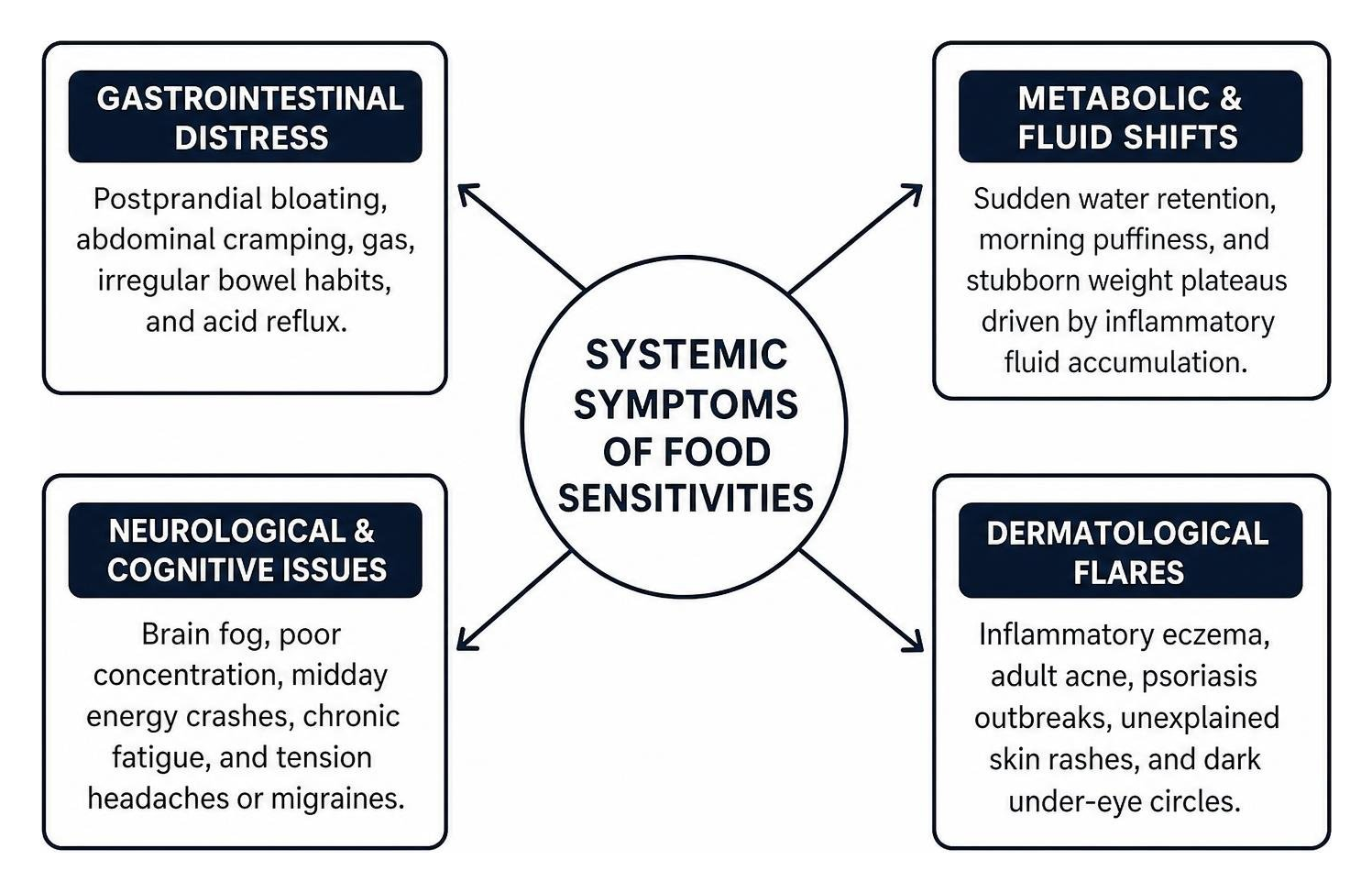
Common systemic manifestations include:
Gastrointestinal Distress: Postprandial bloating, abdominal cramping, gas, irregular bowel habits, and acid reflux.
Metabolic and Fluid Shifts: Sudden water retention, morning puffiness, and stubborn weight plateaus driven by inflammatory fluid accumulation.
Neurological & Cognitive Issues: Brain fog, poor concentration, midday energy crashes, chronic fatigue, and tension headaches or migraines.
Dermatological Flares: Inflammatory eczema, adult acne, psoriasis outbreaks, unexplained skin rashes, and dark under-eye circles.
Musculoskeletal Pain: Unexplained joint stiffness, muscle aches, and generalized systemic soreness.
Core Features of an Effective Elimination Diet for Online Program Success
An effective virtual elimination program is far more than a list of "do not eat" foods. To keep clients engaged and successful, the platform must deliver structured curriculum delivery, culinary support, digital symptom journals, habit psychology, and community accountability.
Essential Foods to Remove Versus Nutrient-Dense Foods to Enjoy
The elimination phase removes the most common dietary irritants, allowing the gut barrier to recover and systemic inflammation to drop. During this phase, participants remove:
Gluten-Containing Grains: Wheat, barley, rye, spelt, and triticale.
Dairy Products: Cow's milk, cheese, yogurt, butter, cream, and whey-based powders.
Soy & Corn: Tofu, soy sauce, edamame, lecithin, cornmeal, high-fructose corn syrup, and corn starch.
Refined Sugars & Artificial Sweeteners: Cane sugar, sucralose, aspartame, saccharin, and sugar alcohols.
Nightshades (in comprehensive tracks): Tomatoes, white potatoes, eggplants, and peppers.
Ultra-Processed Foods & Additives: Artificial colorings, preservatives, MSG, and industrial seed oils.
Instead of deprivation, the focus shifts to an abundance of anti-inflammatory, phytonutrient-dense whole foods:
Hypoallergenic Carbohydrates: Sweet potatoes, squash, parsnips, plantains, tapioca, and gluten-free whole grains like quinoa, brown rice, and buckwheat.
Clean Proteins: Wild-caught fish, grass-fed meats, pasture-raised poultry, bone broth, and collagen peptides.
Healthy Fats: Extra virgin olive oil, avocado oil, avocados, coconut milk, and coconut oil.
Phytonutrient Spectrum Vegetables: Leafy greens (kale, spinach, arugula), cruciferous vegetables (broccoli, cauliflower, Brussels sprouts), celery, cucumbers, asparagus, and carrots.
Low-Glycemic Fruits: Fresh berries (blueberries, raspberries, blackberries), green apples, lemons, and limes.
Herbs & Spices: Turmeric, ginger, garlic, oregano, basil, rosemary, and sea salt.
Digital Tracking Tools, Meal Blueprints, and Coaching Support
To take the guesswork out of daily nutrition, a premier online elimination program provides:
Curated Recipe Libraries: Access to over 70 delicious, allergen-free recipes, including dedicated plant-based and vegan alternatives.
Weekly Meal Plans & Automated Grocery Lists: Complete meal schedules that minimize kitchen stress and prevent impulse eating.
Daily Symptom Reaction Logs: Digital tracking forms that record energy levels, digestion, sleep quality, skin clarity, and mood.
Coaching Check-Ins: Real-time messaging, weekly live Q&A sessions, or group accountability forums to troubleshoot withdrawal cravings, dining out, and social gatherings.
The Step-by-Step Protocol: From Preparation to Reintroduction
Navigating an elimination diet requires a clear clinical roadmap. When clinicians implement our integrative digestive wellness protocols, they rely on a sequenced framework that systematically moves participants from preparation to reintroduction.
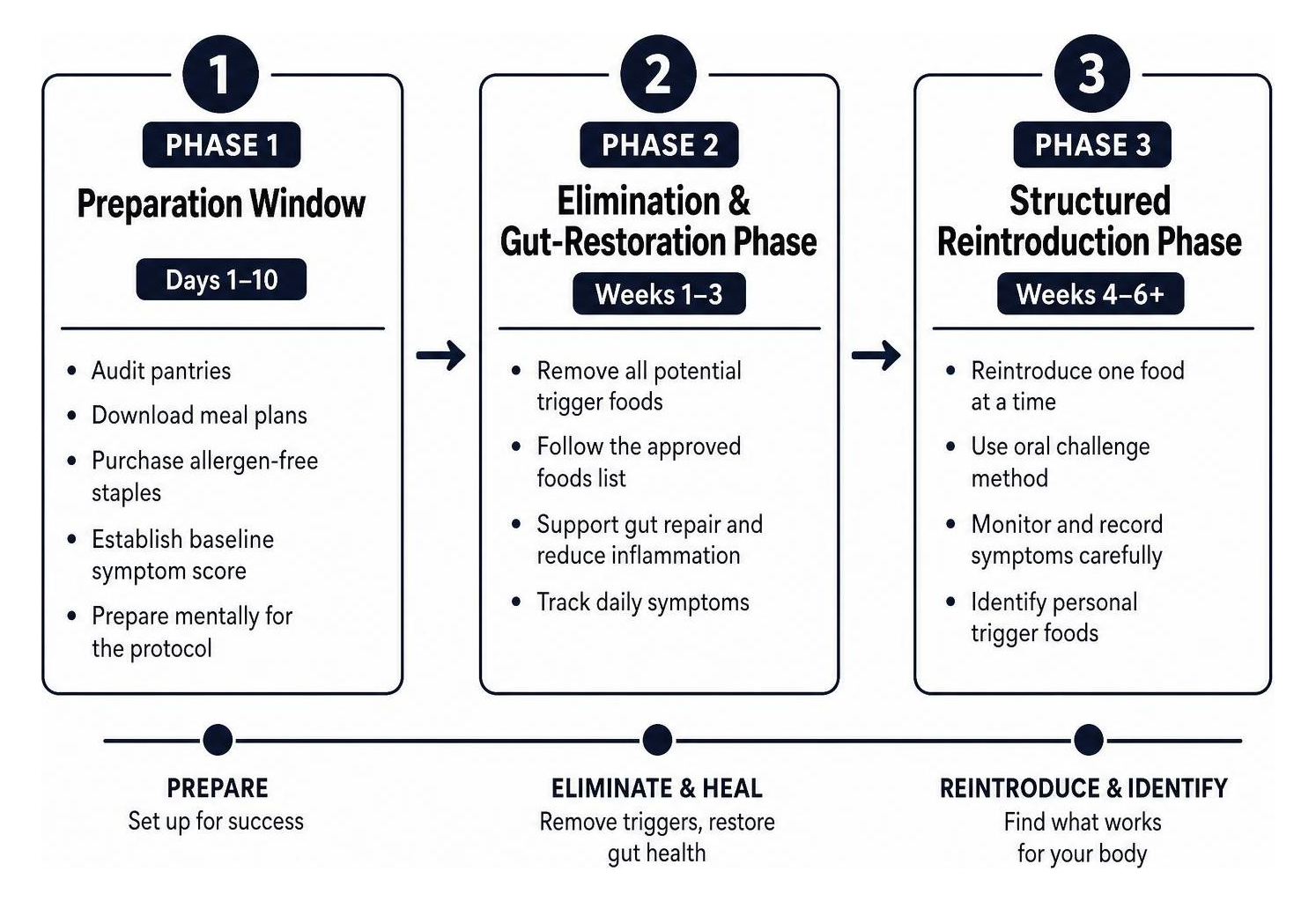
Structuring Phases in an Elimination Diet for Online Program Participants
Phase 1: The Preparation Window (Days 1–10): Participants audit their pantries, download meal plans, purchase allergen-free staples, establish a baseline symptom score, and psychologically prepare for the protocol.
Phase 2: The Elimination & Gut-Restoration Phase (Weeks 1–3): For 21 consecutive days, all potential trigger foods are removed. The immune system calms, the gut barrier repairs, and baseline inflammation drops significantly.
Phase 3: The Structured Reintroduction Phase (Weeks 4–6+): Foods are reintroduced individually using an oral challenge methodology while tracking symptoms carefully.
Phase 4: The Long-Term Personal Food Map: Results are consolidated into a personalized, sustainable eating plan that balances gut health with lifestyle flexibility.
Mastering the 48 to 72-Hour Observation Window
The reintroduction phase is where true food clarity is achieved. Reintroducing ingredients too quickly or all at once will obscure your results.
Follow this clinical testing sequence for each isolated food group (e.g., testing pure sheep/goat yogurt before cow’s milk, or non-GMO corn before gluten):
Day 1 (Challenge Day): Eat a small portion of the single test food at breakfast. If no immediate reaction occurs after 2 hours, eat a normal portion at lunch and dinner. Keep all other meals completely compliant with the elimination phase.
Day 2 (Observation Day): Stop eating the challenge food entirely. Return to baseline elimination meals. Track energy, digestion, joint comfort, and mood across the full 24 hours.
Day 3 (Observation Day): Continue eating strictly compliant elimination meals. Monitor for delayed inflammatory reactions (such as skin breakouts, brain fog, water retention, or bowel irregularities).
Day 4 (Decision Point):
If no symptoms appeared: The food is marked as "Safe" and noted on the personal clarity map. Return to baseline for 24 hours before testing the next food.
If a reaction occurred: Record the symptom, classify the food as a "Current Trigger," and remain on strict elimination meals until symptoms return completely to baseline before testing a new food.

Safety, Contraindications, and Long-Term Dietary Freedom
While elimination diets provide immense therapeutic value, they must be used responsibly:
History of Disordered Eating: Strict elimination protocols can trigger restrictive thoughts or orthorexic behaviors in vulnerable individuals. Structured clinical supervision is essential, and gentler, nutrient-addition models should be prioritized when appropriate.
Pregnancy and Lactation: Pregnancy is not the time for restrictive elimination diets. The focus must remain on balanced macronutrient intake and optimal caloric density for fetal development.
Competitive Athletes: Athletes with high energy demands must deliberately replace eliminated calorie sources with dense hypoallergenic carbohydrates (sweet potatoes, plantains, quinoa) to prevent hormonal downregulation and performance drops.
Sustainable Food Freedom: An elimination diet is never a permanent lifestyle. Long-term health requires high dietary diversity and a wide range of prebiotic plant fibers to nurture a resilient microbiome.
Frequently Asked Questions About Guided Elimination Diets
How long does an online elimination diet take from start to finish?
A comprehensive online elimination program typically lasts 6 to 8 weeks. This timeline includes a 7 to 10-day preparation window, an uninterrupted 3-week elimination phase to quiet systemic immune reactions, and a 3 to 4-week structured reintroduction phase.
Can I participate in a guided elimination diet if I am plant-based or vegan?
Yes. Quality online programs offer customized plant-based pathways that replace common allergens with hypoallergenic vegan protein sources like hemp seeds, pumpkin seed protein powder, chia seeds, sprouted quinoa, lentils, and soaked legumes (when tolerated).
What should I do if I experience adverse reactions to multiple reintroduced foods?
Reacting to nearly every reintroduced food does not mean you are permanently intolerant to everything. Instead, it indicates an underlying gut issue, such as intestinal hyperpermeability (leaky gut), severe dysbiosis, or low digestive enzyme output. When this occurs, pause reintroductions, remain on a broad anti-inflammatory baseline, and consult a qualified functional medicine practitioner for advanced gut-healing support.
Conclusion
Navigating dietary triggers does not have to involve confusing lab panels, endless food anxiety, or restrictive guessing games. A guided elimination protocol provides the structured roadmap you need to identify root causes, reset your digestive health, and reclaim daily vitality.
If you are a practitioner looking to deliver these transformative clinical results directly inside your own branded practice, the Functional Medicine Fast Track system combines clinical mentorship, marketing funnels, and a done-for-you client platform to help you scale your impact effortlessly.
To take the first step toward lasting dietary clarity and structured gut healing, download the comprehensive elimination diet food plan guide today and start building your path to sustainable vitality.